Discover the true cost of reusable vs disposable diapers. Our comprehensive analysis shows potential savings of $1,500-3,200 per child with cloth diapers.
Picture this: Sarah, a first-time mom, stands in the baby store aisle, calculator in hand, staring at two very different options. On one side, a stack of disposable diapers with their familiar convenience. On the other, colorful cloth diapers promising long-term savings. The Reusable Diapers vs Disposable Diapers Cost debate isn’t just about money—it’s about making the smartest financial decision for your growing family.
Every parent faces this crucial choice, and the numbers might surprise you. While disposable diapers offer immediate convenience, the long-term costs can add up to thousands of dollars. Meanwhile, reusable diapers require a higher upfront investment but promise significant savings over time. Understanding the true financial impact of each option helps parents make informed decisions that align with their budget and values.
Key Takeaways 🎯
• Initial Investment: Reusable diapers cost $200-800 upfront, while disposables start at $0 but accumulate costs daily
• Long-term Savings: Families can save $1,500-3,000 over 2-3 years by choosing reusable diapers
• Hidden Costs: Factor in washing expenses for cloth diapers and convenience items for disposables
• Break-even Point: Most families recover their cloth diaper investment within 6-12 months
• Multiple Children: Reusable diapers become increasingly cost-effective with each additional child
Understanding the True Cost of Diapering Your Baby
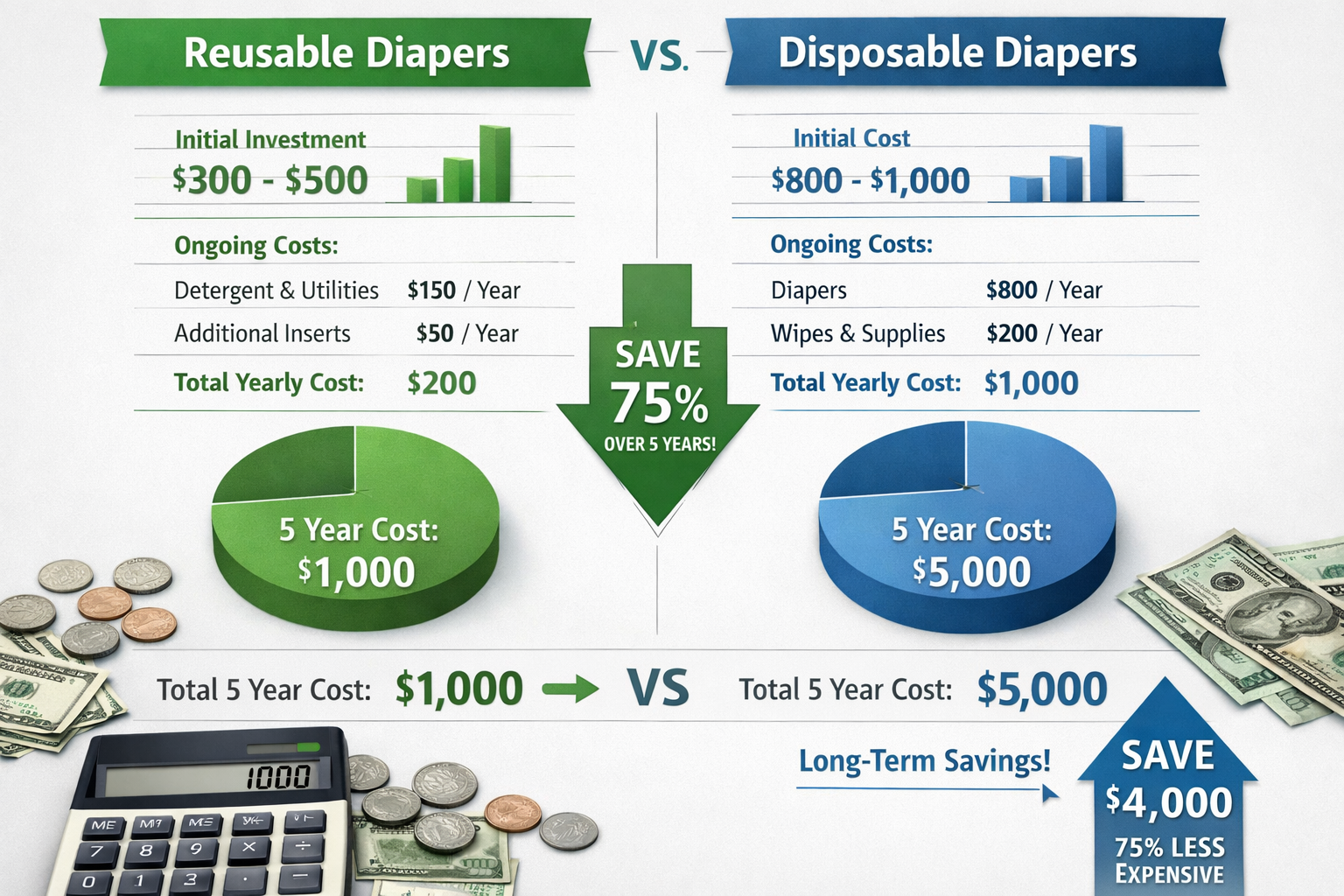
When analyzing the Reusable Diapers vs Disposable Diapers Cost, parents must look beyond the sticker price. The diapering journey typically lasts 2-3 years per child, with newborns using 10-12 diapers daily and toddlers using 6-8 diapers daily. This translates to approximately 6,000-8,000 diaper changes per child.
The financial impact extends far beyond simple multiplication. Hidden costs, convenience factors, and long-term considerations all play crucial roles in the total cost equation. Smart parents evaluate both immediate expenses and cumulative costs to make the most economical choice for their family’s unique situation.
The Diaper Usage Timeline
Understanding diaper usage patterns helps parents calculate accurate costs:
- Newborn (0-3 months): 10-12 diapers per day
- Infant (3-12 months): 8-10 diapers per day
- Toddler (12-24 months): 6-8 diapers per day
- Pre-potty training (24-36 months): 4-6 diapers per day
These numbers vary based on individual children, but they provide a realistic framework for cost calculations.
Disposable Diapers: The Immediate Convenience Choice
Disposable diapers dominate the market for good reason—they offer unmatched convenience. Parents simply use them once and throw them away, making them perfect for busy lifestyles, travel, and childcare situations. However, this convenience comes with a significant long-term price tag.
Breaking Down Disposable Diaper Costs
The average cost of disposable diapers varies by brand, size, and purchasing method:
Budget Brands: $0.15-0.25 per diaper
Mid-range Brands: $0.25-0.35 per diaper
Premium Brands: $0.35-0.50 per diaper
Based on these prices, here’s what families typically spend:
| Time Period | Budget Brand | Mid-range Brand | Premium Brand |
|---|---|---|---|
| Monthly | $45-75 | $75-105 | $105-150 |
| First Year | $540-900 | $900-1,260 | $1,260-1,800 |
| Total (2.5 years) | $1,350-2,250 | $2,250-3,150 | $3,150-4,500 |
Hidden Costs of Disposable Diapers
Beyond the basic diaper cost, families often overlook additional expenses:
- Diaper rash treatments: $5-15 monthly
- Wipes: $10-20 monthly
- Diaper pail refills: $15-25 monthly
- Emergency diaper runs: $20-40 monthly
- Larger trash bags: $5-10 monthly
These extras can add $600-1,200 to the total disposable diaper budget over 2-3 years.


- 100%polyester
- Imported
- Superior Absorbency: Our CoolaPeach cloth diapers are equipped with 6 high-quality microfiber inserts, ensuring maximum …

- Complete Cloth Diapering Set: Includes 4 adjustable pocket cloth diapers and 4 viscose with microfiber inside absorbent …
- Adjustable Fit for Growing Babies: Designed to fit babies from 10 lbs to 35 lbs with adjustable snap settings, ensuring …
- Easy to Clean: Diapers are Machine Washable and quick drying with separated inserts, our cloth diapers can be included w…
Reusable Diapers: The Investment That Pays Off
Reusable diapers, also known as cloth diapers, require a significant upfront investment but offer substantial long-term savings. Modern cloth diapers have evolved far beyond the simple cloth squares of previous generations, featuring advanced materials, easy-to-use designs, and impressive absorbency.
Initial Investment Breakdown
A complete cloth diaper system typically includes:
Basic Starter Set (20-24 diapers): $200-400
Premium System (25-30 diapers): $400-600
Luxury Collection (30+ diapers): $600-800
Additional items needed:
- Diaper covers: $60-120
- Inserts and boosters: $40-80
- Wet bags: $30-50
- Diaper sprayer: $25-50
Types of Reusable Diapers and Their Costs
Different cloth diaper styles offer various price points and convenience levels:
All-in-One (AIO): $15-25 each
- Most convenient option
- Complete diaper in one piece
- Longer drying time
Pocket Diapers: $8-18 each
- Customizable absorbency
- Fast drying
- Requires stuffing
Prefolds with Covers: $2-5 each (plus $15-25 per cover)
- Most economical option
- Requires folding
- Very durable
All-in-Two (AI2): $12-20 each
- Reusable shell with disposable or washable inserts
- Good compromise option
For parents interested in exploring different reusable diaper options, our comprehensive guide to reusable diapers provides detailed comparisons of popular brands and styles.
Ongoing Costs for Cloth Diapers
While the initial investment is higher, ongoing costs for reusable diapers are minimal:
Monthly washing costs: $15-25
- Water usage
- Electricity for washer/dryer
- Detergent
Replacement items: $10-20 monthly
- Worn elastics
- New inserts
- Additional accessories
Annual total ongoing costs: $300-540
The Real Numbers: Reusable Diapers vs Disposable Diapers Cost Analysis
Let’s examine realistic scenarios comparing both options over a typical 2.5-year diapering period:
Scenario 1: Budget-Conscious Family
Disposable Route:
- Budget brand diapers: $1,800
- Wipes and accessories: $600
- Total: $2,400
Reusable Route:
- Initial investment: $300
- Washing costs: $450
- Replacements: $250
- Total: $1,000
Savings with reusable: $1,400
Scenario 2: Mid-Range Family
Disposable Route:
- Mid-range brand diapers: $2,700
- Wipes and accessories: $800
- Total: $3,500
Reusable Route:
- Initial investment: $500
- Washing costs: $500
- Replacements: $300
- Total: $1,300
Savings with reusable: $2,200
Scenario 3: Premium Choice Family
Disposable Route:
- Premium brand diapers: $3,800
- Wipes and accessories: $1,000
- Total: $4,800
Reusable Route:
- Initial investment: $700
- Washing costs: $550
- Replacements: $350
- Total: $1,600
Savings with reusable: $3,200
Break-Even Point Analysis
Understanding when cloth diapers “pay for themselves” helps parents appreciate the investment timeline. Most families reach their break-even point within 6-12 months, depending on their initial investment and usage patterns.
Quick Break-Even Calculator:
- Initial cloth diaper investment ÷ Monthly disposable savings = Break-even months
For example:
- $500 initial investment ÷ $80 monthly savings = 6.25 months
After this point, every month represents pure savings compared to disposable diapers.
Multiple Children: Where Cloth Diapers Really Shine
The Reusable Diapers vs Disposable Diapers Cost equation becomes even more favorable with multiple children. Quality cloth diapers can easily last through 2-3 children with proper care, making the per-child cost incredibly low.
Two-Child Family Comparison
Disposable Costs (2 children):
- First child: $3,500
- Second child: $3,500
- Total: $7,000
Reusable Costs (2 children):
- Initial investment: $500
- Child 1 washing/maintenance: $800
- Child 2 washing/maintenance: $800
- Minor replacements: $200
- Total: $2,300
Total savings: $4,700
With three children, families can save $6,000-8,000 compared to disposables, making cloth diapers an incredibly smart long-term investment.
Hidden Factors That Impact Costs
Several factors can significantly influence the true Reusable Diapers vs Disposable Diapers Cost comparison:
Childcare Considerations
Many daycare centers prefer disposable diapers, which might force cloth diaper families to use disposables during childcare hours. This hybrid approach affects the cost calculation:
- Full-time daycare: May require 50% disposable usage
- Part-time care: Usually manageable with cloth
- Family daycare: Often more flexible with cloth diapers
Washing Machine Efficiency
The cost of washing cloth diapers varies significantly based on:
- Machine efficiency: HE machines use less water and energy
- Local utility rates: Water and electricity costs vary by region
- Washing frequency: More efficient with larger loads
Diaper Rash Considerations
Some children experience different rates of diaper rash with cloth versus disposable diapers. Parents dealing with frequent rash issues should explore our guide on cloth diaper rash causes and solutions to minimize additional treatment costs.
Money-Saving Strategies for Both Options
Maximizing Disposable Diaper Savings
- Buy in bulk during sales
- Use store brands for significant savings
- Subscribe and save programs offer 15-20% discounts
- Coupons and cashback apps provide additional savings
- Size up strategically to extend wear time
Optimizing Cloth Diaper Costs
- Start with used diapers in good condition
- Buy during sales and clearance events
- Choose versatile systems that grow with baby
- Maintain properly to extend diaper life
- Sell when finished to recoup some investment
For parents interested in premium options, our diaper bag recommendations can help organize supplies efficiently for both cloth and disposable diaper users.
Environmental Costs: The Hidden Price Tag
While focusing on financial costs, many parents also consider environmental impact as part of their cost-benefit analysis:
Disposable Environmental Impact:
- 20 billion diapers in US landfills annually
- 500+ years to decompose
- Significant manufacturing carbon footprint
Cloth Diaper Environmental Impact:
- Water and energy usage for washing
- Longer lifespan reduces waste
- Reusable for multiple children
Some families factor environmental costs into their decision, viewing cloth diapers as an investment in their children’s future planet.
Special Circumstances That Affect Costs
Premature Babies
Premature babies often require specialized diaper solutions that can impact cost calculations:
- Longer diapering period: May extend timeline by 6-12 months
- Specialized sizing: Both cloth and disposable options may cost more
- Medical considerations: Some medical conditions favor one option over another
Sensitive Skin
Children with sensitive skin might require:
- Premium disposables: Higher cost but less irritation
- Organic cloth diapers: Higher initial investment
- Special detergents: Additional ongoing costs for cloth
Travel Considerations
Frequent travelers might find:
- Disposables more practical for trips
- Hybrid approach works best
- Travel-specific costs for both options
Making the Right Choice for Your Family
The Reusable Diapers vs Disposable Diapers Cost decision ultimately depends on your family’s unique circumstances, priorities, and resources. Consider these key factors when making your choice:
Choose Cloth Diapers If:
- Long-term savings are a priority
- You plan to have multiple children
- Environmental impact matters to you
- You have reliable washing facilities
- You enjoy the customization options
Choose Disposable Diapers If:
- Convenience is your top priority
- You have limited time for laundry
- Childcare requirements mandate disposables
- Upfront costs are a concern
- You travel frequently
Consider a Hybrid Approach If:
- You want some cost savings but need flexibility
- Childcare requires disposables during the day
- You’re testing cloth diapers before full commitment
- Convenience matters for certain situations
For parents exploring cloth diaper options, consider reading about common issues like compression leaks and nighttime leaking solutions to make an informed decision.
Tips for Success with Either Choice
Maximizing Cloth Diaper Success
- Start with a small stash to test preferences
- Establish a washing routine early
- Have backup options for emergencies
- Join online communities for support and tips
- Invest in quality accessories like proper diaper bags
Optimizing Disposable Diaper Use
- Buy in bulk during sales
- Use subscription services for automatic deliveries
- Stock multiple sizes for growth spurts
- Keep emergency supplies in car and diaper bag
- Track usage patterns to optimize purchasing
Real Parent Stories: Cost Experiences
Maria’s Story: “We started with disposables for convenience but switched to cloth at 6 months. Even starting late, we saved over $1,200 with our first child and used the same diapers for our second baby. The initial learning curve was worth the long-term savings.”
Jake’s Experience: “As a single dad, I chose disposables for simplicity. Yes, they cost more, but the time savings allowed me to focus on other aspects of parenting. For our situation, the convenience was worth the extra cost.”
The Chen Family: “We did a hybrid approach—cloth at home, disposables for daycare and outings. This gave us about 60% of the cost savings of full-time cloth while maintaining flexibility for our busy lifestyle.”
These real experiences highlight that there’s no one-size-fits-all answer to the Reusable Diapers vs Disposable Diapers Cost question.
Future Considerations and Trends
The diaper industry continues evolving, with new options emerging that might affect future cost calculations:
Emerging Trends
- Biodegradable disposables: Higher cost but environmental benefits
- Diaper subscription services: Competitive pricing with convenience
- Hybrid diaper systems: Combining benefits of both options
- Smart diapers: Technology integration at premium prices
Economic Factors
- Raw material costs: Affecting disposable diaper prices
- Utility rates: Impacting cloth diaper washing costs
- Labor costs: Influencing manufacturing and retail prices
Parents should stay informed about these trends when making long-term diapering decisions.
Conclusion: Making Your Best Financial Decision
The Reusable Diapers vs Disposable Diapers Cost analysis reveals that cloth diapers typically offer significant long-term savings, potentially saving families $1,500-3,200 per child. However, the best choice depends on your family’s specific circumstances, priorities, and resources.
Key takeaways for smart parents:
- Cloth diapers provide substantial long-term savings, especially for multiple children
- Disposable diapers offer convenience but at a higher cumulative cost
- Break-even points for cloth diapers typically occur within 6-12 months
- Hidden costs exist for both options and should factor into decisions
- Hybrid approaches can provide a balance of savings and convenience
Your next steps:
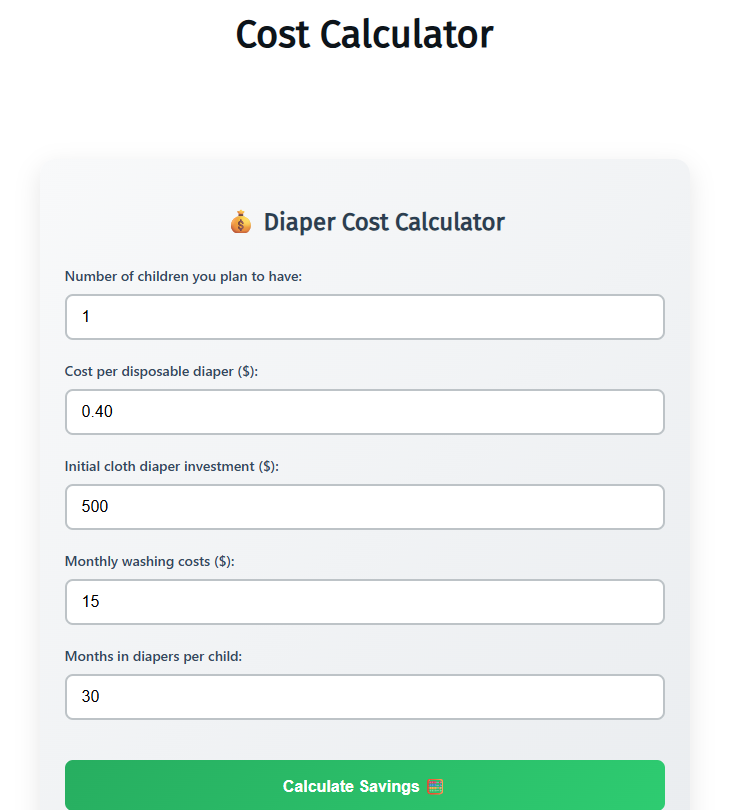
- Use our cost calculator to determine potential savings for your situation
- Research cloth diaper options if interested in the savings potential
- Consider starting with a small cloth diaper trial before full commitment
- Factor in your lifestyle, childcare requirements, and long-term family plans
- Remember that the “best” choice is the one that works for your unique family situation
Whether you choose cloth, disposables, or a combination of both, understanding the true costs helps you make an informed decision that aligns with your budget and values. The most important thing is keeping your baby clean, comfortable, and healthy while making a choice that supports your family’s overall well-being.
For more information about cloth diaper options and parenting resources, explore our comprehensive blog for expert advice and real parent experiences.