Save $9K+ with our minimalist nursery guide. Discover 15 essential baby items, why cloth diapers are #1, and quality vs quantity nursery tips for 2026.
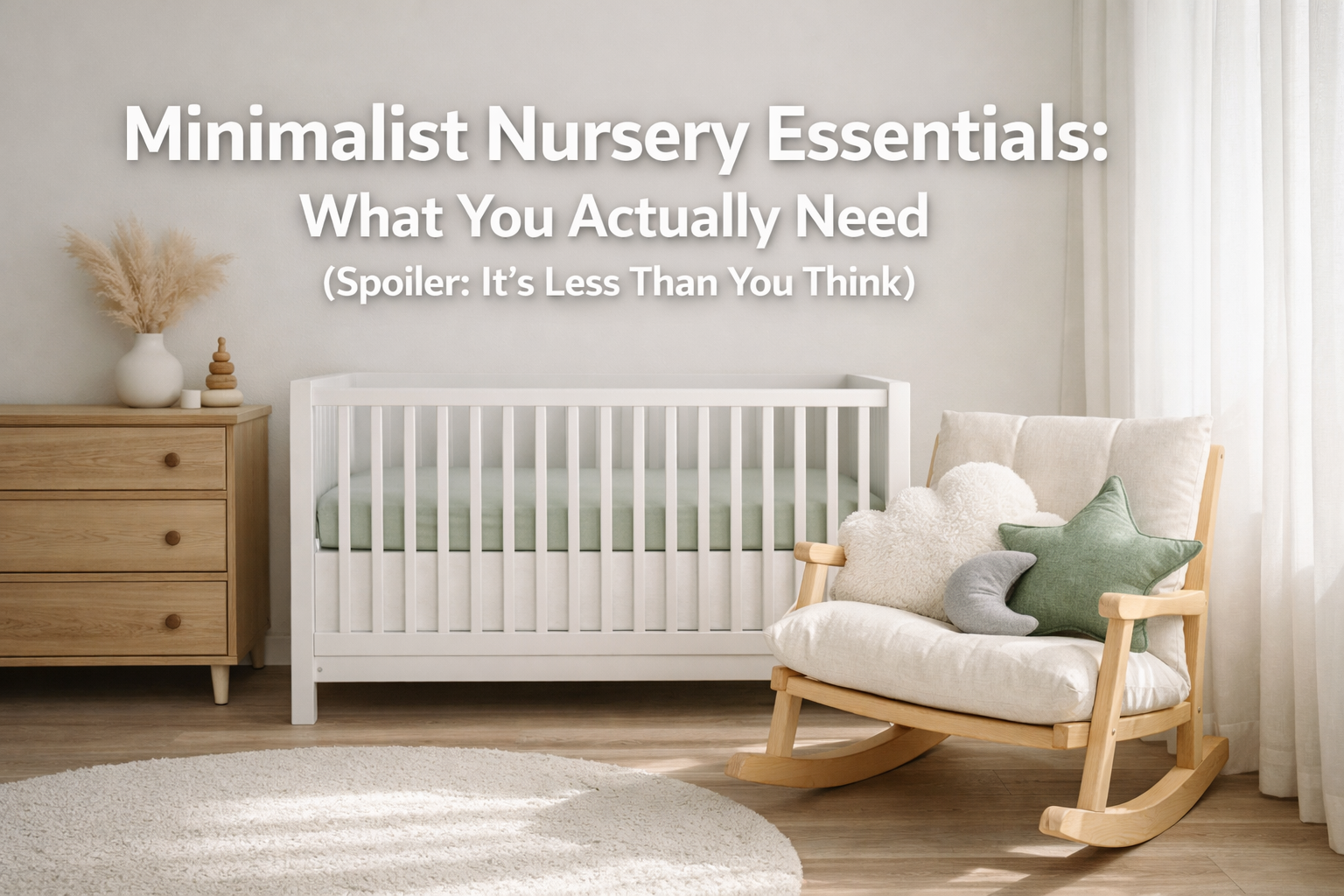
Picture this: A first-time parent standing in the middle of a baby superstore, registry scanner in hand, completely paralyzed by the sheer volume of “must-have” items screaming from every shelf. The wipe warmer. The diaper genie refills. The seventeen different types of swaddles. The decorative wall letters that spell out baby’s name in glittery foam.
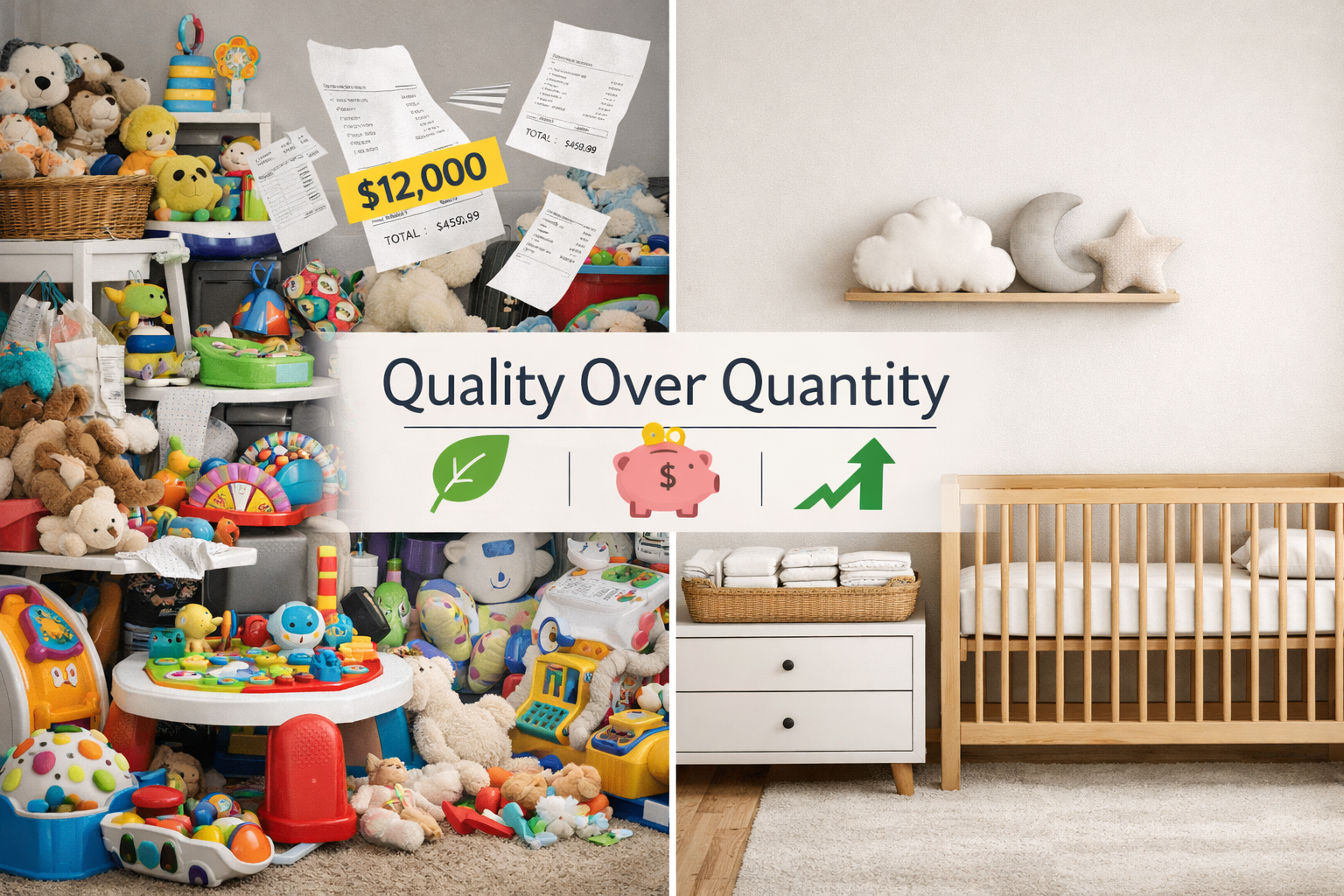
Here’s the truth bomb that nobody in the baby industry wants you to hear: The average American parent spends over $12,000 in their baby’s first year—and most of that money goes toward items they’ll use once, never use at all, or regret purchasing within weeks.
Welcome to the world of minimalist parenting, where less truly is more, and where understanding what you really need for baby can save you thousands of dollars, countless hours of stress, and mountains of landfill waste. This comprehensive guide to creating a minimalist nursery will show you exactly which essential baby items deserve your investment (spoiler: cloth diapers and thoughtful decor pieces top the list) and which trendy gadgets you can confidently skip.
Key Takeaways
✨ The average parent overspends by 70% on unnecessary baby items in year one—most nurseries need only 15 essential pieces, not 50+
💰 Cloth diapers represent the single best ROI in baby gear, saving $2,000-3,000 over disposables while offering resale value
🌿 Quality over quantity applies to decor: 2-3 handcrafted, heirloom-quality pieces create more meaning than 20 cheap throwaway items
📋 Multi-functional items are key: Every piece in a minimalist nursery should serve multiple purposes or grow with your child
🎯 The minimalist approach benefits everyone: Less clutter means easier cleaning, calmer spaces, reduced decision fatigue, and environmental consciousness
The Minimalist Philosophy: Why Less Actually Means More for Your Baby
Understanding Minimalist Parenting in 2026
The minimalist parenting movement isn’t about deprivation—it’s about intention. In 2026, more parents are rejecting the consumer-driven narrative that equates love with purchasing power. Instead, they’re discovering that babies thrive in calm, uncluttered environments where every item serves a genuine purpose.[3]
The philosophy centers on three core principles:
🎯 Quality Over Quantity
Rather than accumulating dozens of mediocre items, minimalist parents invest in fewer, higher-quality pieces that last longer, perform better, and often retain resale value. A $200 investment in premium cloth diapers that last through multiple children beats $2,500 spent on disposables that fill landfills.
♻️ Investment Pieces vs. Disposable Culture
The 2026 minimalist nursery trend prioritizes multi-functional furniture, sustainable materials, and only absolute basics to maintain a serene, clutter-free environment.[3] Designer-approved approaches intentionally keep checklists short because “when everything in your nursery has a purpose, the space feels calmer, flows better, and stays organized.”[1]
💚 Environmental & Financial Benefits
Every item you don’t purchase represents:
- Money saved for actual needs like childcare or education funds
- Reduced environmental impact through less manufacturing and waste
- Mental clarity from simplified decision-making
- Physical space in your home for what matters: family time
One parent shared: “We started with a 50-item registry. After our minimalist friend showed us her setup, we cut it to 18 items. We saved over $3,000 and our nursery feels like a peaceful sanctuary instead of a storage unit.”
The Hidden Costs of Over-Consumption
Beyond the obvious financial waste, over-buying creates:
- Decision fatigue: Choosing between 12 swaddle options instead of focusing on your baby
- Cleaning burden: More stuff means more surfaces to dust, organize, and trip over at 3 AM
- Guilt and stress: Unused items become visual reminders of “wasted” money
- Environmental conscience: The average baby generates 2,000+ pounds of diaper waste alone in disposables
The minimalist approach flips this script entirely. By focusing on essential baby items that truly serve your family’s needs, you create space—literal and mental—for what parenting is actually about.
The 20% That Matters: Why Cloth Diapers Are Your #1 Essential Investment
The Pareto Principle Applied to Baby Gear
In business, the Pareto Principle states that 80% of results come from 20% of efforts. Applied to nursery planning, this means 20% of your baby items will account for 80% of your daily use and long-term value.
At the top of that critical 20%? Cloth diapers.
Why Cloth Diapers Deserve Your Investment Dollars
Let’s break down the math that makes cloth diapers the smartest purchase in your entire minimalist nursery:
💰 Long-Term Savings Breakdown
| Category | Disposable Diapers | Cloth Diapers |
|---|---|---|
| Initial Investment | $0 | $400-600 (complete stash) |
| Year 1 Cost | $800-1,000 | $150 (water/detergent) |
| Year 2 Cost | $700-900 | $150 |
| Year 3 Cost | $500-700 | $150 |
| Total 3-Year Cost | $2,000-2,600 | $850-1,050 |
| Net Savings | — | $1,150-1,750 |
| Resale Value | $0 | $200-400 |
| Second Child Use | $2,000+ more | $0 (already owned) |
Total savings for two children: $3,150-4,150+
That’s a vacation. A year of daycare. A significant college fund contribution. All from one decision.
Beyond the Numbers: The Quality Factor
Modern cloth diapers in 2026 aren’t your grandmother’s safety pins and rubber pants. Today’s systems offer:
- Superior leak protection with properly fitted designs
- Healthier for baby’s skin with breathable, chemical-free fabrics
- Customizable absorbency for heavy wetters and overnight use
- Adorable patterns that make diaper changes more fun
- Environmental responsibility reducing 2,000+ pounds of landfill waste per child
For parents concerned about common issues like compression leaks or nighttime leaking, modern solutions and proper fitting techniques have made these concerns largely obsolete.
Addressing the Diaper Rash Myth
Many parents worry that cloth diapers cause more diaper rash. The reality? Cloth diapers and diaper rash have a complex relationship—but with proper care, cloth can actually be gentler on sensitive skin due to the absence of chemicals found in disposables.
The Resale Value Nobody Talks About
Here’s where cloth diapers truly shine in the quality vs quantity nursery debate: they hold value.
Well-maintained cloth diaper systems can resell for 40-60% of their original price. Premium brands often command even higher resale values. Compare that to the zero resale value of used disposable diapers (obviously), and the financial case becomes even stronger.
One budget-conscious parent explained: “We bought a $500 cloth diaper stash when our daughter was born. Used them for two years, then sold them for $280. Our actual out-of-pocket cost was $220 plus washing expenses—maybe $450 total. Our friends spent over $2,000 on disposables in the same timeframe.”
Building Your Cloth Diaper Foundation
For a minimalist nursery approach, you’ll need:
- 18-24 cloth diapers (enough for 2-3 days between washes)
- 2-3 wet bags for storage and travel
- Cloth-safe detergent
- Optional: diaper sprayer for easier cleaning
This core investment becomes the workhorse of your baby care routine. For parents exploring options, our ultimate guide to reusable diapers covers everything from popular brands to washing routines.
Meaningful Decor Over Clutter: The 2-3 Piece Philosophy
Why Twenty Cheap Items Beat by Two Quality Pieces
Walk into most nurseries and you’ll find:
- Mass-produced wall decals that peel within months
- Plastic storage bins in mismatched patterns
- Throwaway “decorative” items from big-box stores
- Trendy pieces that’ll look dated in a year
Now imagine a different approach: a serene space with 2-3 carefully chosen, handcrafted pieces that serve as both functional items and lifetime keepsakes.
The ProstoConcept Philosophy: Handcrafted Pieces That Grow With Your Child
Quality nursery decor doesn’t mean expensive wallpaper or elaborate murals. It means investing in pieces crafted with intention, designed to last, and beautiful enough to transition through childhood stages.
ProstoConcept embodies this philosophy with their handcrafted pillow collection. Rather than purchasing a dozen cheap throw pillows that flatten, stain, and end up in donation bins, consider this alternative:
The $200 Comparison:
Option A: Target/Big Box Store Approach
- 4 decorative pillows @ $20 each = $80
- 2 storage bins @ $25 each = $50
- Wall decals = $30
- Decorative letters = $40
- Total: $200
- Lifespan: 1-2 years
- Resale value: $0
- Emotional value: Low
Option B: Intentional Investment Approach
- 1 handcrafted cloud pillow = $70
- 1 handcrafted moon pillow = $65
- 1 handcrafted star pillow = $65
- Total: $200
- Lifespan: 10+ years (childhood and beyond)
- Resale value: $80-120
- Emotional value: Priceless
Pillows as Lifetime Keepsakes
ProstoConcept’s cloud, moon, and star pillows exemplify the quality over quantity approach:
🌙 Multi-Functional Design
- Newborn stage: Gentle decor pieces creating a calming atmosphere
- Infant stage: Tummy time props and visual interest
- Toddler stage: Comfort items and reading nook accessories
- Childhood: Beloved room decor that grows with personality
- Beyond: Keepsakes that transition to college dorms or first apartments
✨ Handcrafted Quality
- Made from premium, child-safe materials
- Durable construction that withstands years of use
- Timeless designs that never look dated
- Unique pieces with character (not mass-produced)
💝 Emotional Investment
These aren’t just pillows—they’re the pieces that appear in every childhood photo, the comfort items during sick days, the decor elements that define “home” in your child’s memory.
One parent reflected: “My daughter is seven now, and she still sleeps with the moon pillow we bought for her nursery. It’s been in every bedroom she’s had. You can’t put a price on that kind of attachment and memory.”
Creating Visual Calm Through Restraint
The 2026 minimalist nursery trend emphasizes that less visual clutter equals better sleep and calmer babies.[3] When you limit decor to 2-3 meaningful pieces:
- The room feels more spacious and peaceful
- Cleaning takes minutes instead of hours
- Each piece gets the visual attention it deserves
- You’re not constantly reorganizing knick-knacks
Designer-approved minimalist nurseries intentionally maintain this restraint because “when everything in your nursery has a purpose, the space feels calmer, flows better, and stays organized.”[1]
The Complete Minimalist Nursery List: 15 Essential Baby Items (and Nothing More)
The Foundation: Sleep & Safety
A functional, safe newborn nursery requires only seven core furniture pieces: a safe crib with firm, breathable mattress, dresser with changing setup, comfortable glider or rocker, soft rug (6×9 or larger), blackout curtains, storage baskets, and nightlight.[1]
1. Safe Crib with Firm, Breathable Mattress ⭐
- The absolute non-negotiable foundation
- Recommended brands: Naturepedic, Newton[2]
- Investment: $300-800
- Why it matters: Safety and healthy sleep development
2. 2-3 Fitted Crib Sheets
- Soft, breathable cotton only
- One on crib, one in drawer, one backup[1]
- Investment: $30-60 total
- Skip the excessive sheet collections
3. Blackout Curtains
- Install several inches above window frame for maximum light blocking[1]
- Critical for establishing healthy sleep patterns
- Investment: $40-100
- Pro tip: This is where you don’t skimp—quality blackout makes a massive difference
4. 2-3 Sleep Sacks
- Breathable fabrics (cotton or bamboo)[1]
- Community favorites: Kyte Sleep Sacks[2]
- Investment: $60-120
- Replace loose blankets for safe sleep
5. 2-3 Soft Swaddles
- For the first few weeks only[1]
- Simple muslin or cotton
- Investment: $30-50
Changing & Diapering Station
6. Dresser with Changing Pad Setup
- Multi-functional: storage + changing surface
- Stock top drawer with weekly essentials[1]
- Investment: $200-500
- Grows beyond nursery years
7. Cloth Diaper System (18-24 diapers)
- The #1 ROI investment in your entire nursery
- Include 2-3 wet bags
- Investment: $400-600 (see detailed breakdown above)
- For guidance on choosing systems, explore alternatives to popular brands
8. Waterproof Changing Pad Liners
- Described as a “game changer”[1]
- Keep 2-3 on rotation
- Investment: $20-40
9. Diaper Cream & Unscented Wipes
- Basics only—no excessive product collections
- Brands: Munchkin, Ubbi for pails[1][2]
- Investment: $50-100 initial stock
Feeding & Comfort
10. Comfortable Glider or Rocker
- Essential for countless feeding sessions
- Investment: $200-600
- Choose quality—you’ll spend hours here
11. Multi-Use Nursing Pillow
- Supports feeding positions
- Investment: $40-80
- One quality pillow beats multiple cheap ones
12. 4-6 Burp Cloths
- Store in small basket next to glider[1]
- Investment: $20-40
- Recommendation: 2 packs[2]
13. 2-3 Bibs
- Start minimal—add as needed[1]
- Investment: $15-30
Organization & Atmosphere
14. Tiered Basket System
- 1-2 larger baskets for blankets/toys
- 3-4 medium baskets for swaddles/diapers
- Small baskets for creams/lotions[1]
- All in neutral palettes
- Investment: $60-120
15. Baby Monitor & Sound Machine
- Reliable video monitor with true white noise (not music)[1]
- Recommended brands: Nanit, Owlet, HelloBaby, Hatch[2]
- Investment: $100-300
- Dual essential for peace of mind and better sleep
The Meaningful Decor Addition
Bonus: 2-3 Handcrafted Decorative Pillows
- Cloud, moon, and star designs from quality makers like ProstoConcept
- Lifetime keepsakes that grow with your child
- Investment: $150-200
- The emotional and functional centerpiece of your minimalist nursery
What’s NOT on This List (and Why You Don’t Need It)
❌ Wipe warmers – Unnecessary luxury that babies adapt to instantly
❌ Diaper genies with proprietary refills – Regular pails work fine, especially with cloth
❌ Elaborate mobiles – Simple visual interest works just as well
❌ Themed bedding sets – Loose blankets aren’t safe; fitted sheets suffice
❌ Specialty furniture – Changing tables, dedicated rocking chairs beyond one glider
❌ Excessive clothing – Babies outgrow sizes in weeks
❌ Trendy gadgets – Most get used once or never
❌ Decorative clutter – Wall letters, excessive frames, knick-knacks
The Financial Reality: Breaking Down Real Costs
Traditional Nursery Spending
According to 2026 data, the average American parent spends:
- Furniture: $2,000-3,000
- Disposable diapers (year one): $800-1,000
- Clothing: $500-800
- Feeding supplies: $400-600
- Decor & organization: $300-500
- Gadgets & accessories: $500-1,000
- Bedding & linens: $200-400
Total: $4,700-7,300 (and this is conservative)
Over three years, with disposable diapers and replacing outgrown items, many families exceed $12,000 easily.
Minimalist Nursery Investment
Following the 15-item approach with cloth diapers:
- Essential furniture (crib, mattress, dresser, glider): $1,200
- Cloth diaper system: $500
- Sleep items (sheets, sleep sacks, swaddles): $140
- Changing supplies: $110
- Feeding items: $140
- Organization baskets: $90
- Monitor & sound machine: $200
- Meaningful decor (2-3 quality pillows): $200
- Miscellaneous essentials: $200
Total Initial Investment: $2,780
Three-Year Total (including cloth diaper washing costs): $3,230
Savings: $8,770 compared to traditional approach
That’s nearly $9,000 that can go toward:
- College savings accounts
- Family experiences and travel
- Quality childcare
- Emergency funds
- Actually enjoying parenting without financial stress
Practical Implementation: Building Your Minimalist Nursery
Step 1: Audit Your Current Registry or Purchases
If you’ve already started accumulating items:
- Separate into categories: Essential, Maybe, Definitely Not
- Apply the 80/20 rule: Will you use this item weekly? Does it serve multiple functions?
- Return or sell anything in the “Definitely Not” category
- Pause on “Maybe” items—wait until baby arrives to see if you actually need them
Step 2: Invest in Your Foundation Pieces
Start with the non-negotiables:
- Safe sleep environment (crib + mattress)
- Cloth diaper system
- Basic changing setup
- One comfortable feeding chair
These four elements handle 80% of your daily baby care needs.
Step 3: Add Thoughtful Decor
Rather than filling walls and surfaces immediately:
- Choose 2-3 meaningful pieces that resonate with your family
- Consider handcrafted items that become keepsakes
- Maintain visual breathing room
- Remember: You can always add more, but removing clutter is harder
Step 4: Resist the “Just in Case” Trap
The baby industry thrives on parental anxiety. Every product promises to solve a problem you might not have:
- “What if baby won’t sleep without this $200 bassinet insert?”
- “What if you need seventeen different swaddle styles?”
- “What if guests judge your nursery?”
The reality: Babies need safety, comfort, food, clean diapers, and love. Everything else is negotiable.
Step 5: Plan for Adaptability
The beauty of minimalist parenting is flexibility. With fewer items:
- You can easily rearrange spaces
- Adding items as actual needs arise is simple
- Transitioning between developmental stages requires minimal effort
- Moving homes becomes infinitely easier (ask any parent who’s moved with a fully-stocked nursery)
Real Parent Stories: Minimalism in Action
Sarah’s Story: From $8,000 Registry to $3,000 Reality
“My first registry had 73 items totaling over $8,000. My sister, who’d just had her second baby, sat me down and went through it line by line. ‘Used once.’ ‘Never used.’ ‘Waste of money.’ ‘Total waste.’ By the end, we’d cut it to 22 items.
I was terrified I’d regret it. Instead, I felt liberated. Our nursery had breathing room. I wasn’t constantly organizing clutter. And when our daughter was six months old, I could count on one hand the times I wished I’d bought something we didn’t have.
The cloth diapers alone saved us enough to fully fund her first year of swim lessons. The three handcrafted pillows I bought instead of a dozen cheap ones are still in her room three years later—and she’s obsessed with them. Best decisions I made.”
Marcus’s Experience: The Dad Perspective
“As a dad, I was overwhelmed by all the gear. My wife showed me the minimalist approach, and honestly, it saved my sanity. I could actually find things. The nursery didn’t look like a Babies R Us exploded.
And when I needed to pack the diaper bag for an outing, I wasn’t drowning in options. We had what we needed, and I knew where everything was. Game changer.”
Jennifer’s Journey: Second Baby Revelation
“With our first baby, we bought everything. I mean everything. Spent probably $10,000 between pregnancy and her first birthday. Half of it never got used.
For baby number two, we went full minimalist. Used the same cloth diapers (still in perfect condition), bought almost nothing new except a few size-appropriate items, and focused on quality over quantity for the few things we did purchase.
Not only did we save thousands, but I was a calmer, more present parent. Less stuff meant less mental load. I wasn’t constantly thinking about organizing, cleaning, or feeling guilty about unused purchases. I was just… parenting. It was beautiful.”
Addressing Common Concerns and Pushback
“But What If I Need Something and Don’t Have It?”
This is the most common fear—and it’s valid. Here’s the truth: In 2026, you can get almost anything delivered within 24-48 hours.
If you discover your baby needs a specific item (special bottles, a particular type of carrier, etc.), you can order it immediately. The risk of not having something is minimal. The cost of buying things you’ll never use is guaranteed.
Start minimal. Add as actual needs arise. This approach saves money and reduces waste.
“Won’t People Judge My ‘Empty’ Nursery?”
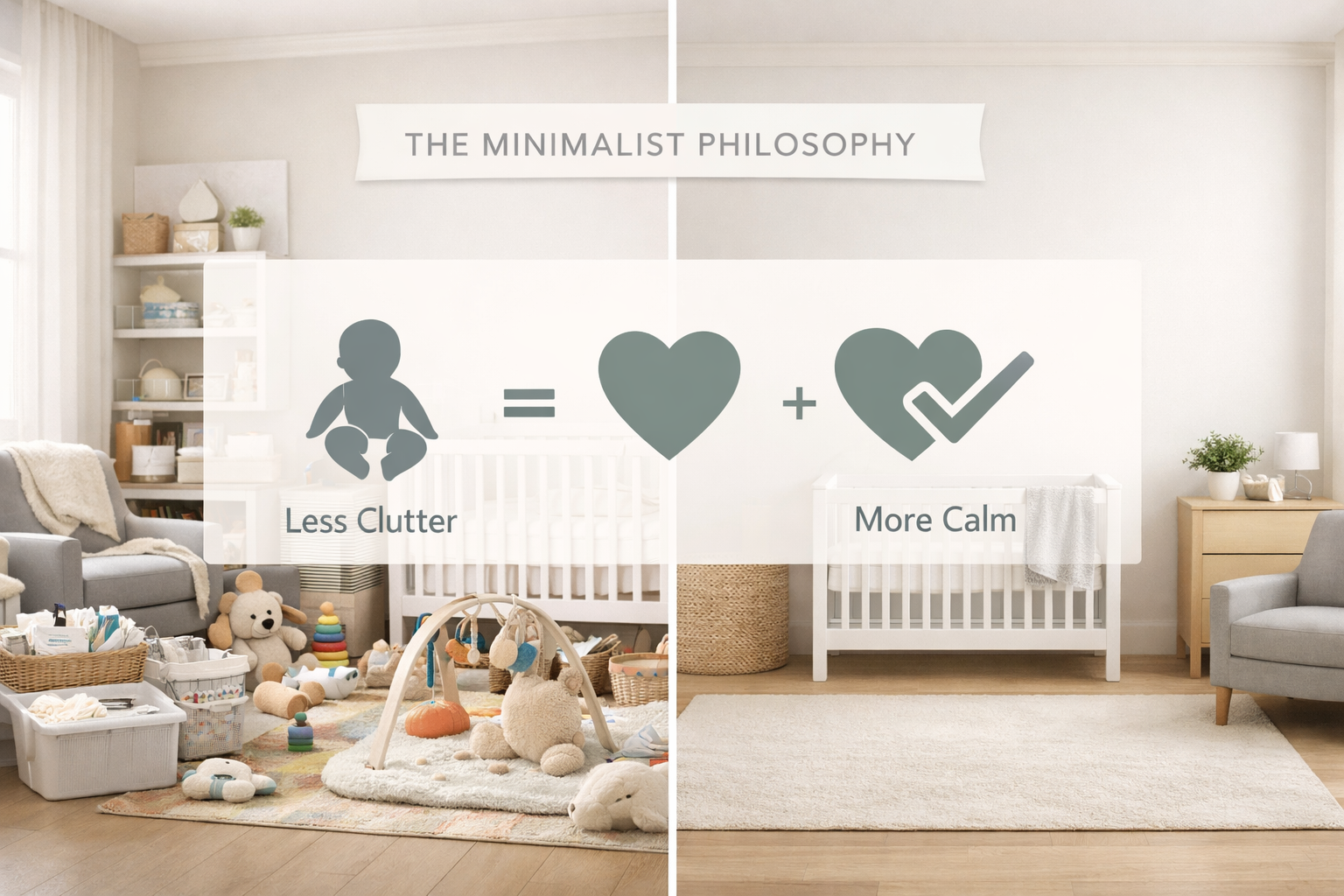
Minimalist nurseries aren’t empty—they’re intentional. The difference is profound.
An intentional space with 15 carefully chosen items, each serving a purpose, feels complete and peaceful. A cluttered space with 50 random items feels chaotic, even if it cost more.
Remember: You’re designing this space for your baby and your family, not for Instagram or judgmental relatives. The calmer environment benefits your child far more than impressive visual clutter.
“Isn’t Buying Quality Items More Expensive?”
Upfront? Sometimes. Long-term? Almost never.
A $70 handcrafted pillow that lasts 10+ years and retains resale value costs less per year than seven $15 pillows that flatten and get tossed within two years.
A $500 cloth diaper system that saves $2,000+ over disposables and can be resold or reused for subsequent children is objectively cheaper than the “inexpensive” disposable option.
Quality over quantity isn’t just a philosophy—it’s sound financial planning.
“What About Baby Shower Gifts?”
This is tricky, as you can’t control what others purchase. Strategies:
- Create a minimalist registry and share it proactively
- Request specific items from your essential list
- Suggest contributions to college funds or diaper services instead of physical items
- Graciously accept gifts and quietly return/exchange what doesn’t fit your approach
- Educate loved ones about your minimalist philosophy—many will appreciate the guidance
For those looking for meaningful baby shower gifts beyond onesies, quality diaper bags and cloth diaper bundles make excellent, practical presents.
The Environmental Impact: Beyond Personal Benefits
The Staggering Waste of Traditional Baby Gear
Consider these sobering statistics:
- 27.4 billion disposable diapers end up in U.S. landfills annually
- Each baby using disposables generates 2,000+ pounds of diaper waste
- Disposable diapers take 500+ years to decompose
- Most baby gear is used for less than a year before being discarded
- 80% of baby clothes are worn fewer than five times before being outgrown
The traditional approach to baby gear creates an environmental catastrophe—and most parents don’t realize they’re participating in it.
The Minimalist Alternative
By choosing essential baby items with longevity and sustainability in mind:
♻️ Cloth Diapers
- Eliminate 2,000+ pounds of landfill waste per child
- Can be reused for multiple children
- Retain value through resale to other families
- Made from sustainable, renewable materials
🌍 Quality Decor & Furniture
- Handcrafted pieces from sustainable materials
- Designed for longevity (10+ years vs. 1-2 years)
- Resale value extends product life
- Reduced manufacturing demand
💚 Overall Impact
- Fewer purchases = Less manufacturing pollution
- Longer-lasting items = Reduced replacement cycle
- Thoughtful consumption = Cultural shift toward sustainability
One environmentally-conscious parent noted: “I realized that every cheap plastic item I bought was a vote for that kind of production. By choosing fewer, better items—especially committing to cloth diapers—I was voting for the world I want my daughter to inherit.”
Month-by-Month: What You Actually Use
Months 0-3: The Newborn Phase
Items you’ll use constantly:
- Crib and mattress (for safe sleep)
- Cloth diapers (8-12 changes daily)
- 2-3 sleep sacks/swaddles
- Changing pad and supplies
- Glider for feeding sessions
- Burp cloths (so many burp cloths)
Items that sit unused:
- Most toys
- Elaborate mobiles
- Decorative items baby can’t see clearly yet
- Specialty gadgets
Months 4-6: Emerging Personality
Items you’ll use constantly:
- Everything from 0-3 months
- Storage baskets (organization becomes crucial)
- Sound machine for sleep training
- Baby monitor
Items gaining value:
- Decorative pillows as visual interest during tummy time
- Soft rug for floor play
Months 7-12: Mobile Baby
Items you’ll use constantly:
- All the basics continue
- Storage solutions for rotating toy minimalism
- Decorative pillows as comfort items and room definition
Items you might add:
- A few carefully chosen developmental toys
- Baby-proofing supplies (not nursery-specific)
Beyond Year One
This is where the quality vs quantity nursery approach truly shines. While parents who bought trendy, age-specific items are replacing entire room setups:
- Your quality crib transitions to a toddler bed
- Your handcrafted pillows remain beloved comfort items
- Your dresser continues serving storage needs
- Your cloth diapers sell for 40-60% of original cost or serve a second child
The minimalist foundation you built continues serving your family for years.
Building Your Intentional Nursery: Action Steps
Ready to embrace the minimalist nursery approach? Here’s your step-by-step implementation plan:
Week 1: Education & Planning
- Read this article thoroughly (check! ✅)
- Research cloth diaper options through resources like our complete guide to reusable diapers
- Calculate your potential savings using the comparison tables above
- Share your minimalist approach with your partner
Week 2: Foundation Purchases
- Invest in your crib and mattress (safety first)
- Order your cloth diaper system (the #1 ROI item)
- Select your quality glider (you’ll spend hundreds of hours here)
- Choose your 2-3 meaningful decor pieces (handcrafted pillows that become keepsakes)
Week 3: Essential Setup
- Install blackout curtains
- Set up changing station on dresser
- Organize basket system
- Prepare cloth diaper washing routine
Week 4: Final Touches
- Add monitor and sound machine
- Stock changing supplies
- Arrange your 2-3 decorative pieces
- Step back and appreciate the breathing room
Ongoing: Resist & Evaluate
- Resist impulse purchases (wait 30 days before buying anything not on your list)
- Evaluate actual needs as they arise (not anticipated problems)
- Add only what serves a genuine purpose
- Remove items that create clutter without adding value
The Bigger Picture: Minimalism as a Parenting Philosophy
Beyond the Nursery
The principles that guide a minimalist nursery extend far beyond baby gear:
🎯 Intentional Living
- Every choice serves your family’s actual values
- Resources (time, money, energy) go toward what matters
- Less decision fatigue frees mental space for presence
💝 Experience Over Things
- The $9,000 saved can fund family experiences
- Memories matter more than matching nursery sets
- Quality time isn’t cluttered by constant organization
🌱 Sustainable Values
- Teaching children that more isn’t better
- Modeling environmental consciousness
- Breaking the consumption cycle
👨👩👧 Simplified Parenting
- Less stuff means less stress
- Easier to maintain order
- More time for actual parenting
Teaching Future Generations
Perhaps the most profound benefit of minimalist parenting: you’re modeling a different relationship with consumption for your children.
In a world that constantly screams “more, more, more,” you’re demonstrating that enough is enough. That quality beats quantity. That thoughtful choices create more satisfaction than impulsive accumulation.
Your child may not remember the specific items in their nursery. But they’ll internalize the values those choices represented.
Conclusion: Less Really Is More
The journey to a minimalist nursery isn’t about deprivation—it’s about clarity. It’s about recognizing that the baby industry profits from parental anxiety, and choosing a different path.
By focusing on essential baby items that truly matter—with cloth diapers and meaningful decor at the top of that list—you create a foundation that serves your family financially, environmentally, and emotionally.
The numbers don’t lie:
- Save $8,000-9,000 over traditional approaches
- Reduce environmental impact by thousands of pounds
- Create calmer, more functional spaces
- Free mental energy for actual parenting
The philosophy endures:
- Quality over quantity becomes a life approach
- Intentional choices replace impulsive consumption
- Sustainable values shape your family culture
The peace is real:
- Less clutter, less stress
- More breathing room, more presence
- Fewer decisions, more clarity
Your Next Steps
Ready to build your intentional nursery? Start here:
- Calculate your potential savings using the comparison tables in this article
- Research cloth diaper systems that fit your lifestyle—our guide to eco-conscious cloth diapering is a great starting point
- Choose 2-3 meaningful decor pieces that will become lifetime keepsakes
- Share this article with your partner or support system to align on the minimalist approach
- Create your 15-item essential list and commit to waiting 30 days before adding anything else
The average American parent spends $12,000 in year one on items they don’t need. You’re not average. You’re intentional. You’re choosing what you really need for baby over what marketing tells you to want.
Your baby doesn’t need a nursery that looks like a magazine spread. They need a safe place to sleep, clean diapers, nourishment, and your presence. Everything else? That’s for you to decide—and you have the power to decide that less is more.
Build your intentional nursery. Choose quality over quantity. Invest in what matters.
Your future self—and your bank account—will thank you. 🌙✨
References
[1] 2026 Baby Nursery Checklist What You Actually Need Designer Approved – https://www.nurserydesignstudio.com/2025/11/25/2026-baby-nursery-checklist-what-you-actually-need-designer-approved/
[2] Baby Registry Checklist 2025 – https://www.friendofamom.com/post/baby-registry-checklist-2025
[3] Watch – https://www.youtube.com/watch?v=-FndvjV65iQ
[4] Minimalist Baby Stuff Hy16 3389880 – https://www.hydstm.com/minimalist-baby-stuff-hy16-3389880.html
[5] Baby Registry Checklist First Time Parents – https://gobabymart.com/blogs/news/baby-registry-checklist-first-time-parents
[6] Baby Gear Trends – https://www.babylist.com/hello-baby/baby-gear-trends
[7] Must Have Baby Gear 2026 – https://www.wishdeck.app/blog/must-have-baby-gear-2026
[8] Minimalist Baby Registry Checklist – https://swaddlean.com/blogs/buying-guides/minimalist-baby-registry-checklist