Save $1,500-2,000 with cloth diapers and create a Pinterest-perfect nursery. Complete budget breakdown, styling tips, and affordable design ideas for 2026.
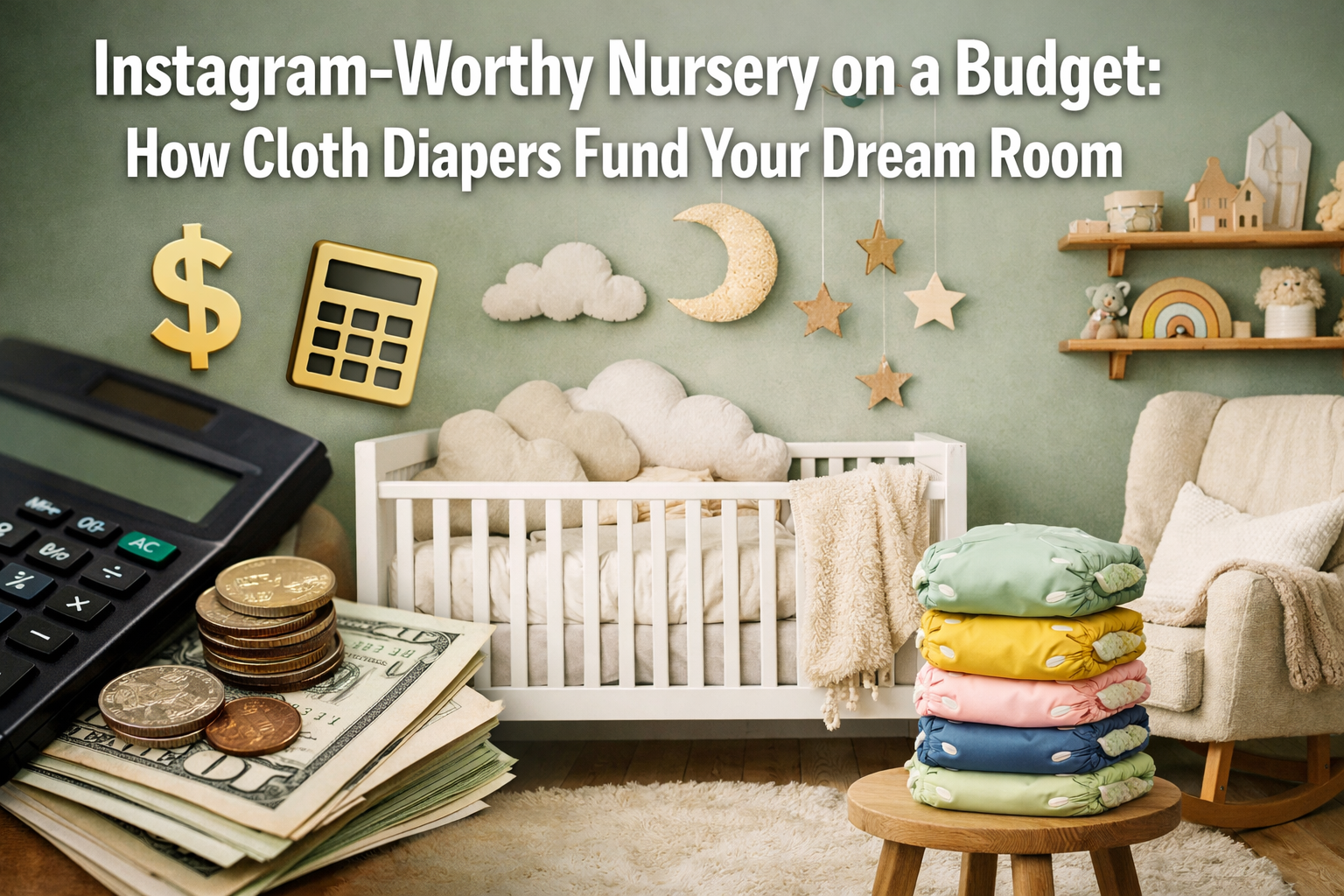
Picture this: You’re scrolling through Pinterest at 2 AM (because, let’s be honest, that’s when pregnancy insomnia hits hardest), and you see that nursery. You know the one—perfectly curated shelves, a cloud-shaped pillow that looks like it floated down from heaven, soft neutral tones that make your heart skip a beat. Then you check the price tags and nearly drop your phone. 💸
But what if there was a way to fund that dream nursery without maxing out credit cards or sacrificing your firstborn’s college fund? Here’s the secret that savvy parents discovered in 2026: the money saved from choosing cloth diapers over disposables—roughly $1,500 to $2,000 over two years—can completely transform your nursery from basic to breathtaking. This article reveals how budget nursery ideas, Instagram nursery aesthetics, cloth diaper savings, affordable nursery design, and Pinterest nursery on budget concepts all work together to create a space that’s both financially smart and absolutely stunning.
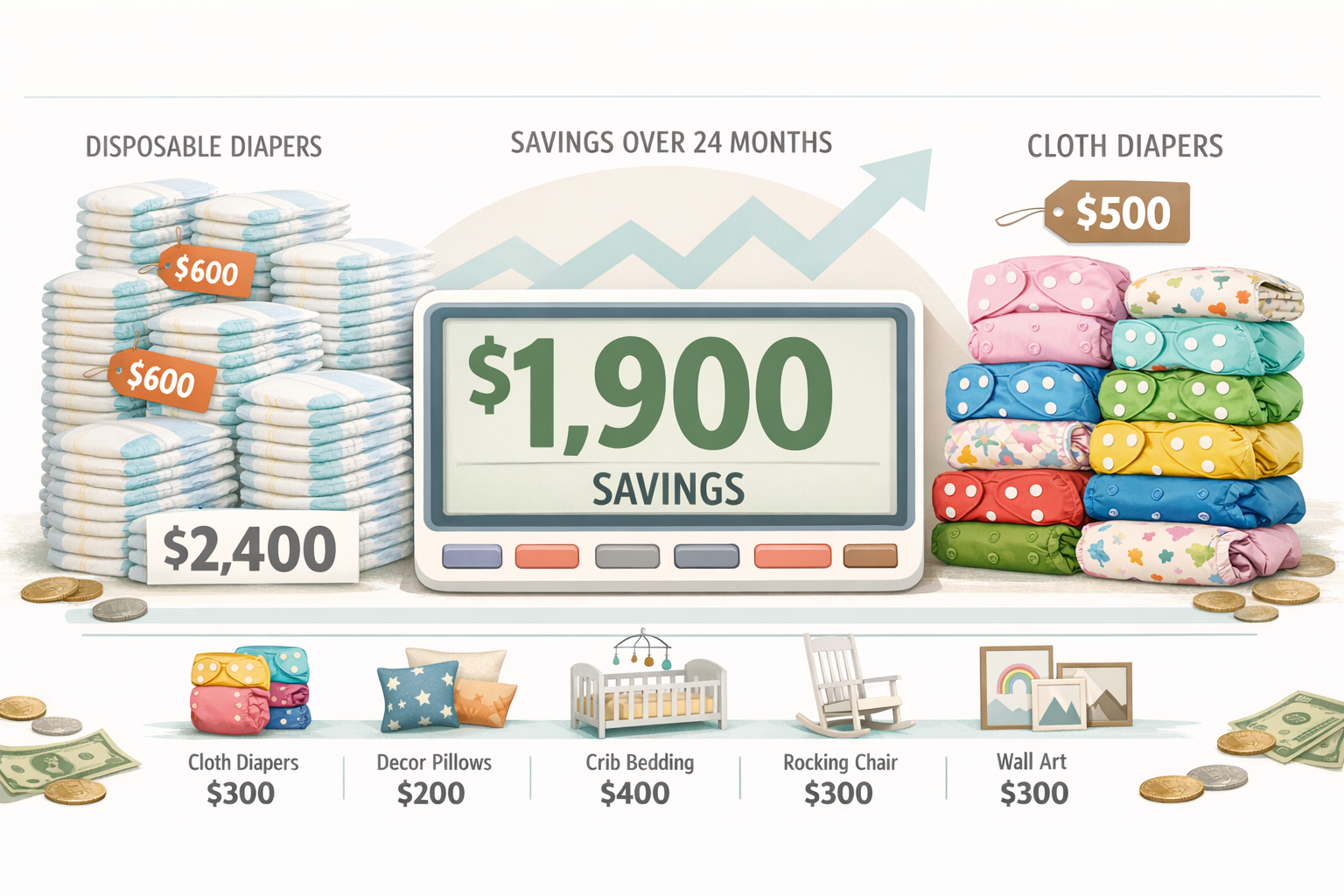
The math is simple, but the impact is profound. While other parents spend nearly $2,400 on disposable diapers that end up in landfills, cloth diaper families invest just $300-500 upfront and redirect those savings into creating a nursery that doesn’t just function—it inspires. A room that makes you actually want to spend 3 AM there during those inevitable feeding sessions. A space so beautiful that you’ll photograph it obsessively and maybe, just maybe, finally understand what “nesting” really means.
Key Takeaways
- 💰 Cloth diapering saves $1,500-2,000 over two years compared to disposables—enough to fund an entire Pinterest-worthy nursery transformation
- 🎨 Strategic design choices matter more than budget size—cohesive color palettes, layered textures, and statement pieces create Instagram-worthy spaces without breaking the bank
- 🛋️ The $1,500 dream nursery is achievable—allocate savings across cloth diapers ($300), decorative pillows ($200), organic bedding ($400), seating ($300), and wall decor ($300)
- 📸 Styling techniques elevate any space—proper lighting, intentional composition, and curated vignettes make budget-friendly rooms photograph like designer showrooms
- ♻️ Sustainability and style align perfectly in 2026—eco-conscious choices like cloth diapers and organic materials are now the height of nursery design trends
The Real Math Behind Cloth Diaper Savings: Your Nursery Fund Starts Here
Let’s talk numbers, because understanding exactly where your nursery budget comes from makes every purchasing decision feel that much sweeter. When parents commit to navigating the world of cloth diapers, they’re not just making an environmental choice—they’re making a financial investment that pays dividends in unexpected ways.
Breaking Down Disposable Diaper Costs
The average baby goes through approximately 6,000 to 8,000 diaper changes before potty training. Yes, you read that correctly. Six thousand opportunities for money to literally go down the drain (or into the trash, more accurately).
Here’s what disposable diapering actually costs in 2026:
Year One (Birth to 12 months):
- Newborn stage (0-3 months): 10-12 diapers/day × 90 days = 900-1,080 diapers
- Infant stage (3-12 months): 8-10 diapers/day × 270 days = 2,160-2,700 diapers
- Total Year One: Approximately 3,060-3,780 diapers
- Cost at $0.25-0.35 per diaper: $765-$1,323
Year Two (12-24 months):
- Toddler stage: 6-8 diapers/day × 365 days = 2,190-2,920 diapers
- Cost at $0.30-0.40 per diaper: $657-$1,168
Two-Year Total: $1,422-$2,491
And that’s being conservative. Premium brands, overnight diapers, and swim diapers push these numbers even higher. Many families report spending closer to $100-120 per month on disposables, bringing the two-year total to nearly $2,880.
The Cloth Diaper Investment That Changes Everything
Now let’s look at the cloth diaper side of the equation. A complete cloth diaper stash typically requires:
Initial Investment:
- 24-30 cloth diapers: $200-350 (depending on brand and style)
- 4-6 wet bags: $40-60
- Diaper sprayer (optional): $30-50
- Cloth-safe detergent (annual): $50-80
- Total First Year: $320-540
Year Two Costs:
- Additional diapers for sizing up: $50-100
- Detergent: $50-80
- Total Second Year: $100-180
Two-Year Total: $420-720
The Magic Number: Your Nursery Budget Appears
When you subtract the cloth diaper investment from disposable costs, here’s what emerges:
Conservative Savings: $1,422 – $720 = $702
Moderate Savings: $1,950 – $500 = $1,450
Maximum Savings: $2,491 – $420 = $2,071
Most families land somewhere in the middle range, with $1,500-2,000 in genuine savings over the diapering years. This isn’t theoretical money or “opportunity cost”—it’s actual cash that stays in your bank account instead of going to diaper corporations.
The Mindset Shift: From Expense to Investment
Here’s where the psychology gets interesting. When parents view their nursery budget as “extra” or “luxury” spending, guilt creeps in. But when that same money is reframed as savings already earned through smart diapering choices, the entire dynamic changes.
“We were going to spend the money on diapers anyway. Choosing cloth didn’t feel like deprivation—it felt like unlocking a secret level where we got both functional diapers AND the nursery of our dreams.” — Sarah M., mom of two
This reframing is powerful. You’re not “splurging” on that gorgeous rocking chair or those cloud-shaped pillows. You’re redirecting money you’ve already saved through conscious choices. The nursery becomes a tangible reward for sustainable parenting, not an indulgence to feel guilty about.
What If You Used That Money to Create a Space You Actually Love?
This is the question that transforms everything. Instead of a basic, functional room that “gets the job done,” what if your nursery became:
- A sanctuary where midnight feedings feel peaceful instead of exhausting
- An Instagram-worthy space that makes you proud to share photos with family and friends
- A design statement that reflects your style and values
- A long-term investment in pieces that grow with your child and potentially serve future siblings
The beauty of cloth diaper savings funding your nursery is that it creates a virtuous cycle. Every time you change a cloth diaper, you’re reminded of the beautiful space it helped create. The nursery becomes a daily celebration of your smart financial and environmental choices.
Design Principles for Instagram-Worthy Rooms on a Budget
Creating a nursery that stops thumbs mid-scroll on Instagram or Pinterest isn’t about unlimited budgets—it’s about understanding fundamental design principles that professionals use. In 2026, the most stunning nurseries share specific characteristics that have nothing to do with price tags and everything to do with intentional choices.
The Power of Cohesive Color Palettes
The fastest way to elevate any space from “fine” to “phenomenal” is through a carefully curated color palette. Instagram-worthy nurseries typically stick to 3-4 colors maximum, with one dominant neutral and 2-3 accent colors that appear throughout the room.
Trending 2026 Nursery Color Combinations:
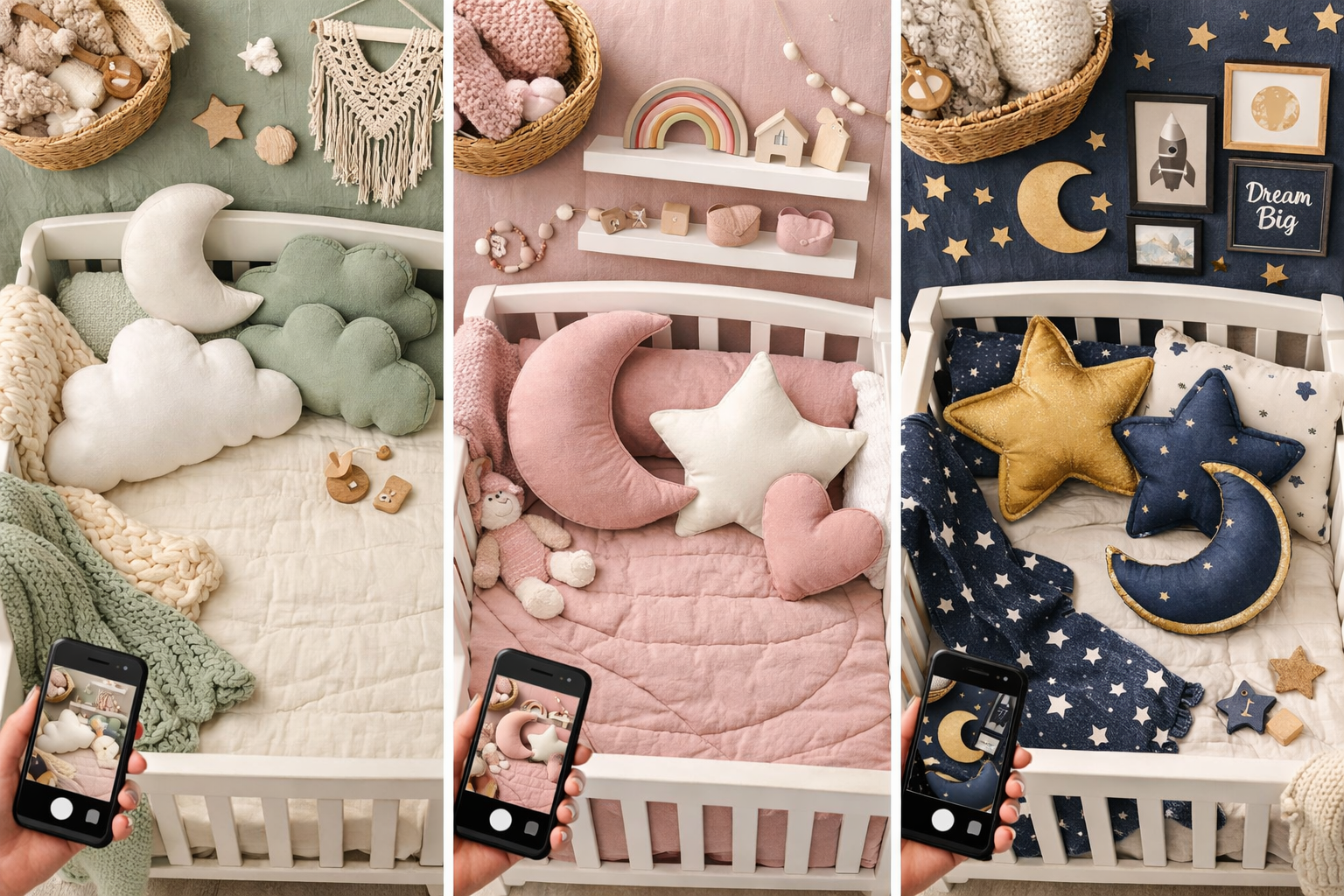
🎨 Sage & Cream: Soft sage green walls with cream bedding, natural wood accents, and touches of terracotta in textiles. This palette feels organic, calming, and photographs beautifully in natural light.
🎨 Dusty Rose & Charcoal: A sophisticated take on pink that works for any gender, paired with deep charcoal gray and warm brass hardware. Add white as a third neutral to prevent the space from feeling too dark.
🎨 Navy & Camel: Rich navy as an accent wall with camel-colored leather or faux-leather seating, white crib, and natural fiber rugs. This combination feels both classic and contemporary.
🎨 Warm Neutrals: Layers of cream, beige, tan, and soft white with natural wood tones. This “quiet luxury” approach is dominating 2026 nursery trends and never goes out of style.[2]
The secret to making budget nursery ideas look expensive lies in color consistency. When your wall color, bedding, decorative pillows, artwork, and storage baskets all speak the same color language, even affordable pieces look intentionally curated rather than randomly collected.
Layered Textures: The Designer’s Secret Weapon
Here’s what separates professional designers from amateur decorators: texture layering. A monochromatic room can look incredibly dynamic when you incorporate varied textures, and this technique costs nothing but awareness.
Texture Combinations That Photograph Beautifully:
- Smooth + Nubby: Sleek wood furniture paired with chunky knit blankets
- Soft + Structured: Plush velvet pillows against crisp linen bedding
- Natural + Refined: Woven seagrass baskets next to painted wood shelving
- Matte + Sheen: Flat-finish walls with satin-finish textiles or metallic accents
The key is creating visual interest through touch-ability. When someone looks at your nursery photos, they should almost be able to feel the different surfaces. This is where ProstoConcept’s decorative pillows become game-changers for affordable nursery design.
Statement Pieces vs. Clutter: The Curation Principle
One of the biggest mistakes in budget nursery design is trying to fill every surface and wall. The 2026 trend toward “lived-in” aesthetics doesn’t mean cluttered—it means carefully curated with breathing room.[2]
The Statement Piece Strategy:
Instead of ten small decorative items, invest in 2-3 statement pieces that anchor the room:
- A sculptural mobile or dramatic light fixture that draws the eye upward
- Oversized decorative pillows in unique shapes (clouds, moons, stars) that serve as both decor and photography props
- One large-scale art piece or gallery wall rather than scattered small frames
This approach works perfectly with cloth diaper savings because you’re making fewer, more impactful purchases rather than accumulating lots of small items that fragment the visual space.
ProstoConcept’s 25+ Color Options: Custom Coordination Made Easy
This is where affordable nursery design gets genuinely exciting. ProstoConcept offers over 25 color options in their decorative pillow collection, which means you can perfectly match your chosen color palette without the custom price tag.
Strategic Pillow Selection for Maximum Impact:
- Anchor with neutrals: Start with cream, white, or gray pillows as your base
- Add personality with shapes: Cloud, moon, and star shapes create that Pinterest-worthy whimsy
- Coordinate with accents: Choose pillow colors that pull from your wall art, rug, or curtains
- Create vignettes: Group pillows in odd numbers (3 or 5) for visual appeal in photos
The beauty of investing $200 of your cloth diaper savings in a coordinated pillow set is that these pieces:
✓ Transform instantly: Change the entire room’s vibe without repainting
✓ Photograph beautifully: Provide textural interest and color pops in Instagram posts
✓ Serve multiple purposes: Floor cushions for tummy time, reading nook comfort, nursing support
✓ Grow with your child: Transition from nursery to toddler room to big kid space
Three Styled Room Examples Using Strategic Pillow Placement
Example 1: The Serene Sage Sanctuary
Color Palette: Sage green, cream, natural wood, touches of rust
Pillow Strategy: Large cream cloud pillow as the hero piece on a neutral glider, sage moon pillow on the floor creating a reading nook corner, rust-colored star pillow as an accent on a wooden bench.
Why It Works: The neutral cloud pillow keeps the space feeling calm and spacious, while the colored accent pillows tie together the room’s palette without overwhelming it. In photos, the cloud pillow becomes an iconic backdrop for baby milestones.
Example 2: The Modern Monochrome
Color Palette: Charcoal, white, cream, brass accents
Pillow Strategy: Oversized white cloud and moon pillows create a dreamy corner installation, one charcoal star pillow on a white rocking chair for contrast.
Why It Works: The monochromatic approach feels sophisticated and timeless. The shape variety (cloud, moon, star) provides visual interest that color would normally provide. This setup photographs exceptionally well in both color and black-and-white.
Example 3: The Warm Bohemian
Color Palette: Terracotta, mustard, cream, natural textures
Pillow Strategy: Mustard moon pillow paired with cream star pillow on a low floor cushion setup, terracotta cloud pillow as a statement piece against white crib bedding.
Why It Works: The warm earth tones create an inviting, cozy atmosphere that feels collected rather than designed. The pillows provide pops of color against neutral foundations, and the floor arrangement creates that coveted “lived-in” aesthetic that’s trending in 2026.[2]
The Psychology of Beautiful Spaces
There’s a reason Instagram nursery design matters beyond aesthetics. Research consistently shows that our physical environments affect our mental states, and for new parents navigating sleep deprivation and hormonal shifts, a calming, beautiful space provides genuine psychological benefits.
When you walk into a nursery that feels cohesive, intentional, and beautiful, your nervous system responds. The visual harmony translates to mental calm. This isn’t frivolous—it’s functional design that supports parental wellbeing during one of life’s most challenging transitions.
And here’s the beautiful irony: Creating this supportive, gorgeous space doesn’t require a designer budget. It requires understanding these fundamental principles and applying your cloth diaper savings strategically.
The $1,500 Dream Nursery Budget Breakdown
Now for the fun part—actually allocating your cloth diaper savings to create a complete, Instagram-worthy nursery. This budget breakdown assumes you’ve saved approximately $1,500 over your diapering journey, though you can easily adjust based on your specific savings.
The Complete Budget: Every Dollar Allocated
| Category | Budget | What You Get | Why It Matters |
|---|---|---|---|
| Cloth Diaper Stash | $300 | 24-28 quality cloth diapers, 4-5 wet bags, accessories | Foundation of your savings strategy; essential investment |
| ProstoConcept Pillow Set | $200 | Cloud + Moon + Star pillows in coordinated colors | Statement pieces that define room aesthetic |
| Organic Crib Bedding | $400 | Crib mattress, waterproof cover, 2-3 fitted sheets, breathable blankets | Safety-critical investment in quality sleep surfaces |
| Rocking Chair/Glider | $300 | Comfortable seating for feeding and bonding | Most-used furniture piece in early months |
| Wall Art & Shelving | $300 | Gallery wall frames, floating shelves, decorative storage | Visual interest and functional organization |
| TOTAL | $1,500 | Complete, cohesive, Pinterest-worthy nursery | Funded entirely by diaper savings |
Category 1: The Cloth Diaper Foundation ($300)
This is where your savings journey begins. Investing $300 in a quality cloth diaper stash might feel significant upfront, but remember—this purchase is what unlocks the entire $1,500 budget for everything else.
Smart Allocation:
- $200-250: Core diaper collection (24-28 diapers in your preferred style)
- $40-60: Wet bags for storage and travel
- $10-30: Cloth wipes and accessories
Pro Tips for Maximizing This Investment:
✓ Buy in sets: Many brands offer starter packages at discounted rates
✓ Choose adjustable sizing: One-size diapers grow with baby, eliminating need for multiple sizes
✓ Invest in quality: Diapers from reputable brands last through multiple children, extending savings even further
✓ Consider secondhand: Gently used cloth diapers work perfectly and reduce initial investment
For detailed guidance on building your stash, check out the ultimate guide to reusable diapers which compares brands and helps you choose the best fit for your family.
Category 2: ProstoConcept Pillow Set ($200)
This is where your nursery starts to transform from functional to phenomenal. Allocating $200 to a coordinated set of decorative pillows might seem indulgent, but these pieces deliver outsized impact for the investment.
The Strategic Three-Pillow Set:
🌙 Moon Pillow ($65-75): Serves as floor cushion for tummy time, reading nook anchor, or glider accent. The crescent shape photographs beautifully and provides ergonomic support during floor play.
☁️ Cloud Pillow ($65-75): The hero piece that appears in every milestone photo. Large enough to create visual impact, soft enough for baby to interact with safely, iconic enough to become your nursery’s signature element.
⭐ Star Pillow ($55-65): The accent piece that ties everything together. Smaller scale makes it versatile for various placements—crib corner, shelf styling, or floor arrangement.
Color Coordination Strategy:
With 25+ color options, you can create perfect harmony:
- Monochrome approach: All three pillows in varying shades of the same color (light gray, medium gray, charcoal)
- Neutral + accent: Two neutral pillows (cream, white) plus one in your accent color (sage, dusty rose, navy)
- Tonal variation: Three colors from the same family (pale pink, dusty rose, terracotta)
The key is ensuring these pillows pull colors from other room elements—your rug, curtains, wall art, or bedding. This creates the cohesive look that defines Instagram-worthy spaces.
Category 3: Organic Crib Bedding ($400)
This is your largest single investment, and for good reason. Babies spend 14-17 hours per day sleeping in their first months, making the crib the most important piece of nursery real estate.
Budget Breakdown:
- $150-200: Organic crib mattress (firm, breathable, non-toxic)
- $40-60: Waterproof mattress protector
- $60-90: 2-3 organic cotton fitted sheets
- $80-120: Breathable cotton blankets and sleep sacks
- $30-50: Crib skirt or storage (optional)
Why Organic Matters:
Sustainable material choices are both a 2026 design trend and a health imperative.[3] Organic cotton bedding:
✓ Contains no harmful chemicals that off-gas near baby’s breathing zone
✓ Regulates temperature better than synthetic materials
✓ Lasts significantly longer than conventional bedding, improving value
✓ Photographs beautifully with natural texture and quality drape
Smart Shopping Strategies:
- Look for GOTS certification: Guarantees organic status and ethical production
- Choose neutral colors: White, cream, or light gray sheets work with any design evolution
- Buy multiples of what works: Once you find sheets that fit well, stock up
- Skip the bumpers: Not recommended for safety, and eliminating them saves $50-80
Category 4: Rocking Chair or Glider ($300)
This piece will log more hours than any other nursery furniture. Between feeding sessions, soothing fussy moments, and those precious quiet cuddles, you’ll spend hundreds of hours in this chair during the first year alone.
What $300 Gets You:
At this price point, you’re looking at:
- Mid-range gliders with smooth motion and comfortable padding
- Upholstered rocking chairs in durable, cleanable fabrics
- Secondhand designer pieces that originally retailed for $600-800
- Simple modern rockers with clean lines and neutral upholstery
Features Worth Prioritizing:
✓ Armrest height: Should support your arms during feeding without hunching shoulders
✓ Seat depth: Deep enough to sit back comfortably, not so deep you can’t reach the floor
✓ Fabric durability: Tightly woven, stain-resistant, or easily cleanable (babies are messy)
✓ Motion smoothness: Test the glide or rock—jerky motion gets annoying quickly
The Upcycle Option:
If you’re handy, $300 can fund an incredible transformation:
- $50-100: Vintage rocking chair from Facebook Marketplace or estate sales
- $80-120: Reupholstery supplies (foam, batting, fabric)
- $50-80: VOC-free paint for wood frame
- $20-40: New hardware or decorative details
This approach aligns perfectly with 2026’s “collected” aesthetic trend while staying well under budget.[2]
Category 5: Wall Art & Shelving ($300)
The final budget category transforms your walls from blank canvases to curated galleries. This is where your personal style really shines through.
Strategic Allocation:
$150 – Floating Shelves:
- 2-3 floating shelves in varying lengths
- Creates vertical storage and display opportunities
- Allows you to rotate decor as baby grows
$100 – Gallery Wall Frames:
- 5-7 frames in coordinating finishes (black, white, natural wood, or brass)
- Mix of sizes for visual interest (8×10, 5×7, 4×6)
- Can display family photos, prints, or baby’s artwork as they grow
$50 – Artwork & Prints:
- Digital downloads from Etsy (often $5-15 each)
- Allows you to print exactly what fits your color palette
- Easy to swap out as design preferences evolve
$50 – Decorative Storage:
- Woven baskets for shelves
- Fabric bins that coordinate with room colors
- Hooks for hanging items
DIY Wall Art Ideas That Look Expensive:
🎨 Framed fabric swatches: Buy small amounts of designer fabric and frame them—instant high-end art for $30-40 total
🎨 Pressed botanicals: Collect leaves or flowers, press them, and frame against white backgrounds for organic, minimalist art
🎨 Typography prints: Create custom quotes or baby’s name in Canva, print at home or local print shop
🎨 Paint chip art: Arrange paint chips in ombre patterns and frame—free materials, stunning results
The beauty of allocating $300 to walls is that this category offers maximum flexibility. You can start with less expensive options and upgrade over time, or go all-in on a few statement pieces.
Budget Flexibility: Adjusting for Your Savings
Not everyone saves exactly $1,500 from cloth diapering. Here’s how to adjust:
If You Saved $1,000:
- Reduce pillow investment to 2 pieces instead of 3 ($130)
- Choose a $200 seating option (simple rocker vs. glider)
- DIY more wall art instead of purchasing
- Prioritize crib bedding quality—don’t compromise on sleep safety
If You Saved $2,000:
- Upgrade to premium organic mattress ($250-300)
- Add a second seating piece (ottoman or floor pouf)
- Invest in custom window treatments ($150-200)
- Purchase additional ProstoConcept pillows for floor play area
The framework remains the same regardless of total budget: allocate strategically across categories that create both function and beauty.
Styling Tips: How to Photograph Your Nursery for Instagram
You’ve invested your cloth diaper savings wisely. You’ve created a Pinterest-worthy space that makes your heart happy. Now it’s time to capture it in photos that do justice to your design vision. The good news? Professional-looking nursery photography requires no special equipment—just understanding a few key principles.
Lighting: The Make-or-Break Factor
Nothing impacts photo quality more dramatically than lighting. The same nursery can look either dingy and cramped or bright and spacious depending entirely on how it’s lit.
The Golden Rules of Nursery Lighting:
🌅 Shoot during golden hour: The hour after sunrise or before sunset provides the most flattering, warm natural light. If your nursery has windows, this is your secret weapon.
💡 Turn off overhead lights: Harsh ceiling lights create unflattering shadows and yellow color casts. Rely on natural light supplemented with soft lamps if needed.
🪟 Face the light source: Position yourself so windows are in front of or beside you, not behind you. Backlighting creates silhouettes and dark spaces.
📱 Use indirect light: If direct sunlight is too harsh, shoot on slightly overcast days or when light bounces off nearby buildings rather than streaming directly in.
Artificial Lighting Hacks:
If your nursery lacks natural light, don’t despair:
- Ring lights ($25-40): Create even, flattering illumination for detail shots
- LED panel lights ($30-50): Mimic natural daylight and are adjustable
- Multiple lamps: Place 2-3 soft lamps around the room to eliminate harsh shadows
- White poster boards: Use as reflectors to bounce light into dark corners
Composition Techniques That Elevate Amateur Photos
Professional photographers follow specific compositional rules that make images more visually appealing. You can apply these same techniques with just a smartphone.
The Rule of Thirds:
Imagine your camera frame divided into a 3×3 grid (most phone cameras can display this grid in settings). Place important elements along these lines or at their intersections rather than dead center.
Application: When photographing your rocking chair with ProstoConcept pillows, position the chair slightly off-center with the cloud pillow at a grid intersection. This creates more dynamic, interesting composition than centering everything.
Leading Lines:
Use architectural elements or furniture arrangements to create lines that draw the viewer’s eye through the image.
Application: Position yourself so the crib rail, shelf edge, or rug border creates a diagonal line leading toward your focal point (like that gorgeous moon pillow).
Depth and Layers:
Create visual depth by including foreground, middle ground, and background elements.
Application: Shoot through a doorway (foreground), capturing the rocking chair (middle ground) with the crib visible behind it (background). This creates dimension that makes photos feel immersive.
Negative Space:
Don’t fill every inch of frame. Empty space around your subject makes it stand out and gives the image breathing room.
Application: When photographing your gallery wall, include some blank wall space around it. This prevents the image from feeling cluttered and draws attention to the art itself.
Styling Vignettes: The Instagram Secret
Here’s what Instagram-famous nurseries understand: you don’t photograph the entire room at once. Instead, you create and capture small, perfectly styled vignettes.
Vignette 1: The Cozy Corner
Elements: Rocking chair + cloud pillow + draped knit blanket + small side table with book and plant
Styling trick: Drape the blanket casually rather than folding it perfectly. This “lived-in” look is more appealing than overly styled perfection.[2]
Photo angle: Shoot from slightly above and to the side, capturing the chair’s profile with the crib visible in soft focus behind it.
Vignette 2: The Shelf Story
Elements: Floating shelf with 3-5 carefully curated items (moon pillow, small plant, 2-3 books, wooden toy)
Styling trick: Vary heights and create triangular arrangements. Place tallest item on one end, shortest on opposite end, with medium items in between.
Photo angle: Straight-on at shelf height for clean, catalog-style shot, or slightly below looking up for more dynamic perspective.
Vignette 3: The Floor Play Area
Elements: Neutral rug + star and cloud pillows arranged casually + wooden toys + natural light streaming across
Styling trick: Create an odd-numbered grouping (3 or 5 items) and leave some rug visible. Don’t cover every inch.
Photo angle: Overhead shot (stand on a step stool) for flat-lay aesthetic, or low angle from floor level for intimate perspective.
Detail Shots That Tell the Story
Instagram feeds that feel cohesive include both wide room shots and intimate details. These close-ups showcase the quality and thoughtfulness of your choices.
Details Worth Capturing:
📸 Texture close-ups: The weave of your organic cotton sheets, the knit pattern of a blanket, the grain of wooden shelves
📸 Color coordination: Arrange items from your room in a flat-lay showing how colors work together (cloth diaper + matching pillow + paint swatch + fabric swatch)
📸 Functional beauty: Your cloth diapers neatly folded in a woven basket, demonstrating that sustainable choices can be aesthetically pleasing
📸 Hardware and finishes: Brass drawer pulls, wooden crib details, shelf brackets—these small elements add up to overall aesthetic
Editing for Consistency: The Instagram Feed Strategy
Individual beautiful photos are great, but a cohesive Instagram feed requires consistent editing across all images.
Free Editing Apps That Deliver Professional Results:
- Snapseed: Offers precise control over brightness, contrast, saturation, and warmth
- VSCO: Provides filters that create cohesive looks across multiple photos
- Lightroom Mobile: Free version includes powerful editing tools and preset creation
Creating Your Signature Edit:
- Choose 2-3 photos you love from your nursery
- Adjust one photo until it perfectly represents your desired aesthetic (brightness, warmth, saturation)
- Note the exact adjustments you made (e.g., +20 brightness, +10 warmth, -5 saturation)
- Apply identical adjustments to all nursery photos
- Save as a preset so future photos match automatically
Common Editing Mistakes to Avoid:
❌ Over-saturation: Makes colors look unnatural and garish
❌ Too much contrast: Creates harsh shadows and blown-out highlights
❌ Heavy filters: Dated look that screams “edited” rather than naturally beautiful
❌ Inconsistent white balance: Some photos warm-toned, others cool creates disjointed feed
The Authenticity Factor: Real Life vs. Instagram
Here’s the truth that needs saying: Instagram-worthy doesn’t mean perfect. In 2026, the most engaging nursery content shows real life—the beautiful space you created, yes, but also the reality of living in it.
Content That Resonates:
✓ Before and after transformations showing how cloth diaper savings funded specific changes
✓ Honest captions about budget constraints and creative solutions
✓ “Messy moments” that show your gorgeous nursery actually being used and loved
✓ Behind-the-scenes of styling vignettes or arranging elements
The goal isn’t to create an untouchable showroom. It’s to document a beautiful, functional space that you created thoughtfully and can genuinely enjoy. When other parents see your nursery photos, they should feel inspired, not inadequate.
Hashtag Strategy for Maximum Reach
If you’re sharing your budget nursery transformation to inspire other parents, strategic hashtags help your content find the right audience.
Effective Hashtag Categories:
Broad reach (100K+ posts):
#nurseryinspo #nurserydecor #babynursery #nurserydesign
Targeted audience (10K-100K posts):
#budgetnursery #clothdiapersavings #affordablenursery #pinterestnursery #instagramnursery
Niche community (under 10K posts):
#clothdiaperfamily #sustainablenursery #budgetfriendlynursery #nurseryon budget #ecofriendlynursery
Pro tip: Use 15-20 hashtags mixing all three categories. This balances discoverability with targeted reach.
Making It Last: Designing for Growth and Change
One often-overlooked aspect of budget nursery design is longevity. The most financially savvy approach creates a space that evolves with your child rather than requiring complete overhauls every few years.
The Transition-Friendly Foundation
When allocating your cloth diaper savings, prioritize pieces that work across multiple life stages:
Furniture That Grows:
- Convertible cribs that become toddler beds, then full beds
- Dressers that serve as changing tables initially, then standard storage for years
- Rocking chairs that transition to reading nook seating
Adaptable Decor:
- Neutral wall colors that work from newborn through elementary years
- Classic artwork rather than overtly baby-themed pieces
- Storage solutions that accommodate changing needs (diapers → toys → books → art supplies)
The ProstoConcept pillows exemplify this principle perfectly. A cloud pillow that serves as nursery decor becomes:
- Toddler years: Floor cushion for reading time
- Preschool: Imaginative play prop
- Elementary: Cozy bedroom accent
- Beyond: Nostalgic keepsake or hand-me-down to future siblings
The Refresh Strategy: Small Changes, Big Impact
Instead of complete redesigns, plan for minor refreshes that keep the space feeling current as your child grows:
Age 0-1 (Newborn/Infant):
- Focus: Safety, functionality, soothing atmosphere
- Key elements: Blackout curtains, white noise machine, comfortable feeding chair
- Decor: Soft colors, minimal stimulation
Age 1-3 (Toddler):
- Focus: Exploration, independence, play
- Key elements: Low shelving for toy access, floor cushions, childproofing
- Decor: Add one accent color, introduce playful elements while maintaining base palette
Age 3-5 (Preschool):
- Focus: Creativity, learning, personality expression
- Key elements: Art display area, small table for activities, book storage
- Decor: Incorporate child’s artwork, add personality through removable elements
Age 5+ (School Age):
- Focus: Homework, hobbies, developing independence
- Key elements: Desk area, organized storage, display space for collections
- Decor: Child has input on color changes, poster additions, room arrangement
The beauty of this approach is that your foundational investment (quality crib/bed, dresser, seating) remains constant. Only smaller, less expensive elements shift—exactly the kind of budget-friendly strategy that cloth diaper savings enable.
Sustainable Choices That Save Money Long-Term
The 2026 trend toward sustainable nursery design isn’t just environmentally conscious—it’s financially smart.[3] Sustainable materials typically offer:
✓ Superior durability: Solid wood lasts decades vs. particle board’s few years
✓ Better resale value: Quality pieces recoup significant investment when sold
✓ Health benefits: Non-toxic materials mean no need to replace items due to off-gassing concerns
✓ Timeless aesthetics: Classic sustainable design doesn’t look dated quickly
Sustainable Material Checklist:
🌳 FSC-certified wood: Ensures furniture comes from responsibly managed forests
🧵 Organic cotton: For bedding, curtains, and textiles
🎨 VOC-free paint: Eliminates harmful chemical emissions
🪵 Natural fibers: Wool, jute, sisal for rugs and baskets
🌿 Non-toxic finishes: Water-based stains and sealants
When you choose sustainable materials funded by cloth diaper savings, you’re creating a full-circle eco-conscious nursery. The same values that drove your diapering choice inform every design decision.
Common Budget Nursery Mistakes (And How to Avoid Them)
Even with $1,500 in cloth diaper savings, it’s possible to make purchasing decisions that undermine your Instagram-worthy goals. Here are the pitfalls to avoid:
Mistake #1: Buying Everything New
The problem: Retail prices on nursery furniture are inflated, and babies outgrow items quickly.
The solution: Embrace strategic secondhand shopping. Allocate 40-50% of your budget to new safety-critical items (crib mattress, car seat) and find gently used versions of everything else.
Where to shop:
- Facebook Marketplace for local furniture pickup
- Once Upon a Child for barely-used baby items
- Estate sales for vintage pieces with character
- Buy Nothing groups for free community items
What to buy new:
- Crib mattress (safety concern)
- Car seat (safety concern)
- Cloth diapers (though secondhand works if properly sanitized)
What to buy used:
- Cribs (if they meet current safety standards)
- Dressers and changing tables
- Rocking chairs and gliders
- Decorative items and artwork
Mistake #2: Trendy Over Timeless
The problem: That ultra-specific theme (safari, nautical, woodland creatures) feels dated within a year and limits your design flexibility.
The solution: Build your foundation with timeless neutrals and add personality through easily changeable elements.
Timeless choices:
- White, cream, gray, or soft sage walls
- Natural wood furniture
- Classic patterns (stripes, simple geometrics)
- Neutral large pieces (crib, dresser, seating)
Personality through accessories:
- Pillows in current favorite colors
- Artwork that can be swapped
- Textiles (blankets, curtains) in trendy patterns
- Small decorative objects
This approach means your $1,500 investment has staying power. When design preferences shift, you’re replacing $50 worth of accessories, not $500 worth of furniture.
Mistake #3: Ignoring Functionality for Aesthetics
The problem: A nursery that photographs beautifully but doesn’t function well for actual baby care becomes frustrating quickly.
The solution: Function first, then beautify. Ensure every design choice serves a practical purpose.
Functional must-haves:
- Adequate lighting for nighttime diaper changes (dimmable lamp near changing area)
- Storage within arm’s reach of changing station
- Comfortable seating positioned near outlets for phone charging during feeds
- Blackout capability for windows to support sleep
- Clear floor space for tummy time and play
The test: Before finalizing any purchase, ask “How will this make daily baby care easier?” If the answer is “it won’t,” reconsider.
Mistake #4: Forgetting About Storage
The problem: Babies come with shocking amounts of stuff. Without adequate storage, even the most beautifully designed nursery descends into chaos.
The solution: Allocate 15-20% of your budget specifically to storage solutions that double as decor.
Storage that looks good:
- Woven baskets in varying sizes
- Fabric bins that coordinate with room colors
- Floating shelves with decorative bookends
- Vintage trunks or wooden crates
- Over-door organizers in neutral colors
What needs storage:
- Cloth diapers and changing supplies
- Clothing (current size + next size up)
- Toys and books
- Extra bedding and blankets
- Feeding supplies
- Grooming and health items
Pro tip: When photographing your nursery for Instagram, these storage solutions enhance rather than detract from the aesthetic when chosen thoughtfully.
Mistake #5: Skipping the Plan
The problem: Impulse purchases without a cohesive vision result in a disjointed space that never quite comes together.
The solution: Spend time planning before spending money. Create a vision board, measure your space, and shop with intention.
The Planning Process:
- Measure your nursery and create a basic floor plan
- Collect inspiration (Pinterest, Instagram, magazines) noting common elements you love
- Define your color palette (3-4 colors maximum)
- List essential items in priority order
- Set category budgets (furniture, decor, textiles, storage)
- Shop over time rather than buying everything at once
- Live with pieces before adding more—sometimes less is more
This measured approach ensures your cloth diaper savings fund a cohesive, intentional space rather than a collection of pretty but unrelated items.
Real Parent Stories: Cloth Diaper Savings Transformations
Sometimes the most powerful inspiration comes from real families who’ve walked this path. Here are three stories of parents who used cloth diaper savings to fund their dream nurseries.
Story 1: Emma’s Sage Sanctuary
The Situation: First-time mom Emma was overwhelmed by nursery costs until she discovered cloth diapering.
The Numbers:
- Cloth diaper investment: $425
- Disposable diaper cost avoided: $2,100
- Total savings: $1,675
How She Spent It:
- $350: Secondhand convertible crib refinished in white
- $275: New organic crib mattress and bedding set
- $220: ProstoConcept cloud, moon, and star pillows in sage and cream
- $280: Vintage rocking chair reupholstered in cream linen
- $350: DIY floating shelves, gallery wall frames, and handmade artwork
- $200: Storage baskets and organizational systems
The Result: A serene, cohesive nursery in soft sage and cream that’s been featured on two Instagram accounts with over 50K followers. Emma reports that friends regularly ask if she hired a designer.
Her Advice: “Don’t underestimate the power of a consistent color palette. I chose sage and cream for everything—pillows, paint, textiles, even the cloth diapers I displayed in baskets. That repetition makes everything look intentional and expensive.”
Story 2: Marcus and James’s Modern Monochrome
The Situation: Two dads wanted a sophisticated, gender-neutral nursery that didn’t scream “baby” but still felt warm and welcoming.
The Numbers:
- Cloth diaper investment: $380
- Disposable diaper cost avoided: $1,950
- Total savings: $1,570
How They Spent It:
- $400: IKEA crib painted in charcoal gray with brass hardware added
- $300: Premium organic mattress and white bedding
- $180: Two white cloud pillows and one charcoal star pillow from ProstoConcept
- $320: Modern glider in charcoal fabric
- $250: Large-scale black and white photography prints
- $120: Brass and wood shelving with geometric storage
The Result: A striking monochrome nursery that feels more like a boutique hotel than a traditional baby room. The space has been shared in several design blogs and inspired countless other parents.
Their Advice: “We treated the nursery like any other room in our home—designed for adults who happen to have a baby, not a ‘baby room.’ The cloth diaper savings gave us the budget to invest in pieces we genuinely loved rather than settling for whatever was cheapest in the baby store.”
Story 3: Priya’s Warm Bohemian Haven
The Situation: Third-time mom Priya wanted to create something special for her youngest after hand-me-down nurseries for the first two children.
The Numbers:
- Cloth diaper investment: $200 (already owned some from previous children)
- Disposable diaper cost avoided: $2,200
- Total savings: $2,000
How She Spent It:
- $450: Splurge on a beautiful rattan crib (her dream piece)
- $300: Organic mattress and terracotta-colored bedding
- $250: Full set of ProstoConcept pillows in terracotta, mustard, and cream
- $350: Comfortable glider with ottoman
- $400: Macrame wall hanging, woven wall baskets, and plants
- $250: Layered natural fiber rugs and additional textiles
The Result: A warm, collected space that feels like it evolved over time rather than being decorated all at once. The layered textures and earth tones photograph beautifully, and Priya reports it’s her favorite room in the house.
Her Advice: “After two babies, I knew exactly what I actually needed versus what baby stores tell you to buy. That clarity helped me spend the cloth diaper savings on things that truly mattered—comfort, beauty, and pieces that would last through multiple children.”
Start Saving, Start Designing: Your Action Plan
You’ve seen the math. You understand the design principles. You’ve been inspired by real transformations. Now it’s time to create your own Instagram-worthy nursery funded by cloth diaper savings.
Month-by-Month Action Plan
Months 1-3 of Pregnancy (or Pre-Baby Planning):
✅ Research cloth diapering options and choose your preferred system
✅ Calculate your specific savings based on local disposable diaper prices
✅ Create a Pinterest board collecting nursery inspiration
✅ Identify your color palette (3-4 colors maximum)
✅ Measure your nursery space and sketch a basic floor plan
Months 4-6:
✅ Purchase your cloth diaper stash (watch for sales and bundle deals)
✅ Begin shopping for large furniture pieces (crib, dresser, seating)
✅ Source secondhand items through marketplace apps and local sales
✅ Order your ProstoConcept pillow set in coordinating colors
✅ Paint or prepare walls if doing color changes
Months 7-8:
✅ Invest in organic crib mattress and bedding
✅ Install shelving and storage solutions
✅ Arrange furniture and test functionality (can you reach everything?)
✅ Add textiles (curtains, rugs, blankets)
✅ Begin styling shelves and surfaces
Month 9 (or Final Month Before Baby):
✅ Add finishing touches (artwork, plants, decorative objects)
✅ Organize storage systems (cloth diapers, clothing, supplies)
✅ Test lighting for various times of day
✅ Photograph your completed nursery before baby arrives
✅ Prepare for actual use (stock changing station, set up feeding area)
The Shopping Checklist
Use this checklist to ensure you’re allocating your cloth diaper savings strategically across all necessary categories:
Essential Furniture:
- Crib or bassinet
- Crib mattress (new, firm, breathable)
- Dresser or changing table
- Rocking chair or glider
Bedding & Textiles:
- 2-3 fitted crib sheets
- Waterproof mattress protector
- Breathable blankets
- Curtains or blackout shades
- Area rug
Decorative Elements:
- ProstoConcept pillow set (cloud, moon, star)
- Wall art or gallery wall frames
- Shelving (floating or bookcase)
- Plants or natural elements
- Decorative storage baskets
Functional Items:
- Adequate lighting (overhead + task + ambient)
- Storage solutions for diapers and supplies
- Hamper for dirty clothes/diapers
- White noise machine
- Humidifier or air purifier
Cloth Diapering Supplies:
- 24-30 cloth diapers
- 4-6 wet bags
- Cloth wipes (optional)
- Diaper sprayer (optional)
- Cloth-safe detergent
Resources for Continued Inspiration
As you embark on your budget nursery journey, these resources provide ongoing support and inspiration:
For Cloth Diapering Success:
- Navigating the world of cloth diapers for comprehensive guidance
- Troubleshooting common issues to ensure your savings stay on track
- Understanding cloth diaper rash to maintain baby’s comfort
For Design Inspiration:
- Instagram hashtags: #budgetnursery #clothdiapersavings #nurseryon budget
- Pinterest boards focused on specific color palettes
- Design blogs highlighting sustainable, affordable spaces
For Organizational Support:
- Diaper bag organization tips that extend to nursery storage
- Minimalist parenting communities focused on intentional purchasing
The Mindset for Success
Creating an Instagram-worthy nursery on a budget requires a specific mindset shift:
From → To
- “I can’t afford nice things” → “I’m investing savings strategically”
- “Cheap means ugly” → “Budget-friendly can be beautiful”
- “I need everything new” → “I’m curating quality pieces”
- “More is better” → “Less, but better, is best”
- “Pinterest perfection” → “Personal and functional beauty”
Remember: The most beautiful nurseries aren’t the most expensive—they’re the most thoughtful. Your cloth diaper savings provide the budget. Your intentional choices create the beauty.
Conclusion: The Nursery That Pays for Itself
Here’s the beautiful truth about funding your Instagram-worthy nursery with cloth diaper savings: you’re not actually spending extra money. You’re redirecting funds that would have been spent anyway, transforming a consumable expense (disposable diapers) into lasting value (a beautiful, functional space).
Every time you walk into your thoughtfully designed nursery—with its cohesive color palette, perfectly placed ProstoConcept pillows, organic bedding, and curated gallery wall—you’re experiencing the tangible result of smart financial choices. The $1,500-2,000 you saved didn’t disappear into trash bins. It created a sanctuary that supports your family’s wellbeing during one of life’s most transformative periods.
This approach represents a fundamental shift in how we think about baby expenses. Instead of viewing everything as pure cost, we can identify opportunities where sustainable choices create financial flexibility for things that truly enhance quality of life.
The Ripple Effects Beyond the Nursery
The benefits extend far beyond having a pretty room to photograph:
Environmental Impact: By choosing cloth diapers, you’re diverting approximately 6,000 disposable diapers from landfills while creating a beautiful space—a win-win that aligns values with aesthetics.
Financial Confidence: Successfully executing a budget nursery transformation builds financial skills and confidence that serve you throughout parenthood’s expensive journey.
Mental Health: A calming, beautiful environment genuinely supports parental mental health during the challenging newborn period. This isn’t frivolous—it’s foundational.
Future Savings: The design principles you’ve learned—buying quality over quantity, choosing timeless over trendy, shopping secondhand strategically—apply to every future purchasing decision.
Community Inspiration: When you share your budget nursery journey, you inspire other parents to believe beautiful spaces are accessible, not just for those with unlimited budgets.
Your Next Steps
The path from “I wish I could afford that nursery” to “I created that nursery” is clearer than it seems:
- Commit to cloth diapering and calculate your specific savings potential
- Define your design vision through intentional inspiration gathering
- Create your budget allocation across the five key categories
- Shop strategically over time, prioritizing quality in key areas
- Style with intention using the principles outlined in this guide
- Document and share your transformation to inspire others
The nursery of your dreams isn’t reserved for parents with unlimited budgets or designer connections. It’s available to anyone willing to make strategic choices and invest savings thoughtfully.
Your cloth diaper journey doesn’t just save money and help the environment—it funds the beautiful beginning your family deserves. That’s not just smart budgeting. That’s transformative parenting.
Ready to start saving and start designing? Your Instagram-worthy nursery awaits, one cloth diaper at a time. 🌙☁️⭐
References
[1] 2026 Nursery Playbook – https://www.nurserydesignstudio.com/2026-nursery-playbook/
[2] The Nursery And Kids Room Trends Designers Are Backing In 2026 – https://www.nestig.com/blogs/get-inspired/the-nursery-and-kids-room-trends-designers-are-backing-in-2026
[3] Nursery Decor Trends Moms Are Loving In 2026 Smart Stylish And Sustainable – https://simplestepsmarket.com/blogs/simple-steps-journal/nursery-decor-trends-moms-are-loving-in-2026-smart-stylish-and-sustainable
[4] Baby Nursery Trends – https://www.thebump.com/a/baby-nursery-trends
[5] Best Nursery Trends – https://www.babylist.com/hello-baby/best-nursery-trends
[6] Nursery Ideas Phbr0 Bpt 12299 – https://www.houzz.com/photos/nursery-ideas-phbr0-bpt_12299
[7] Nursery Color Of The Year – https://www.halosleep.com/blogs/halo/nursery-color-of-the-year