You open the diaper pail and a sharp ammonia smell hits your nose. Or maybe the diapers smell fine when dry but stink when baby pees. This is often ammonia build‑up – concentrated urine left in the fibers or detergent residue interacting with urine. Don’t worry; it’s fixable.
What Causes Ammonia Buildup

- 100% Cotton
- Made in the USA or Imported
- COMFORTABLE: Made from 100% cotton for a soft, gentle feel on sensitive baby skin. Free from any plastics or dyes that m…

- SLIM FIT AND ANTI LEAK – Perfect fit with crossover snaps and hip snaps to avoid wing droop and keep the baby cloth diap…
- GROWS WITH YOUR CHILD – One size adjustable cloth diaper covers (8-40lbs) with 3×4 rise snaps, perfect fit for newborn i…
- ULTIMATE ABSORBENCY – Including six adjustbale 4-layer natural blend polyester cloth diaper inserts. Blowout free days a…

- 100% Cotton
- 💎ESSENTIAL ITEM- Our multi-functional muslin burp cloth, measuring 20×10 inches, is perfect for all your needs. Made of …
- 💎ULTRA ABSORBENT- These washcloths are perfect for catching spills and drools, thanks to the ultra-absorbent 100% cotton…
Ammonia is a byproduct of urine. When diapers don’t get cleaned thoroughly or rinsed well, uric acid decomposes and ammonia forms. Hard water can exacerbate the problem because minerals combine with detergent, trapping residues in the fabric. Too little detergent won’t remove waste, while too much leaves a film that reacts with urine.
Adjusting Your Detergent and Wash Routine
Use the recommended amount of detergent for heavily soiled loads; don’t skimp. If you have hard water, use a water softener or add washing soda to improve detergent performance. Make sure there is enough agitation in the main wash—overloaded machines can’t clean properly. Finish with a warm or cold rinse until no suds remain.
Occasional Stripping for Deep Cleaning
If ammonia build‑up persists, strip your diapers. There are different methods: an RLR soak, a small amount of bleach in hot water followed by multiple rinses, or a mineral removal treatment if you have hard water. Stripping removes residues, but don’t do it regularly; adjust your routine so diapers stay clean going forward.
Preventing Future Odors
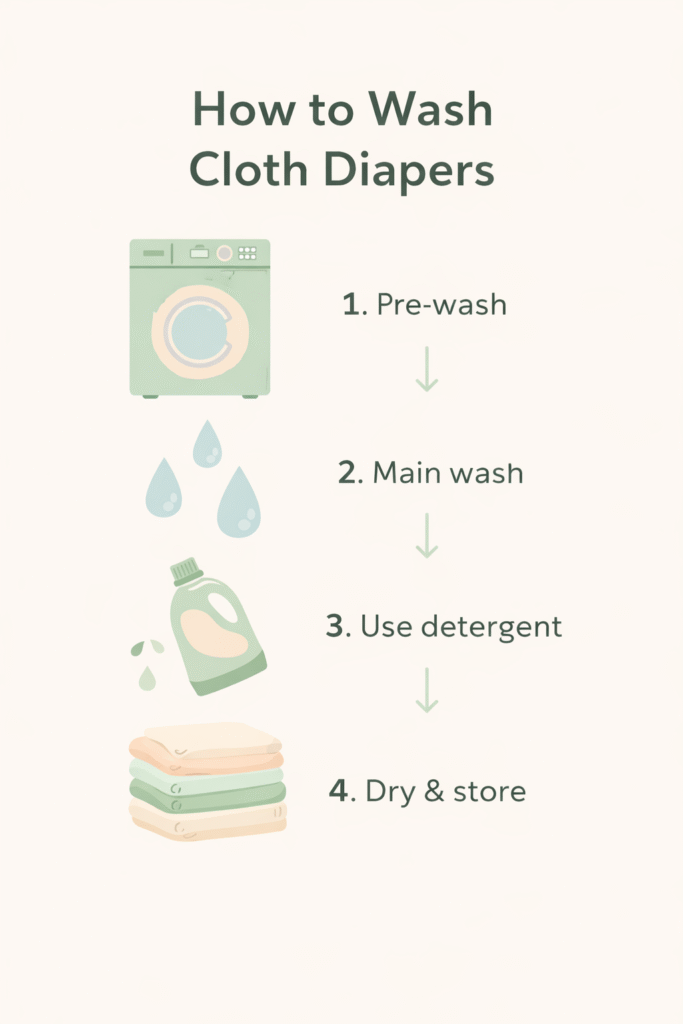
Rinse overnight diapers or very saturated diapers before storing them; less urine sitting in the fibers means less chance for ammonia to form. Make sure diapers dry completely before putting them away. Occasionally sun diapers to naturally bleach and deodorise them.
FAQs Can I use vinegar to get rid of ammonia smell? Vinegar is acidic and can neutralise ammonia in the short term, but frequent vinegar use may degrade elastic and PUL. Instead, adjust your wash routine and only use vinegar sparingly in the prewash or to descale hard water.
How often should I strip my diapers? Stripping should be an occasional reset—every few months or when problems arise—not part of your regular routine. If you’re stripping often, tweak your wash routine and water conditions.
Is ammonia dangerous for my baby? Ammonia can cause burns if concentrated urine sits against skin for long periods. Once cleaned, diapers are safe, but persistent strong odors mean you need to adjust your wash routine to protect baby’s skin.
For a comprehensive understanding of cloth diapering, check out our Ultimate Guide to Cloth Diapers.