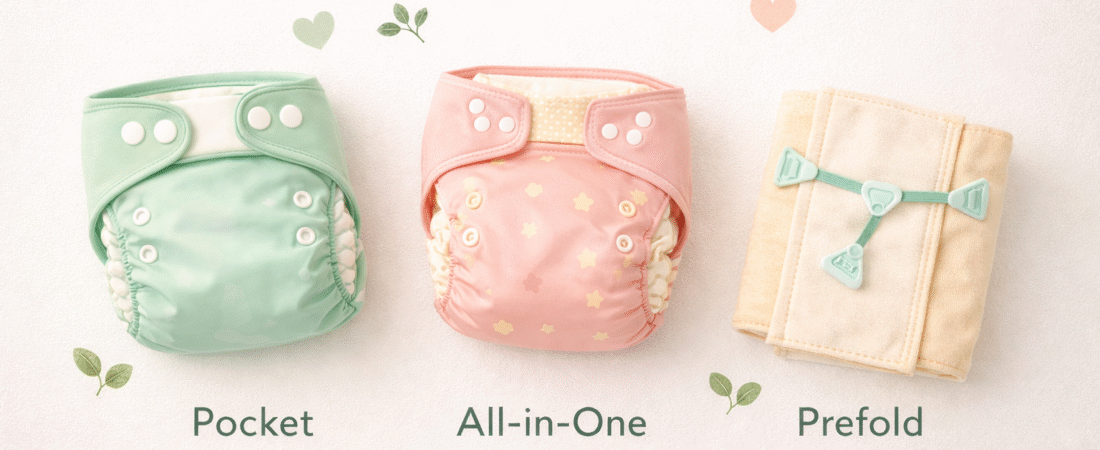
Cloth Diapers & Diaper Rash: Causes, Prevention & Best Practices
My Experience With Cloth Diapers and Diaper Rash
If you’re using cloth diapers and suddenly notice a rash appearing on your baby’s skin, you’re not alone. Many parents worry that cloth diapers might cause diaper rash — but in most cases, that’s not true.
Diaper rash usually happens because of moisture, friction, or irritation — whether you use cloth or disposable diapers. In fact, for some babies with sensitive skin, cloth diapers can actually help reduce rash because they are breathable and don’t contain fragrances or gels.
Let’s look at what really causes diaper rash, how it relates to cloth diapers, and what you can do to keep your baby comfortable.
What Is Diaper Rash?
Diaper rash is a form of irritated skin in the diaper area. It can appear as:
- Redness
- Bumps
- Peeling or inflamed skin
- A shiny or raw appearance
Rashes vary in cause, so understanding the type matters.
Irritant Contact Rash
This is the most common type. It’s caused by:
- Moisture against the skin
- Contact with urine or stool
- Friction from the diaper
Yeast (Candida) Rash
Often appears in:
- Skin folds
- Bright red patches
- Sometimes with tiny red bumps
This type may follow antibiotic use or prolonged moisture.
Allergic Reaction Rash
This can occur from:
- Detergent residue
- Fragrance
- Fabric softeners
- Certain creams
Bacterial Rash
Less common — usually needs medical advice.
Do Cloth Diapers Cause More Diaper Rash Than Disposables?
Short answer: no — not when used and washed properly.
Cloth diapers:
✅ allow more airflow
✅ reduce exposure to fragrances and chemicals
✅ encourage more frequent changes
However, both cloth and disposables can cause rash if moisture stays on the skin too long.
The real problem is usually:
- infrequent changing
- poor fit
- leftover detergent or ammonia buildup
- new foods
- or teething-related acidity
So rather than switching diaper type, focus on skin-friendly habits.
Why Cloth Diapers Sometimes Get Blamed
Cloth diapers may seem like the cause when:
- baby sleeps longer overnight
- humidity increases
- washing routine changes
- the diaper isn’t rinsed fully
But the truth is — rashes happen to almost every baby at some point. Cloth simply makes parents more aware because they pay closer attention to laundry, fabrics, and routines.
The Ammonia Issue in Cloth Diapers
One unique challenge with cloth diapers is ammonia buildup.
This happens when:
- urine breaks down over time
- diapers sit too long before washing
- detergent buildup prevents proper cleaning
- hard water interferes with rinsing
Ammonia can cause:
🔥 burning
🔥 redness
🔥 blister-like irritation
If a diaper smells strongly like a litter box — that’s ammonia. Proper washing routines fix this.
Best Cloth Diaper Fabrics for Sensitive Skin
Some babies do better with certain materials, including:
Natural Fibres
👍 Cotton
👍 Bamboo
👍 Hemp
Benefits:
- breathable
- gentle on skin
- absorb well
Stay-Dry Liners
Good for babies who react to moisture.
Avoid:
❌ Microfleece if baby has polyester sensitivity
❌ Rough fabrics
How Often Should You Change Cloth Diapers?
To prevent rash:
⏰ Every 2–3 hours during the day
💩 Immediately after bowel movements
🌙 Overnight: use boosters or stay-dry liners
Frequent changing is key.
Can You Use Diaper Cream With Cloth Diapers?
Yes — but avoid zinc-heavy creams directly on fabric because they can block absorbency.
Options:
✔ Cloth-safe creams
✔ Disposable liners
✔ Reusable fleece liners
Avoid:
❌ Petroleum-based creams directly on inserts
Washing Routine Tips to Prevent Rash
Here’s a simple cloth-diaper wash routine:
- Cold rinse
- Hot wash with appropriate detergent
- Extra rinse
- Dry fully
Avoid:
❌ Fabric softeners
❌ Dryer sheets
❌ Overloading the machine
These cause buildup.
If you have hard water, mineral deposits may increase irritation — in that case, water softeners can help.
When Cloth Diapers May Not Be Suitable
Switch temporarily if:
- rash becomes severe
- skin is broken or bleeding
- yeast rash appears
- you’re using prescription creams
Return to cloth once skin heals. Your baby’s comfort always comes first.
Cloth Diapers and Diaper Rash
Look, I’m going to be straight with you right from the start. When I first started cloth diapering, I genuinely believed that switching from disposables would magically solve all diaper rash problems.
I’d read all these testimonials from parents who claimed their baby’s persistent rashes disappeared overnight after ditching disposables.
I was so convinced that I actually didn’t even bother researching diaper rash prevention for cloth diapers because I figured it just wouldn’t be an issue.
Boy, was I wrong.
About two weeks into our cloth diaper experience, my daughter developed the worst diaper rash I’d ever seen. Bright red, angry-looking skin that made diaper changes absolutely heartbreaking.
I felt like a complete failure.
Here I was, trying to do this “better” thing for my baby and the environment, and instead I’d apparently made things worse.
That experience sent me down a research rabbit hole that completely changed how I understood diaper rash, cloth diapers, and the complex relationship between the two. Cloth diapers don’t automatically prevent diaper rash, and in some cases, they can actually contribute to it if you’re not careful.
Once you understand what’s really happening though, cloth diapers can genuinely be better for preventing and managing diaper rash than disposables.
The truth is way more nuanced than the cloth diaper evangelists want you to believe, and honestly, that’s exactly what makes this topic so important to understand properly.
Understanding Diaper Rash: The Real Story


- 100%polyester
- Imported
- Superior Absorbency: Our CoolaPeach cloth diapers are equipped with 6 high-quality microfiber inserts, ensuring maximum …

- Complete Cloth Diapering Set: Includes 4 adjustable pocket cloth diapers and 4 viscose with microfiber inside absorbent …
- Adjustable Fit for Growing Babies: Designed to fit babies from 10 lbs to 35 lbs with adjustable snap settings, ensuring …
- Easy to Clean: Diapers are Machine Washable and quick drying with separated inserts, our cloth diapers can be included w…
Diaper rash has many causes, and that’s the first thing I wish someone had told me.
When we say “diaper rash,” we’re actually talking about several different skin conditions that all happen to occur in the diaper area.
Understanding which type you’re dealing with makes all the difference in treatment and prevention.
The most common form is irritant contact dermatitis, which happens when your baby’s skin gets irritated from prolonged exposure to moisture, friction, and the chemical breakdown of urine and feces. When urine sits against skin for extended periods, enzymes in it combine with bacteria from feces to create ammonia.
This ammonia is extremely alkaline and literally burns the skin. That’s why you’ll sometimes notice a strong ammonia smell when you open a wet diaper, especially first thing in the morning.
Then there’s candidal diaper rash, which is caused by yeast overgrowth. This type looks distinctly different from regular irritant rash.
It appears as bright red patches with defined borders and often has satellite lesions, which are small red spots surrounding the main rash area.
Yeast absolutely loves warm, moist environments, which is why the diaper area is particularly vulnerable. Babies who’ve recently been on antibiotics are especially susceptible because antibiotics kill off the good bacteria that normally keep yeast in check.
Bacterial diaper rash is less common but definitely worth knowing about. This can happen when bacteria invade already-damaged skin from an existing rash.
It often appears more infected-looking, with oozing, crusting, or honey-colored discharge.
Finally, there’s allergic contact dermatitis, which happens when your baby’s skin reacts to something it’s touching. In cloth diapering, this could be the detergent residue, the synthetic materials in the diaper itself, elastic components, or even specific natural fibers that some babies are sensitive to.
Why Cloth Diapers Get Blamed
Here’s where things get interesting. Cloth diapers have this reputation in some circles for causing more diaper rash than disposables, and honestly, there’s actually some truth to that claim when cloth diapers aren’t managed properly.
The primary issue comes down to moisture management. Modern disposable diapers contain superabsorbent polymers that lock away moisture incredibly effectively, keeping skin much drier than cloth choices.
When you put your hand inside a wet disposable, the surface often still feels relatively dry despite containing a significant amount of urine.
Cloth diapers, even with stay-dry liners, simply cannot match this level of moisture-wicking technology.
Your baby’s skin stays in contact with moisture for longer periods in cloth diapers. That prolonged moisture exposure softens and weakens the skin barrier, making it more vulnerable to irritation from the ammonia and enzymes I mentioned earlier.
Frequent diaper changes become absolutely critical with cloth diapers in a way that’s somewhat more forgiving with disposables.
The second major issue is washing-related problems. This is where things get really tricky, and it’s what caused my daughter’s rash.
If you don’t wash cloth diapers properly, you can end up with three different problems that directly contribute to diaper rash.
First, there’s inadequate cleaning. If your wash routine doesn’t actually remove all the urine and fecal matter from the fabric, you’re essentially putting dirty diapers back on your baby.
Those residual wastes continue breaking down and creating ammonia against your baby’s skin.
Second, and this is the one that got me, there’s detergent buildup. When you use too much detergent or don’t rinse thoroughly enough, detergent molecules get trapped in the fabric layers.
These residues then sit against baby’s skin and can cause irritation directly.
Even worse, they create a barrier that reduces the fabric’s absorbency, leading to leaks and extended moisture exposure.
Third, there’s mineral buildup from hard water. If you live in an area with hard water and don’t adjust your washing routine accordingly, minerals deposit in the fabric and create a similar problem to detergent buildup.
The fabric becomes less absorbent, holds onto bacteria more readily, and can irritate sensitive skin.
Then there’s the material sensitivity issue. Some babies genuinely react to specific fabrics or materials used in cloth diapers.
Microfiber is a particularly common culprit.
While microfiber inserts are popular because they’re inexpensive and absorb quickly, they’re actually made from synthetic polymers that can irritate sensitive skin. This is why manufacturers specifically warn against allowing microfiber to touch baby’s skin directly, yet many parents don’t realize this and use microfiber-lined pocket diapers with the microfiber against skin.
Elastic components, particularly in cheaper cloth diapers, can contain latex or other materials that some babies are allergic to. The elastic around legs and waist creates friction points that, combined with moisture, can develop into raw, chafed areas.
Why Cloth Diapers Can Actually Be Better for Rash-Prone Babies
Now here’s the flip side, and this is what eventually made our cloth diaper experience successful. Once you understand and address the potential problems, cloth diapers can genuinely be superior for preventing and managing diaper rash.
The biggest advantage is breathability. Natural fiber cloth diapers, particularly cotton, bamboo, and hemp, allow much better air circulation than disposable diapers.
Disposables are designed to contain moisture, which means they’re essentially wrapping your baby’s bottom in plastic.
That plastic outer layer prevents air from reaching the skin, creating a greenhouse effect that keeps the diaper area warmer and more humid.
Quality cloth diapers, especially those with natural fiber covers or wool covers, allow air exchange while still containing messes. This air circulation helps keep the skin cooler and drier between changes, which significantly reduces the conditions that allow diaper rash to develop.
The second major advantage is reduced chemical exposure. Disposable diapers contain a whole cocktail of chemicals: fragrances, dyes, lotions, superabsorbent polymers, and various other additives.
While manufacturers insist these are all safe, the fact remains that some babies’ skin reacts negatively to these substances.
I’ve personally talked to many parents who switched to cloth specifically because their baby developed persistent rashes from disposables that cleared up almost immediately with cloth.
Cloth diapers, especially simple cotton prefolds, are essentially just fabric. There are no chemicals, no fragrances, no mysterious polymer gels.
For babies with particularly sensitive skin or those prone to allergic reactions, this simplicity can be incredibly useful.
The third advantage, and this one surprised me, is the change frequency. Because cloth diapers don’t wick moisture away as effectively as disposables, you’re forced to change them more often.
While this sounds like a disadvantage, it actually means your baby spends less total time sitting in waste.
Parents using disposables often rely on those moisture indicators or wait until the diaper feels heavy, which can mean baby sits in a wet diaper for extended periods. With cloth, you know immediately when baby is wet, and you’re motivated to change it promptly.
The Ammonia Problem
Let me talk about the ammonia issue specifically because this doesn’t get discussed enough in cloth diaper communities. There’s this tendency to pretend ammonia buildup either doesn’t exist or only happens to people who are “doing it wrong.” That’s complete nonsense, and it caused me unnecessary stress when I was trying to figure out what was happening with my daughter’s rash.
Ammonia buildup is a real, common problem in cloth diapers, and it happens even to people following recommended washing routines. Here’s what’s actually going on: urine contains urea, a nitrogen-containing compound.
When bacteria break down urea, they produce ammonia.
This is a natural process that happens with all urine, whether in cloth or disposable diapers.
In disposables, the superabsorbent polymers lock this moisture away from the surface, and you throw the diaper out before ammonia buildup becomes significant. In cloth diapers, especially overnight when a diaper might be worn for eight to twelve hours, ammonia concentration builds up in the fabric layers.
When you open a morning diaper and get hit with that eye-watering ammonia smell, that’s a clear indicator that your baby’s skin has been sitting against that alkaline irritant all night.
The tricky thing about ammonia burns is they look almost identical to regular diaper rash at first, just red, irritated skin in the diaper area. But ammonia rash tends to be more severe around the genitals where urine concentration is highest, and it often appears almost immediately after extended wear time.
The solution needs adjusting your strategy.
For overnight, this might mean adding extra absorbency to dilute urine concentration, using a stay-dry liner to create a barrier between the ammonia and skin, or doing a dream diaper change before you go to bed. Some parents find that using a disposable overnight is the practical compromise that allows them to cloth diaper during the day without dealing with ammonia issues.
For washing, if you’re dealing with persistent ammonia buildup despite following standard washing recommendations, you likely need to bleach sanitize your entire stash. I know cloth diaper purists will tell you bleach is unnecessary and harmful, but the reality is that sometimes you need to disinfect to break the cycle of bacterial buildup creating ammonia.
A diluted bleach soak followed by many rinses can reset your diapers and eliminate the bacteria causing the problem.
Material Matters: Choosing the Right Cloth Diapers for Sensitive Skin
After dealing with my daughter’s rash, I completely overhauled our cloth diaper stash based on what I learned about materials and skin sensitivity. This made a tremendous difference, and it’s something I really wish cloth diaper retailers were more upfront about.
Natural fibers are almost always gentler on sensitive skin than synthetics. Cotton, bamboo, and hemp diapers allow better breathability, are less likely to cause allergic reactions, and generally feel softer against skin. Cotton prefolds or fitted diapers paired with wool or cotton covers create the most breathable system possible and are excellent for rash-prone babies.
Bamboo viscose has become incredibly popular in cloth diaper inserts, and for good reason. It’s naturally antimicrobial, extremely soft, and highly absorbent.
However, there is some controversy around bamboo production methods involving harsh chemicals, so if you’re going the natural route for health reasons, be aware that bamboo isn’t quite as “natural” as pure cotton.
Hemp is the most absorbent natural fiber available for cloth diapers, making it excellent for overnight use or heavy wetters. It’s also naturally antimicrobial and becomes more absorbent with repeated washing.
The downside is that hemp is slower to absorb initially, so it works best layered with faster-absorbing materials like cotton.
On the synthetic side, athletic wicking jersey and microfleece are popular stay-dry materials. These work by pulling moisture away from the surface and into the absorbent layers below, leaving the surface that touches baby’s skin feeling drier.
For many babies prone to moisture-related rash, this stay-dry layer makes a significant difference.
However, some babies with particularly sensitive skin react to these synthetic materials, so it’s worth testing before committing to a full stash.
Microfiber, as I mentioned earlier, should never touch baby’s skin directly. It’s useful as an absorbent insert hidden inside pocket diapers, but the synthetic polymers can cause irritation and even abrasion if in direct contact with skin. If you’re using microfiber inserts, always confirm there’s a stay-dry layer or natural fiber layer between the microfiber and your baby’s bottom.
PUL, the waterproof laminate used in most modern cloth diaper covers and shells, is generally well-tolerated. However, some babies do develop sensitivity to it, particularly with extended skin contact in fitted-style diapers where PUL touches skin directly. If you suspect PUL sensitivity, wool covers are an excellent choice.
Lanolized wool is naturally waterproof, breathable, and has antimicrobial properties that help prevent diaper rash.
Diaper Creams and Cloth Diapers
This is probably one of the most confusing aspects of cloth diapering when you’re dealing with diaper rash. You need to treat the rash, but most effective diaper rash creams will ruin your expensive cloth diapers by creating a water-repellent barrier that destroys absorbency.
Traditional diaper rash creams contain zinc oxide, petroleum, or other thick, waxy substances that coat and protect the skin. These ingredients work brilliantly for treating rash, but they also coat cloth diaper fibers and create a waterproof barrier that repels liquid instead of absorbing it. Once this happens, your diapers will leak constantly, and removing the buildup needs aggressive stripping routines involving dawn dish soap or other treatments.
So what do you do when your cloth-diapered baby has a rash that needs treatment? You have several options, each with different trade-offs.
The first option is to use disposable liners. Fleece liners or disposable paper liners create a physical barrier between the cream and your diaper.
You can apply any diaper cream you want to baby’s skin, lay the liner over it, and then put the cloth diaper on top.
The liner catches the cream and prevents it from transferring to the diaper fabric. This works reasonably well for mild to moderate rashes.
The second option is to use cloth-safe diaper creams. These formulations are designed to wash out of fabric without leaving residue.
Common cloth-safe ingredients include coconut oil, shea butter, calendula, and certain zinc oxide formulations specifically labeled as cloth-safe.
The challenge here is that these creams are often less effective than traditional barrier creams, particularly for severe rashes.
The third option, and honestly the one I ended up using during bad rash episodes, is to temporarily switch to disposables. I know this feels like admitting defeat when you’re committed to cloth diapering, but sometimes your baby’s immediate comfort needs to take priority over your diapering philosophy.
Use whatever diaper cream works best to heal the rash, then return to cloth once the skin is healthy again.
Coconut oil deserves special mention because it’s frequently recommended in cloth diaper communities as a safe, natural option. Coconut oil does have antimicrobial and anti-inflammatory properties, and it’s much easier to wash out of cloth than petroleum-based products.
However, it’s not a true barrier cream, so it’s most effective for prevention or very mild rash as opposed to treating moderate to severe cases.
Also, be aware that coconut oil can stain inserts and reduce absorbency over time if used excessively.
Prevention Strategies That Actually Work
After going through the rash experience and doing extensive research, I developed a prevention strategy that virtually eliminated diaper rash problems for us. These practices made cloth diapering sustainable and successful.
Change frequency is absolutely critical. With cloth diapers, you should be changing every two to three hours most during the day, and immediately after bowel movements.
Yes, this is more often than disposables need, but it’s non-negotiable if you want to prevent moisture-related rash.
Overnight is trickier since you obviously can’t change every two hours, but adding extra absorbency and using stay-dry liners helps manage the longer wear time.
Diaper-free time is incredibly useful for preventing and healing diaper rash. Letting baby’s bottom air out completely for even just fifteen to twenty minutes per day makes a noticeable difference.
The air exposure helps dry any moisture, allows oxygen to reach the skin, and gives the area a break from the enclosed, humid environment of diapers.
Many parents incorporate diaper-free time into their daily routine, such as after bath time or during morning playtime on a waterproof mat.
Proper washing cannot be overstated. Most cloth diaper rash problems ultimately trace back to washing issues. You need to find the wash routine that works for your water type, machine, and diaper materials.
This usually involves some trial and error, but once you nail it down, it becomes routine.
The key indicators that your wash routine is working are: no ammonia smell when opening wet diapers, no lingering odors after washing, diapers that absorb quickly when tested, and most importantly, healthy baby skin.
Regular stripping and sanitizing, despite what some cloth diaper purists claim, is sometimes necessary. If you notice ammonia smell building up, reduced absorbency, or persistent rash that doesn’t respond to treatment, your diapers likely need a deep clean.
A bleach sanitization every few months can prevent problems from developing in the first place.
Dietary awareness helps too, especially as baby starts solid foods. Acidic foods like citrus, tomatoes, and berries can create more irritating urine and feces that contribute to diaper rash.
Teething also somehow correlates with increased rash susceptibility, possibly due to changes in saliva pH affecting digestive output.
Being aware of these patterns helps you anticipate and prevent problems.
When Cloth Diapers Aren’t the Right Choice
I want to be really honest about something that cloth diaper advocates don’t like to admit. Sometimes, for some babies, cloth diapers just aren’t the best option, at least not full-time.
If your baby has persistent, severe diaper rash that doesn’t respond to treatment despite proper cloth diaper care, disposables might genuinely be the better choice. Some babies have skin that’s simply too sensitive for the increased moisture exposure that comes with cloth.
There’s no shame in prioritizing your baby’s skin health over your environmental or financial goals.
Similarly, if your baby has certain medical conditions, such as severe reflux, frequent diarrhea, or specific skin conditions like eczema that extends into the diaper area, the practical challenges of cloth diapering might outweigh the benefits. You have to make choices based on your actual circumstances, not theoretical ideals.
Part-time cloth diapering is a completely valid option that more parents should consider. Using cloth during the day when you can change frequently and watch for issues, while using disposables overnight or when traveling, gives you many of the benefits of cloth without the most challenging aspects.
This hybrid approach often works better for families than either extreme.
The key thing I learned through my cloth diapering experience is that flexibility matters more than dogmatic adherence to any particular approach. Your baby’s health and your family’s wellbeing should always trump ideology, even when that ideology is supposedly about health and wellbeing.
Frequently Asked Questions
Does cloth diapering cause more diaper rash?
Cloth diapering doesn’t inherently cause more diaper rash, but it does need more frequent changes and proper washing routines to prevent moisture-related irritation. When managed correctly, cloth diapers can actually reduce rash in babies who are sensitive to the chemicals found in disposable diapers.
How often should you change cloth diapers to prevent rash?
You should change cloth diapers every two to three hours during the day and immediately after bowel movements. Overnight changes depend on your baby’s needs, but adding extra absorbency and stay-dry liners can help manage the longer wear time without causing rash.
What causes ammonia smell in cloth diapers?
Ammonia smell happens when bacteria break down the urea in urine, creating ammonia compounds. This buildup occurs more commonly with extended wear times, inadequate washing, or when hard water minerals prevent proper rinsing.
The ammonia itself can burn and irritate your baby’s skin.
Can you use regular diaper rash cream with cloth diapers?
Regular diaper rash creams containing zinc oxide or petroleum will damage cloth diapers by creating water-repellent buildup that ruins absorbency. You can use these creams with a disposable liner as a barrier, switch to cloth-safe formulations, or temporarily use disposable diapers during severe rash treatment.
Are natural fiber diapers better for sensitive skin?
Natural fiber diapers made from cotton, bamboo, or hemp are generally better for sensitive skin because they’re more breathable and less likely to cause allergic reactions than synthetic materials. Microfiber in particular should never touch baby’s skin directly as it can cause irritation and abrasion.
How do you strip cloth diapers to remove buildup?
Stripping cloth diapers involves washing them many times with hot water to remove detergent, mineral, or ammonia buildup. For severe buildup or persistent ammonia smell, a diluted bleach sanitization followed by several rinse cycles can reset your diapers and eliminate bacteria causing problems.
Does hard water affect cloth diaper rash?
Hard water contains minerals that can deposit in cloth diaper fabric, reducing absorbency and creating irritation against baby’s skin. If you have hard water, you may need to adjust your washing routine by adding water softeners or using specific detergents designed for hard water conditions.
Is coconut oil safe for cloth diapers?
Coconut oil is safer for cloth diapers than petroleum-based creams because it washes out more easily, but it can still cause staining and reduce absorbency if used excessively. Coconut oil works best for mild rash prevention as opposed to treating moderate to severe cases.
Key Takeaways:
Diaper rash in cloth diapers typically results from moisture exposure, washing problems, or material sensitivity as opposed to cloth diapers themselves being inherently problematic. Understanding the specific type of rash you’re dealing with decides the most effective treatment approach.
Proper washing routines prevent most cloth diaper rash problems, but they need consistent attention to detergent amount, water temperature, rinse cycles, and recognition of when bleach sanitization becomes necessary. Inadequate washing creates ammonia buildup, bacterial growth, and detergent residue that directly irritate baby’s skin.
Natural fiber diapers made from cotton, bamboo, or hemp generally cause fewer sensitivity reactions than synthetic materials, though stay-dry liners help some babies by reducing surface moisture. Microfiber should never contact skin directly despite being commonly used in pocket diapers.
Frequent diaper changes every two to three hours, combined with regular diaper-free time and suitable use of barriers like fleece liners when applying diaper cream, form the foundation of successful cloth diapering for rash-prone babies. The increased change frequency required by cloth actually benefits babies by reducing total time spent in waste.
Sometimes cloth diapers aren’t the right choice for certain babies or situations, and part-time cloth diapering offers a practical compromise that provides benefits without the most challenging aspects of full-time cloth use.
Here are ready‑to‑post external authority links you can use on your blog for the topic diaper rash plus additional relevant trusted sources:
Verywell Health – Diaper Rash Overview
https://www.verywellhealth.com/diaper-rash-7091468 — Trusted medical resource explaining what diaper rash is, symptoms, causes, and care (common condition affecting infants). (Verywell Health)
Verywell Health – Diaper Rash Home Remedies & Care Tips
https://www.verywellhealth.com/home-remedies-for-diaper-rash-8611089 — Evidence‑based home care tips including frequent diaper changes, barrier creams with zinc oxide, and moisture management. (Verywell Health)
Healthline – Diaper Rash Causes, Prevention & Treatment
https://www.healthline.com/health/diaper-rash — Clear guidance on causes, signs, and how to help soothe and prevent diaper rash with practical steps. (Healthline)
KidsHealth (Nemours) – Diaper Rash Home Care & Doctor Advice
https://kidshealth.org/en/parents/diaper-rash-sheet.html — Pediatrician‑reviewed parent‑friendly overview of preventing and caring for diaper rash, and when to call the doctor. (KidsHealth)
Mayo Clinic – Diaper Rash Causes & Prevention
https://www.mayoclinic.org/diseases-conditions/diaper-rash/symptoms-causes/syc-20371636 — Reputable medical explanation of causes and prevention strategies for diaper dermatitis. (Mayo Clinic)
✅ Cloth Diaper Care & Best Practices
Dreft – How to Wash & Clean Cloth Diapers (laundry tips)
https://www.dreft.com/en-us/washing-tips/washing-baby-clothes/how-to-wash-cloth-diapers — Practical washing routine to keep cloth diapers clean, hygienic and less irritating to baby’s skin. (Dreft)
Fluff Love University – Guide to Washing Cloth Diapers
https://fluffloveuniversity.com/how-to-wash-cloth-diapers/ — In‑depth washing process including rinsing, hot wash, and drying to protect cloth and prevent rash. (Fluff Love University)
Additional Reputable Resources
American Academy of Dermatology – Diaper Rash Care
https://www.aad.org/public/everyday-care/itchy-skin/rash/treat-diaper-rash — Dermatologist guidance on how to clean, care, and protect delicate skin against diaper rash. (AAD)
Cleveland Clinic – Diaper Rash Symptoms & Care Tips
https://my.clevelandclinic.org/health/diseases/11037-diaper-rash-diaper-dermatitis — Medical health system overview on proper hygiene and treatment basics. (Cleveland Clinic)
Cloth Diapers & Diaper Rash: Causes, Prevention & Best Practices My Experience With Cloth Diapers and Diaper Rash If you’re using cloth diapers and suddenly notice a rash appearing on your baby’s skin, you’re not alone. Many parents worry that cloth diapers might cause diaper rash — but in most cases, that’s not true. Diaper rash usually happens because of moisture, friction, or irritation — whether you use cloth or disposable diapers. In fact, for some babies with sensitive skin, cloth diapers can actually help reduce rash because they are breathable and don’t contain fragrances or gels. Let’s look at what really causes diaper rash, how it relates to cloth diapers, and what you can do to keep your baby comfortable. What Is Diaper Rash? Diaper rash is a form of irritated skin in the diaper area. It can appear as: Redness Bumps Peeling or inflamed skin A shiny or raw appearance Rashes vary in cause, so understanding the type matters. Irritant Contact Rash This is the most common type. It’s caused by: Moisture against the skin Contact with urine or stool Friction from the diaper Yeast (Candida) Rash Often appears in: Skin folds Bright red patches Sometimes with tiny red bumps This type may follow antibiotic use or prolonged moisture. Allergic Reaction Rash This can occur from: Detergent residue Fragrance Fabric softeners Certain creams Bacterial Rash Less common — usually needs medical advice. Do Cloth Diapers Cause More Diaper Rash Than Disposables? Short answer: no — not when used and washed properly. Cloth diapers: ✅ allow more airflow ✅ reduce exposure to fragrances and chemicals ✅ encourage more frequent changes However, both cloth and disposables can cause rash if moisture stays on the skin too long. The real problem is usually: infrequent changing poor fit leftover detergent or ammonia buildup new foods or teething-related acidity So rather than switching diaper type, focus on skin-friendly habits. Why Cloth Diapers Sometimes Get Blamed Cloth diapers may seem like the cause when: baby sleeps longer overnight humidity increases washing routine changes the diaper isn’t rinsed fully But the truth is — rashes happen to almost every baby at some point. Cloth simply makes parents more aware because they pay closer attention to laundry, fabrics, and routines. The Ammonia Issue in Cloth Diapers One unique challenge with cloth diapers is ammonia buildup. This happens when: urine breaks down over time diapers sit too long before washing detergent buildup prevents proper cleaning hard water interferes with rinsing Ammonia can cause: 🔥 burning 🔥 redness 🔥 blister-like irritation If a diaper smells strongly like a litter box — that’s ammonia. Proper washing routines fix this. Best Cloth Diaper Fabrics for Sensitive Skin Some babies do better with certain materials, including: Natural Fibres 👍 Cotton 👍 Bamboo 👍 Hemp Benefits: breathable gentle on skin absorb well Stay-Dry Liners Good for babies who react to moisture. Avoid: ❌ Microfleece if baby has polyester sensitivity ❌ Rough fabrics How Often Should You Change Cloth Diapers? To prevent rash: ⏰ Every 2–3 hours during the day 💩 Immediately after bowel movements 🌙 Overnight: use boosters or stay-dry liners Frequent changing is key. Can You Use Diaper Cream With Cloth Diapers? Yes — but avoid zinc-heavy creams directly on fabric because they can block absorbency. Options: ✔ Cloth-safe creams ✔ Disposable liners ✔ Reusable fleece liners Avoid: ❌ Petroleum-based creams directly on inserts Washing Routine Tips to Prevent Rash Here’s a simple cloth-diaper wash routine: Cold rinse Hot wash with appropriate detergent Extra rinse Dry fully Avoid: ❌ Fabric softeners ❌ Dryer sheets ❌ Overloading the machine These cause buildup. If you have hard water, mineral deposits may increase irritation — in that case, water softeners can help. When Cloth Diapers May Not Be Suitable Switch temporarily if: rash becomes severe skin is broken or bleeding yeast rash appears you’re using prescription creams Return to cloth once skin heals. Your baby’s comfort always comes first.