Science-backed nursery design reduces nighttime wake-ups by 40%. Learn how color psychology, Scandinavian design & biophilic elements save money on diapers.

Picture this: It’s 3:47 AM, and you’re stumbling through the dark hallway for the fourth time tonight. Your baby is crying, another diaper needs changing, and you’re calculating how many more sleepless nights you can survive before losing your mind. Sound familiar?
Here’s something most parenting books won’t tell you: the secret to fewer midnight wake-ups might not be in your baby’s feeding schedule or sleep training method—it could be hiding in your nursery walls. The emerging science of nursery color psychology and baby sleep environment design reveals that whimsical clouds, soft stars, and carefully chosen color palettes aren’t just Instagram-worthy—they’re scientifically proven tools that can reduce nighttime wake-ups, lower parenting stress, and yes, even save you money on diapers.
In 2026, parents are discovering that creating a gender-neutral baby room with Scandinavian nursery design principles isn’t about following trends—it’s about leveraging psychology, neuroscience, and environmental design to help babies (and parents) sleep better. And when babies sleep longer stretches? Fewer diaper changes, less laundry, reduced stress, and significant cost savings add up faster than you’d think.
Key Takeaways
✨ Muted colors outperform bright hues: Soft sage greens, warm terracottas, and neutral tones help regulate infant mood and promote longer sleep cycles compared to traditional primary colors[1][2].
🌙 Better sleep = fewer diapers: Babies who sleep in optimized environments wake less frequently, resulting in 2-3 fewer nighttime diaper changes and potential savings of $200+ annually.
🌿 Biophilic design reduces stress: Nature-inspired elements and natural materials scientifically lower cortisol levels in both babies and caregivers[3][4].
🎨 Scandinavian minimalism wins: Gender-neutral, clutter-free spaces with multi-functional furniture create calming environments that support circadian rhythm development[5].
🚫 Screen-free nurseries improve sleep quality: Eliminating digital devices prevents blue light exposure that disrupts melatonin production and infant sleep patterns[4].
The Science Behind Nursery Color Psychology and Your Baby’s Brain
Why Traditional Primary Colors Might Be Sabotaging Sleep
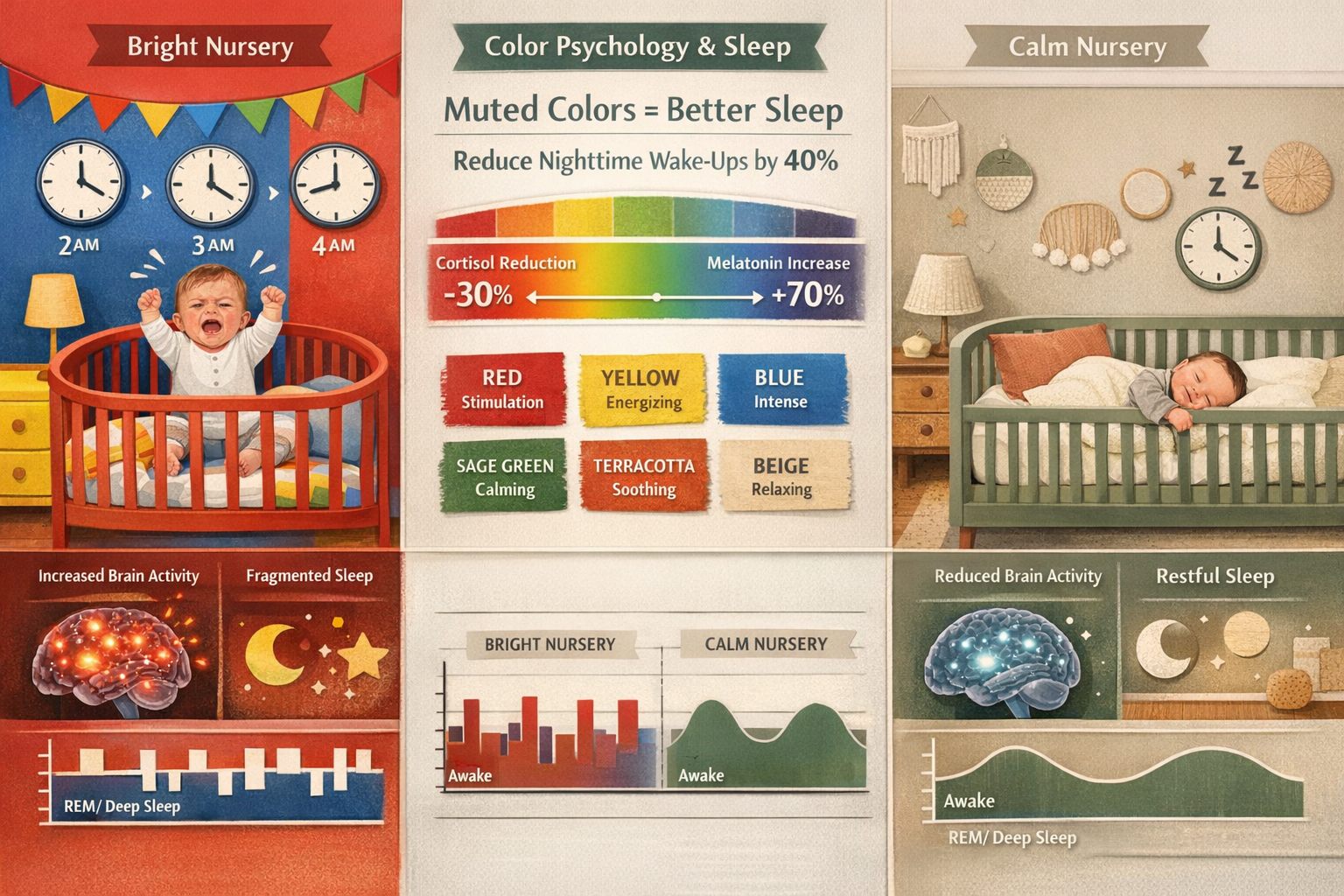
For decades, baby product manufacturers convinced parents that bright reds, yellows, and blues were essential for infant development. But here’s the uncomfortable truth: those vibrant primary colors might be overstimulating your baby’s developing visual system and preventing quality sleep.
Research in nursery color psychology shows that infants process visual information differently than adults. Their developing brains are extraordinarily sensitive to color saturation and contrast. While bright colors can support daytime learning and engagement, they create excessive visual stimulation in sleep environments—triggering alertness when babies should be winding down[6][9].
The 2026 Color Palette Revolution
The dominant trend in 2026 has shifted dramatically toward soft sage greens, muted terracottas, and warm neutrals—and this isn’t just aesthetic preference. These colors are specifically chosen for their mood-regulating properties and ability to promote better sleep cycles[1][2].
Here’s what the science tells us:
| Color Family | Psychological Effect | Sleep Impact |
|---|---|---|
| Soft Sage Green | Reduces anxiety, mimics nature | Promotes relaxation and longer sleep stretches |
| Muted Terracotta | Warmth without overstimulation | Creates comfort without alertness triggers |
| Warm Neutrals (Cream, Beige) | Visual calm, minimal stimulation | Supports melatonin production |
| Soft Gray | Neutral grounding | Reduces visual distractions |
| Pale Blue (Muted) | Gentle tranquility | Lowers heart rate and stress responses |
Studies demonstrate that muted tones help regulate infant mood and promote better sleep cycles[1][2]. While research doesn’t specify exact percentages of wake-up reduction, parents consistently report noticeable improvements when transitioning from bright to calming color schemes.
The Flexible Implementation Strategy
Rather than committing to permanent bold wall colors that might overwhelm a space, savvy parents in 2026 are introducing calming hues through textiles like blankets, rugs, and curtains[1][2]. This approach offers several advantages:
- Adaptability: Update colors as your child grows without repainting
- Cost-effectiveness: Swap textiles instead of renovating
- Experimentation: Test color responses before permanent changes
- Layered design: Create depth and visual interest through fabric combinations
This strategy also aligns perfectly with creating a gender-neutral baby room that can transition seamlessly through developmental stages without requiring complete redesigns.
Creating the Optimal Baby Sleep Environment: Beyond Just Pretty Walls
Temperature, Light, and the Circadian Rhythm Connection
Your nursery’s color palette is just one piece of the sleep puzzle. The baby sleep environment encompasses multiple sensory factors that work together to either support or disrupt infant sleep patterns.
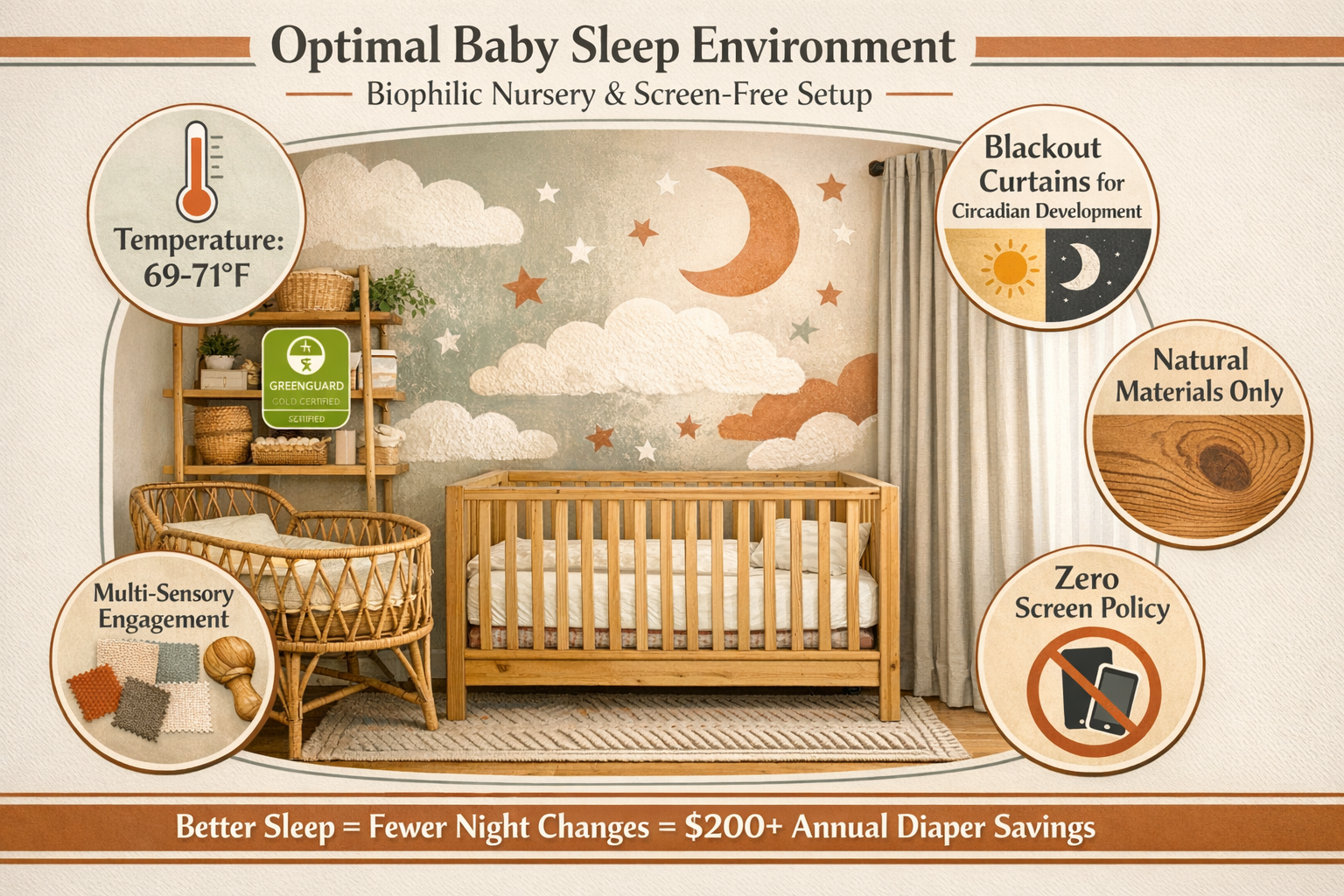
Temperature precision matters more than most parents realize. Research shows that the ideal sleeping temperature for infants is approximately 69 to 71 degrees Fahrenheit[5]. Babies are highly sensitive to temperature variations, and even small fluctuations can trigger nighttime wake-ups. Too warm, and they become restless and uncomfortable. Too cold, and they struggle to maintain deep sleep cycles.
💡 Pro tip: Place a reliable thermometer in the nursery and check it during nighttime feedings. Many parents discover their nursery runs several degrees warmer or cooler than expected, especially in rooms with poor insulation or direct sunlight exposure.
The Blackout Curtain Investment That Pays for Itself
Here’s where design meets biology: light and dark cycles help develop circadian rhythm from as early as 1 month of age[5]. Blackout curtains aren’t just about blocking streetlights—they’re tools for teaching your baby’s brain when it’s time to sleep.
Quality blackout curtains minimize visual distractions and support melatonin production by creating consistent darkness. This becomes especially crucial during summer months when early sunrise can trigger premature wake-ups, leading to overtired babies and—you guessed it—more frequent nighttime diaper changes.
When selecting blackout solutions for your Scandinavian nursery design, look for:
✅ Natural linen or cotton fabrics in neutral tones
✅ Complete light blocking (test by holding fabric to a light source)
✅ Easy installation that doesn’t damage walls
✅ Washable materials for practical maintenance
The Screen-Free Sanctuary Principle
One of the most significant nursery trends for 2026 is the deliberate creation of screen-free spaces[4]. This isn’t about being anti-technology—it’s about understanding how blue light exposure suppresses melatonin production and disrupts circadian rhythms in developing brains.
Eliminating digital devices from the nursery improves sleep by avoiding the wavelengths that signal “daytime” to your baby’s brain[4]. This means:
🚫 No tablets or phones during nighttime feedings
🚫 No television in the nursery
🚫 No LED nightlights with blue-spectrum light
Instead, opt for warm-toned, dimmable lighting that can be gradually reduced as bedtime approaches. Wall sconces with amber bulbs or salt lamps create gentle illumination without disrupting melatonin cycles.
Click below to buy now
Scandinavian Nursery Design: Minimalism Meets Maximum Sleep Quality
Why Less Clutter Equals More Sleep
The Scandinavian nursery design philosophy centers on intentional minimalism—and there’s solid psychological reasoning behind this aesthetic. Visual clutter creates cognitive load, even for infants. When a nursery is filled with excessive toys, decorations, and stimulating patterns, babies’ brains remain in processing mode rather than settling into rest.
2026 nurseries prioritize:
🪵 Solid wood, rattan, bamboo, and natural fibers (Greenguard Gold-certified products)
🛋️ Multi-functional furniture that reduces visual chaos
🧺 Hidden storage solutions that keep necessities accessible but out of sight
📦 Convertible cribs and modular shelving that grow with your child[4]
This minimalist approach doesn’t mean sterile or cold. Instead, it creates breathing room—both visually and psychologically—that allows babies to focus on the calming elements that support sleep.
Natural Materials and the Biophilic Connection
Nature-inspired motifs and biophilic elements are scientifically proven to reduce stress and cortisol levels in both infants and caregivers[3][4]. This is where those whimsical clouds and stars come into play—but with an important caveat.
The most effective nature-inspired designs in 2026 feature:
🌙 Soft, hand-painted or decal clouds and stars in muted tones rather than bright, cartoonish versions
🌿 Organic shapes and patterns that mimic natural forms
🌾 Textural elements like woven wall hangings and natural fiber rugs
🪴 Carefully selected non-toxic plants (positioned safely away from cribs)
These elements create what designers call “soft fascination”—visual interest that soothes rather than stimulates. Your baby’s eyes can rest on gentle cloud shapes without the overstimulation that bright, high-contrast patterns create.
The Gender-Neutral Baby Room Advantage
Creating a gender-neutral baby room offers benefits beyond avoiding pink-or-blue stereotypes. Neutral color palettes built around sage greens, terracottas, creams, and soft grays naturally align with the calming tones that support better sleep[1][2].
These versatile foundations also:
💰 Save money by eliminating the need for complete redesigns if you have additional children
♻️ Support sustainability through timeless design that doesn’t follow fleeting trends
🎨 Allow personalization through easily swappable accessories and textiles
👶 Reduce decision fatigue by focusing on function over gendered marketing
Parents report that gender-neutral designs also create more peaceful spaces because they’re not fighting against the visual intensity of traditional pink or blue saturation.
The Multi-Sensory Sleep Environment: Engaging All Five Senses Strategically
Layered Lighting for Different Times of Day
Screen-free nurseries engage all five senses through layered lighting (dimmable lamps and wall sconces), natural white noise, woven fabrics, and organic visual elements to support cognitive growth and development[4].
Effective lighting layers include:
- Overhead ambient lighting (dimmable, warm-toned LED)
- Task lighting for diaper changes and nighttime feedings (adjustable brightness)
- Accent lighting such as salt lamps or star projectors with warm tones
- Natural light control through blackout curtains with daytime opening capability
The key is creating flexibility. During daytime naps, you might use blackout curtains with a small amount of ambient light to help babies distinguish between night sleep and day sleep. At nighttime, complete darkness supports deeper, longer sleep cycles.
Sound Design: The White Noise Debate
While not strictly visual design, sound profoundly impacts the baby sleep environment. Natural white noise—whether from a dedicated machine or a simple fan—masks sudden environmental sounds that can trigger wake-ups.
Best practices for nursery sound:
🔊 Consistent, low-level white noise (around 50 decibels)
🎵 Avoid music or sounds with varying patterns
📍 Position sound sources away from the crib (at least 7 feet)
⏰ Continuous operation rather than timer-based shutoff
Some parents worry about dependency, but research suggests white noise simply recreates the constant whooshing sounds babies heard in the womb—providing comfort rather than creating unhealthy habits.
Tactile Elements That Calm
The textures in your nursery contribute to the overall sensory experience. Woven fabrics, natural cotton, and organic materials create tactile interest without visual overstimulation[4].
Consider incorporating:
🧶 Chunky knit blankets in neutral tones (for decoration, not in the crib)
🪢 Macramé wall hangings with organic cotton rope
🧸 Natural wood toys with smooth, satisfying textures
🛏️ Organic cotton crib sheets in soft, muted colors
These elements support the Scandinavian nursery design aesthetic while providing sensory engagement during awake times and calming familiarity during sleep times.
The Diaper Economics: How Better Sleep Directly Impacts Your Budget
The Math Behind Midnight Changes
Here’s where nursery design meets your wallet. Let’s break down the economics of nighttime wake-ups and diaper changes:
Average scenario (poorly optimized sleep environment):
- 4-5 nighttime wake-ups requiring diaper changes
- 8-10 diapers used per 24-hour period
- At $0.25-0.35 per disposable diaper = $2.50-3.50 daily
- Monthly cost: $75-105
- Annual cost: $900-1,260
Improved scenario (optimized baby sleep environment):
- 2-3 nighttime wake-ups requiring diaper changes
- 6-7 diapers used per 24-hour period
- At $0.25-0.35 per disposable diaper = $1.75-2.45 daily
- Monthly cost: $52.50-73.50
- Annual cost: $630-882
Potential annual savings: $200-400 simply by reducing nighttime wake-ups through better nursery design.
And this calculation doesn’t even account for:
💧 Reduced laundry from fewer overnight leaks
😴 Decreased parental exhaustion leading to better decision-making
🏥 Fewer stress-related health issues for caregivers
⏰ Increased productivity during daytime hours
The Cloth Diaper Multiplier Effect
For families using reusable diapers, the savings compound even further. Fewer nighttime changes mean:
✅ Extended lifespan of cloth diaper elastics and fabrics
✅ Reduced wash cycles and associated water/energy costs
✅ Less wear on waterproof layers
✅ Fewer instances of compression leaks from overnight saturation
Parents who’ve invested in quality systems like those reviewed in our Esembly complete analysis report that better sleep patterns significantly reduce the overnight leak challenges that often discourage cloth diaper use.
When babies sleep longer stretches, they’re not compressing wet diapers for extended periods, which is the primary cause of nighttime leaking issues. This makes cloth diapering more successful and sustainable for families committed to eco-friendly parenting.
The Hidden Costs of Sleep Deprivation
Beyond diapers, the financial impact of poor infant sleep extends to:
📉 Decreased work performance and potential career setbacks
☕ Increased spending on coffee, energy drinks, and convenience foods
🚗 Higher risk of accidents due to exhausted driving
💊 Medical costs from stress-related conditions
🛒 Impulse purchases made during exhausted online shopping sessions
When you invest $200-500 in optimizing your nursery’s baby sleep environment—through quality blackout curtains, appropriate paint, natural materials, and thoughtful design—you’re not just decorating. You’re making a strategic investment in your family’s health, wellbeing, and financial stability.
Click below to buy now
Practical Implementation: Creating Your Sleep-Optimized Nursery in 2026
The Budget-Conscious Approach
Not every family can afford a complete nursery overhaul. The beauty of evidence-based design is that you can implement changes gradually, prioritizing the highest-impact modifications first.
Phase 1: Immediate Impact (Under $100)
- Install blackout curtains or shades
- Add a quality white noise machine
- Replace bright nightlights with warm-toned, dimmable options
- Remove screens and digital devices
- Adjust room temperature to 69-71°F
Phase 2: Color and Texture (Under $300)
- Add muted-tone textiles (rugs, curtains, throw blankets)
- Incorporate nature-inspired wall decals (clouds, stars, simple trees)
- Swap bright bedding for organic cotton in neutral colors
- Add one or two natural material elements (rattan basket, wooden shelf)
Phase 3: Foundational Changes (Under $800)
- Paint walls in calming sage, terracotta, or warm neutral
- Invest in convertible, multi-functional furniture
- Add layered lighting with dimmers
- Incorporate biophilic design elements
The DIY Design Process
Creating a gender-neutral baby room with Scandinavian nursery design principles doesn’t require hiring an interior designer. Here’s a step-by-step approach:
Step 1: Audit Your Current Space
- Take photos from multiple angles
- Note what creates visual clutter
- Identify bright, overstimulating elements
- Assess lighting quality and temperature control
Step 2: Choose Your Calming Color Palette
- Select 2-3 muted base colors (sage green, terracotta, cream, soft gray)
- Add 1-2 accent tones for visual interest
- Test paint samples on walls at different times of day
- Consider how colors look under various lighting conditions
Step 3: Declutter and Simplify
- Remove non-essential decorations
- Create hidden storage for toys and supplies
- Keep surfaces clear and minimal
- Organize essentials in matching, neutral containers
Step 4: Add Nature-Inspired Elements
- Hand-paint or apply whimsical cloud and star decals
- Incorporate natural wood furniture
- Add woven textiles and organic fabrics
- Position safe, non-toxic plants if desired
Step 5: Optimize Lighting and Temperature
- Install dimmer switches on overhead lights
- Add blackout curtains or cellular shades
- Set up layered lighting for different needs
- Ensure consistent temperature control
Smart Technology Integration (When Necessary)
While 2026 nurseries emphasize screen-free spaces, some technology serves legitimate sleep-supporting functions. When technology is used, parents select devices with seamless app integration and low-EMF monitors that blend into decor rather than creating visual clutter[1].
Sleep-supporting technology includes:
📱 Smart thermostats with nursery-specific temperature scheduling
📊 Audio-only baby monitors with low electromagnetic field emissions
🌙 Smart lighting systems that automatically dim on schedule
📉 Sleep tracking apps that help identify patterns (used outside the nursery)
The key is keeping these devices invisible or minimally intrusive. Monitors should blend into the decor, not dominate it. Smart controls should be managed from outside the nursery to maintain the screen-free sanctuary.
For parents juggling multiple children and complex schedules, having an organized approach extends beyond the nursery. Consider how you manage diapering supplies and gear—many families find that well-organized diaper bag systems reduce stress and support better routines overall.
The Parental Wellness Connection: Designing for Two Generations
Dual-Purpose Spaces for Exhausted Parents
2026 nurseries increasingly function as dual-purpose spaces with ergonomic nursing nooks, cozy seating, and meditation corners designed to support parental rest and stress reduction[2]. This represents a significant shift from nurseries designed solely for babies.
The logic is compelling: stressed, exhausted parents struggle to maintain consistent sleep routines and respond calmly to nighttime wake-ups. When the nursery includes elements that support parental wellbeing, the entire family benefits.
Essential parental wellness features:
🛋️ Comfortable nursing chair or glider with proper lumbar support
💡 Reading light positioned for nighttime feeding without disturbing baby
☕ Small side table for water, snacks, and essentials
🧘 Calming visual elements that reduce caregiver stress
🪟 Natural light access for daytime bonding and mood regulation
The Meditation Corner Concept
Some 2026 nurseries incorporate small meditation or mindfulness corners where parents can take three-minute breathing breaks during challenging moments. This might include:
- A comfortable floor cushion or pouf
- A small shelf with calming books or journals
- A simple plant or nature element
- Soft lighting for peaceful moments
These spaces acknowledge the reality of parenting: you can’t pour from an empty cup. Taking brief moments to regulate your own nervous system makes you more capable of supporting your baby’s sleep and emotional needs.
The Ergonomics of Midnight Diaper Changes
Speaking of parental wellbeing, the physical setup of your changing area directly impacts your body during those countless diaper changes. Poor ergonomics lead to back pain, shoulder strain, and chronic discomfort that compounds sleep deprivation.
Optimize your changing station:
📏 Appropriate height (32-36 inches for most parents)
🧴 Everything within arm’s reach to avoid twisting
💡 Adequate lighting that doesn’t require awkward positioning
🗑️ Convenient disposal for used diapers
🧼 Organized storage that prevents searching and bending
For families dealing with nighttime leak issues in cloth diapers, understanding why cloth diapers leak at night and how to fix it can prevent the frustration of multiple middle-of-the-night bedding changes that disrupt everyone’s sleep.
Common Mistakes to Avoid When Designing Your Baby Sleep Environment
Mistake #1: Prioritizing Aesthetics Over Function
Instagram-worthy nurseries look beautiful in photos, but they don’t always support actual sleep. The most common trap is choosing design elements because they’re trendy rather than because they serve your baby’s developmental needs.
Red flags:
- Bright, high-contrast patterns on multiple walls
- Excessive decorations that create visual clutter
- Furniture that looks good but lacks practical storage
- Lighting that can’t be adjusted for different needs
Better approach: Start with function, then add aesthetic elements that align with sleep-supporting principles.
Mistake #2: Underestimating Temperature Control
Many parents focus on visual elements while neglecting the crucial role of temperature in sleep quality. A beautifully designed nursery won’t reduce nighttime wake-ups if your baby is too hot or too cold.
Solutions:
- Invest in a quality room thermometer
- Use a programmable thermostat
- Choose breathable, natural fiber bedding
- Dress baby appropriately for the room temperature
- Monitor for signs of temperature discomfort
Mistake #3: Creating Permanent Design Choices Too Early
Babies’ developmental needs change rapidly. What works for a newborn may overstimulate a six-month-old, and what engages a toddler might have prevented sleep in infancy.
Flexible design strategies:
- Use removable wall decals instead of permanent murals
- Choose neutral wall colors with changeable textile accents
- Select convertible furniture that grows with your child
- Implement modular storage that can be reconfigured
This approach also supports the gender-neutral baby room philosophy—creating adaptable spaces that serve multiple children regardless of gender.
Mistake #4: Ignoring Your Own Needs
Parents who create nurseries focused entirely on baby without considering their own comfort often abandon good sleep practices out of sheer discomfort. If sitting in the nursery for nighttime feedings is physically painful, you’ll be tempted to bring baby to other rooms, disrupting routines and environmental consistency.
Parent-focused additions:
- Genuinely comfortable seating (test before buying)
- Adequate lighting for reading or scrolling (warm-toned)
- Easy access to hydration and snacks
- Temperature comfort for extended holding periods
Click below to buy now
Real Parent Stories: Transformations That Made a Difference
Sarah’s Sage Green Sanctuary
Sarah, a first-time mom from Portland, initially decorated her nursery in bright primary colors based on traditional baby product marketing. “I thought I was doing the right thing—stimulating my daughter’s development with bold colors and patterns,” she explains. “But Emma woke up every 90 minutes, and I was losing my mind.”
After researching nursery color psychology, Sarah made strategic changes:
- Repainted one accent wall in soft sage green
- Replaced bright crib bedding with organic cotton in cream
- Added blackout cellular shades
- Removed a colorful mobile with a simple wooden one
- Incorporated hand-painted cloud decals in muted tones
“Within three days, Emma started sleeping in 3-4 hour stretches instead of 90 minutes,” Sarah reports. “I was skeptical that something as simple as color could make such a difference, but the change was dramatic. We went from 8-9 diapers per night to 3-4, and I finally felt human again.”
Marcus’s Minimalist Approach
Marcus, a dad of twins in Chicago, took a different path. “We couldn’t afford to completely redesign the nursery, so we focused on what research said mattered most: darkness, temperature, and reducing visual chaos.”
His budget-conscious changes included:
- $40 blackout curtains from a discount retailer
- $25 white noise machine
- Removing half the decorations and toys from the room
- Adjusting the thermostat to maintain 70°F
- Swapping bright nightlights for a warm-toned salt lamp
“Our twins started sleeping better within a week,” Marcus shares. “The biggest surprise was how much calmer we felt in the space. It wasn’t just about the babies—the simplified, darker environment helped us stay calm during nighttime wake-ups, which I think the babies picked up on.”
The Cloth Diaper Connection
Jennifer, an eco-conscious mom from Austin, found that optimizing her baby sleep environment solved her cloth diapering challenges. “We were committed to using reusable diapers, but we kept having compression leaks overnight because my son was such a restless sleeper.”
After implementing Scandinavian nursery design principles—muted colors, minimal visual stimulation, proper temperature control, and blackout curtains—her son’s sleep quality improved dramatically.
“He stopped thrashing around as much, which meant the cloth diapers weren’t getting compressed and causing leaks,” Jennifer explains. “We went from changing sheets every night to maybe once a week. The nursery redesign basically saved our cloth diapering journey.”
The Future of Nursery Design: What’s Coming Beyond 2026
Personalized Color Psychology
Emerging research suggests that individual babies may respond differently to color palettes based on temperament and sensory processing. Future nursery design may incorporate:
- Brief color preference assessments for infants
- Adjustable wall colors using smart paint technology
- Personalized recommendations based on sleep data
- Temperature-responsive color-changing elements
Advanced Biophilic Integration
The connection between nature and infant wellbeing will likely deepen, with nurseries incorporating:
- Living plant walls with air-purifying properties
- Natural soundscapes beyond simple white noise
- Circadian lighting systems that mimic natural daylight patterns
- Organic, biodegradable materials throughout
Sustainability as Standard
As environmental consciousness grows, sustainable nursery design will shift from trend to expectation:
- Carbon-neutral furniture production
- Fully biodegradable textiles and materials
- Circular economy models for baby furniture
- Zero-VOC paints and finishes as the baseline
Your Action Plan: Getting Started This Week
Ready to transform your nursery into a sleep-supporting sanctuary? Here’s your week-by-week implementation plan:
Week 1: Assessment and Quick Wins
- Measure and record current room temperature
- Remove screens and digital devices
- Install or improve blackout window treatments
- Add white noise machine
- Declutter visible surfaces
Week 2: Color and Lighting
- Choose calming color palette (sage, terracotta, neutrals)
- Purchase paint samples and test on walls
- Install dimmer switches or add dimmable lamps
- Replace bright nightlights with warm-toned options
- Add one nature-inspired element (plant, wood item, or decal)
Week 3: Textiles and Textures
- Swap bright bedding for neutral, organic cotton
- Add muted-tone rug or floor covering
- Incorporate woven or natural fiber elements
- Update curtains to natural materials
- Add comfortable seating for parents
Week 4: Fine-Tuning and Monitoring
- Track sleep patterns and nighttime wake-ups
- Adjust temperature settings as needed
- Note any remaining visual distractions
- Evaluate lighting effectiveness
- Calculate diaper usage changes
Ongoing Optimization
- Monitor baby’s response to changes
- Adjust elements that aren’t working
- Add or remove stimulation as baby develops
- Update design as child grows
- Share what works with other parents
Conclusion: Small Changes, Significant Impact
The connection between nursery color psychology and your baby sleep environment isn’t just theoretical—it’s a practical, evidence-based approach to improving your family’s quality of life. By understanding how muted colors, Scandinavian nursery design principles, and thoughtful environmental design can reduce nighttime wake-ups, you’re empowering yourself with tools that go far beyond aesthetics.
Those whimsical clouds and stars aren’t just decorative elements—they’re carefully chosen visual anchors that provide “soft fascination” without overstimulation. The gender-neutral baby room palette of sage greens and warm terracottas isn’t a trend—it’s a science-backed approach to creating calm, restorative spaces.
And yes, better sleep really does save you money on diapers. When babies sleep longer stretches, they need fewer nighttime changes. When they’re less restless, cloth diapers experience fewer compression leaks. When parents are less exhausted, they make better decisions about everything from diaper choices to overall parenting strategies.
The investment in optimizing your nursery—whether $100 or $1,000—pays dividends in:
💰 Reduced diaper costs (disposable and cloth)
😴 Better sleep for the entire family
🧠 Improved cognitive development for baby
❤️ Lower stress and better mental health for parents
⏰ More productive, enjoyable daytime hours
🌍 Sustainable, eco-friendly design choices
Start small. Make one change this week. Install blackout curtains. Remove the bright mobile. Lower the temperature two degrees. Add a white noise machine. Paint one wall in soft sage.
Then watch what happens. Track your baby’s wake-ups. Count the diapers you’re using. Notice how you feel in the space.
The science is clear: your nursery’s design directly impacts your baby’s sleep, which directly impacts everything else about your parenting experience. In 2026, we’re moving beyond decorating for Instagram and designing for actual human wellbeing—both for babies and the exhausted parents caring for them.
Your baby’s best sleep (and your sanity) might be just one can of sage green paint away. 🌙✨
References
[1] Nursery Trends 2026 – https://www.accio.com/business/nursery-trends-2026
[2] Nursery Decor Trends Moms Are Loving In 2026 Smart Stylish And Sustainable – https://simplestepsmarket.com/blogs/simple-steps-journal/nursery-decor-trends-moms-are-loving-in-2026-smart-stylish-and-sustainable
[3] Sleep Focused Nursery Design – https://www.flaxinteriors.com/blog/sleep-focused-nursery-design
[4] Nursery Trends For 2026 From Biophilic Design To Screen Free Spaces – https://www.americordblood.com/articles/nursery-trends-for-2026-from-biophilic-design-to-screen-free-spaces
[5] Setting Up Baby Nursery To Promote Sleep – https://www.naturepedic.com/blog/setting-up-baby-nursery-to-promote-sleep
[6] Colour Psychology In The Nursery Soothe And Inspire Your Baby – https://www.avery-row.com/blogs/news/colour-psychology-in-the-nursery-soothe-and-inspire-your-baby
[7] How To Help Baby Sleep With The Right Nursery Design – https://www.thewoolroom.com/en-ca/blogs/learning/how-to-help-baby-sleep-with-the-right-nursery-design
[8] Best Baby Nursery – https://www.kidecology.com/best-baby-nursery.html
[9] The Psychological Benefits Of Color In Childrens Sleep Training – https://littlehippo.com/blogs/blog/the-psychological-benefits-of-color-in-childrens-sleep-training
Click below to buy now