Learn how to choose the right cloth diaper inserts for your baby. Compare bamboo vs microfiber inserts, layering strategies, and find the best options.
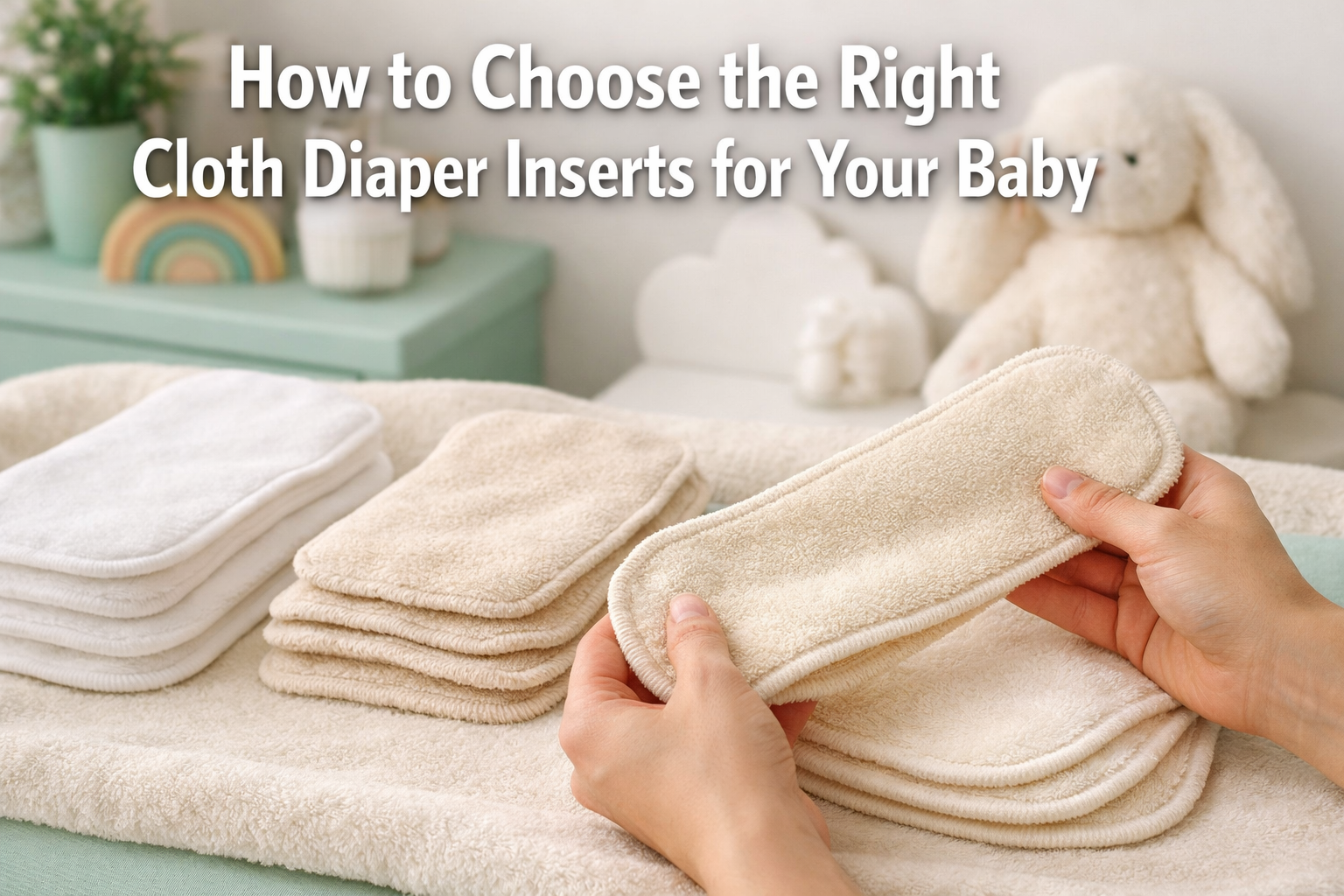
Picture this: It’s 3 AM, and you’re changing your baby for the third time tonight because their diaper has leaked—again. The frustration is real, and you’re wondering if cloth diapers are even worth it. Here’s the truth: the problem isn’t cloth diapering itself—it’s choosing the wrong cloth diaper inserts.
Understanding cloth diaper inserts is the secret to leak-free days (and nights!), happy babies, and confident parents. Whether you’re comparing bamboo vs microfiber inserts or searching for the best cloth diaper inserts for your little one’s needs, this comprehensive guide will walk you through everything you need to know to make the right choice in 2026.
The world of cloth diaper inserts can feel overwhelming at first. Bamboo, microfiber, hemp, cotton—what do these terms even mean, and which one will keep your baby dry? Don’t worry. By the end of this article, you’ll be an insert expert, ready to customize your cloth diapering system like a pro.
Key Takeaways
- Material matters: Bamboo offers excellent absorbency with minimal bulk, microfiber absorbs fastest but requires careful use, and hemp provides maximum capacity for heavy wetters
- Layering is key: Combining different insert types (fast-absorbing on top, slow-absorbing below) creates the most effective leak protection
- One size doesn’t fit all: Newborns, daytime use, and overnight needs each require different insert strategies
- Compression leaks are preventable: Understanding which materials resist compression (bamboo, hemp) versus those prone to it (microfiber) helps you avoid frustrating leaks
- Investment pays off: Quality inserts from trusted retailers like ClothDiaper.com last longer and perform better than budget alternatives
What Are Cloth Diaper Inserts? Understanding the Basics 🍼
Before diving into the specifics of best cloth diaper inserts, let’s start with the fundamentals. A cloth diaper insert is the absorbent layer that goes inside your cloth diaper shell or cover. Think of it as the “business end” of your diapering system—the part that actually soaks up the wetness and keeps your baby comfortable.
Unlike disposable diapers where the absorbent material is built right in, cloth diapers typically separate the waterproof outer layer (the shell or cover) from the absorbent inner layer (the insert). This modular design is actually brilliant because it allows you to:
Customize absorbency based on your baby’s age, output, and the time of day. A newborn during the day needs different absorbency than a toddler at night.
Adjust drying time by choosing materials that dry quickly for your everyday rotation or slower-drying, super-absorbent options for special situations.
Mix and match different insert types to create the perfect combination for your baby’s unique needs.
Replace worn inserts without replacing the entire diaper system, saving money in the long run.
How Inserts Work in Your Diapering System
Most modern cloth diaper systems use pocket diapers or covers that hold inserts. In a pocket diaper, you stuff the insert into a pocket opening, where it sits between the waterproof outer layer and the stay-dry inner lining. With covers, you simply lay the insert inside the cover, and it sits directly against your baby’s skin (unless you use a liner).
The insert’s job is straightforward: absorb liquid quickly and hold it securely until the next diaper change. However, the how varies dramatically between different materials, which is why choosing the right insert matters so much.
Types of Cloth Diaper Inserts: A Complete Breakdown
When you’re navigating the world of cloth diapers and their components, understanding the different insert materials available is crucial. Each type has unique characteristics, benefits, and drawbacks. Let’s break down the most popular options you’ll encounter in 2026.
Bamboo Terry Inserts: The Popular All-Rounder 🎋
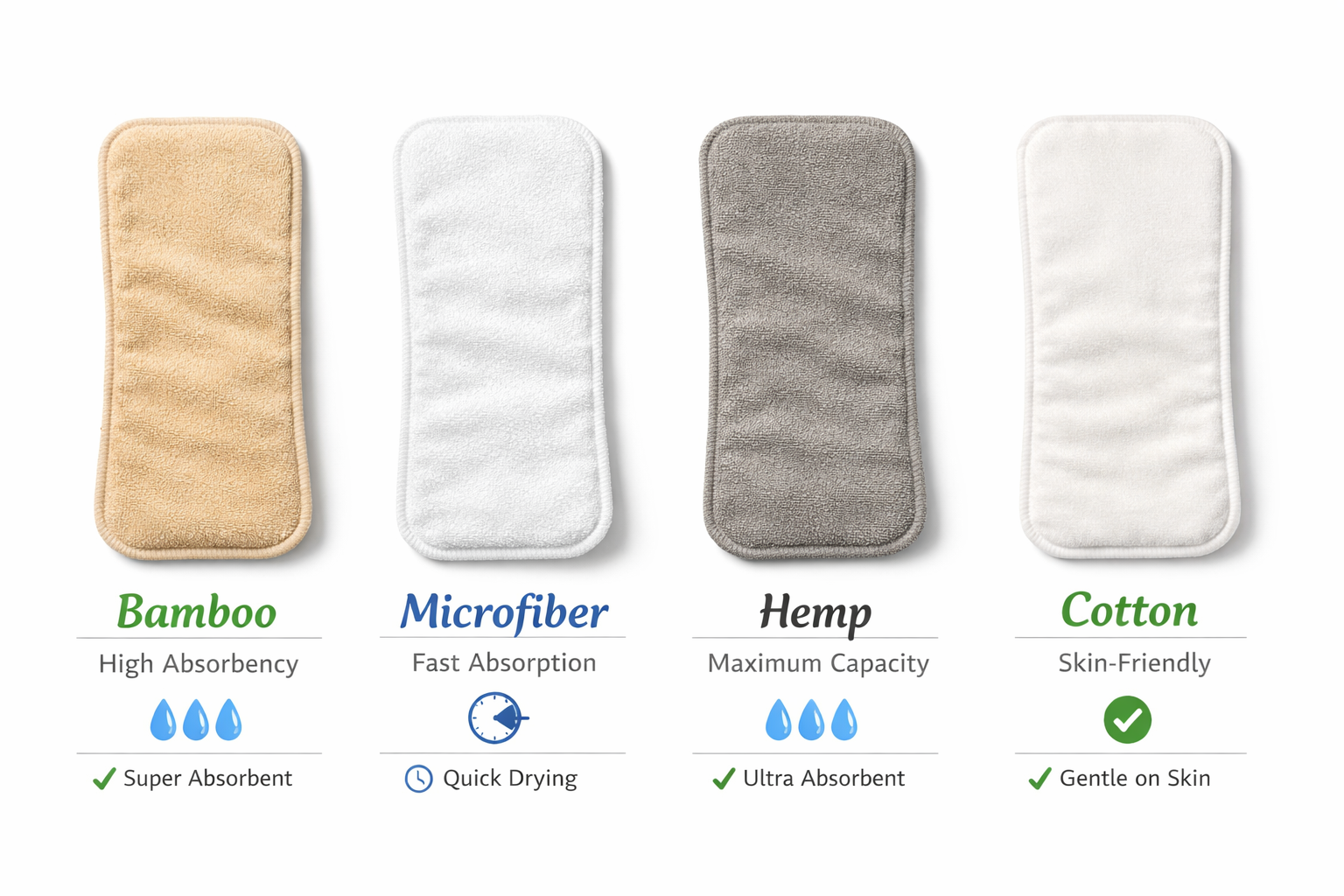
Bamboo terry has become one of the most common and accessible cloth diaper insert options for good reason. Made from bamboo viscose or rayon, these inserts offer high absorbency with reduced bulk compared to polyester alternatives like microfiber.[1]
Pros of Bamboo Inserts:
- Excellent absorbency-to-bulk ratio: They hold a lot without making your baby’s diaper look overly puffy
- Less prone to compression leaks: Unlike microfiber, bamboo maintains its absorbency even when your baby sits or lies on it[1]
- Naturally antimicrobial: Bamboo has natural properties that resist odors and bacteria
- Soft and comfortable: The terry texture is gentle against baby’s skin
- Environmentally friendly: Bamboo is a renewable, fast-growing resource
Cons of Bamboo Inserts:
- Slower absorption than microfiber: Not ideal for babies who release a lot of liquid at once
- Longer drying time: Bamboo takes longer to dry than synthetic materials
- Can be pricey: Quality bamboo inserts typically cost more than microfiber options
Best Uses for Bamboo:
Bamboo terry inserts work exceptionally well for everyday daytime use, especially for moderate wetters. Lightweight bamboo terry inserts (4-layer) are perfect for newborns and warmer weather, while standard bamboo terry (4-layer) serves as the most popular everyday insert across all ages.[1]
For parents dealing with compression leaks in cloth diapers, bamboo is an excellent choice because it maintains absorbency under pressure much better than budget polyfiber alternatives.
Microfiber Inserts: The Speed Demon ⚡
Microfiber inserts are made from ultra-fine polyester fibers that create a highly absorbent material. These were once the gold standard in cloth diapering, and they’re still widely used today—though with some important caveats.
Pros of Microfiber Inserts:
- Fastest absorption: Microfiber wicks moisture away incredibly quickly, making it ideal for heavy wetters who release a lot at once[2]
- Budget-friendly: Generally the most affordable insert option
- Quick drying: Dries faster than natural fibers, which is great for frequent washing
- Widely available: Nearly every cloth diaper retailer carries microfiber options
Cons of Microfiber Inserts:
- Cannot touch baby’s skin directly: Microfiber will actually wick moisture away from skin, causing severe dryness and irritation
- Prone to compression leaking: When saturated and compressed (like when baby sits), microfiber releases liquid[2]
- Loses absorbency over time: The fibers break down with repeated washing and use
- Requires multiple layers: You need at least 3 high-quality layers for effective performance[2]
- Holds odors: Microfiber tends to trap ammonia and odors more than natural fibers
Best Uses for Microfiber:
Microfiber works best when used strategically rather than as a standalone solution. High-quality microfiber performs best when paired with hemp or bamboo rather than used alone.[2] Place microfiber as the top layer in a layering system where it can quickly absorb liquid and pass it to slower-absorbing materials below.
Hemp Inserts: The Heavy-Duty Champion 💪
Hemp inserts are made from hemp fibers, often blended with cotton for added softness and flexibility. Hemp is the heavyweight champion of absorbency, though it comes with trade-offs.
Pros of Hemp Inserts:
- Maximum absorbency: Hemp holds the most liquid per square inch of any common diaper material[2]
- Minimal compression leaking: Once absorbed, hemp holds liquid securely even under pressure
- Trim fit: Despite high absorbency, hemp inserts are relatively thin
- Long-lasting: Hemp fibers are incredibly durable and actually improve with washing
- Natural and eco-friendly: A sustainable crop that requires minimal pesticides
Cons of Hemp Inserts:
- Slowest absorption: Hemp absorbs liquid very slowly, making it unsuitable for babies who have sudden bladder releases[2]
- Stiff when wet: Hemp-cotton blends become less flexible when saturated, which can be uncomfortable for younger babies
- Expensive: Hemp is typically the priciest insert option
- Long drying time: Takes longer to dry than bamboo or microfiber
- Requires prep: Hemp needs multiple washes before reaching full absorbency
Best Uses for Hemp:
Hemp-cotton blends are recommended for babies over 6 months of age, as they are less flexible when wet.[1] For heavy wetters and overnight use, hemp-cotton or bamboo-cotton combinations provide maximum absorbency suitable for extended wear periods.[1] Hemp works beautifully as a bottom layer in a layering system or as a booster for nighttime diapering.
If you’re struggling with nighttime leaks in cloth diapers, adding hemp to your insert strategy can be a game-changer.
Cotton Inserts: The Classic Choice 🌿
Cotton inserts, whether made from organic cotton, cotton terry, or cotton flannel, represent the traditional approach to cloth diapering. While less common as standalone inserts in modern systems, cotton still has its place.
Pros of Cotton Inserts:
- Skin-friendly: Cotton is naturally soft, breathable, and comfortable against baby’s skin[2]
- Moderate absorption: Absorbs well without being too slow or too fast
- Cool to the touch: Stays comfortable in warm weather
- Versatile: Can be used alone or in combination with other materials
- Affordable: Generally mid-range in pricing
- Easy to care for: Straightforward washing and drying
Cons of Cotton Inserts:
- Bulkier than bamboo or hemp: Requires more material for equivalent absorbency
- Moderate drying time: Not as quick as microfiber, not as slow as hemp
- Can develop stains: White cotton shows stains more readily than colored materials
Best Uses for Cotton:
Cotton works well for daytime use, especially in warmer climates where its breathability is appreciated. It’s also excellent for babies with sensitive skin who react to synthetic materials. Cotton prefolds and flats remain popular among traditional cloth diapering enthusiasts.
Bamboo vs Microfiber Inserts: The Head-to-Head Comparison
When parents ask about the best cloth diaper inserts, the conversation often comes down to bamboo vs microfiber inserts. These two materials represent different philosophies in cloth diapering, and understanding their differences helps you make the right choice for your family.
Absorption Speed: Microfiber Wins
If your baby tends to release a lot of liquid at once (common with breastfed babies), microfiber’s lightning-fast absorption is unbeatable. The liquid disappears almost instantly, preventing it from pooling and potentially leaking out the sides of the diaper.
Bamboo, while still reasonably quick, absorbs more slowly. For most babies, this isn’t a problem, but for heavy wetters with sudden releases, you might notice the diaper feels wet for a few seconds before the bamboo fully absorbs the liquid.
Winner: Microfiber (for absorption speed)
Total Absorbency: Bamboo Wins
While microfiber absorbs quickly, bamboo holds more liquid overall. A bamboo insert of the same size and thickness will typically outperform microfiber in total capacity, meaning you can go longer between changes or use fewer layers for equivalent protection.
Winner: Bamboo (for total absorbency)
Compression Leak Resistance: Bamboo Wins by a Landslide
This is where bamboo really shines. Bamboo is less prone to compression leaks than low-cost polyfiber competitors, making it superior for daily use, especially for moderate wetters.[1] When your baby sits, crawls, or lies down, the pressure on a saturated microfiber insert can literally squeeze liquid back out, causing leaks.
Bamboo maintains its absorbency even under pressure, which is why many parents who switch from microfiber to bamboo report a dramatic decrease in leaks.
Winner: Bamboo (by a significant margin)
Durability and Longevity: Bamboo Wins
Microfiber loses absorbency over time as the fibers break down with repeated washing and use.[2] Many parents notice their microfiber inserts becoming less effective after 6-12 months of regular use.
Bamboo, on the other hand, maintains its absorbency much longer and can often last through multiple children with proper care.
Winner: Bamboo (for long-term performance)
Drying Time: Microfiber Wins
If you need inserts that dry quickly—perhaps because you have a smaller rotation or live in a humid climate—microfiber’s fast drying time is a real advantage. Bamboo can take significantly longer to dry, especially in humid conditions or during winter months.
Winner: Microfiber (for quick drying)
Cost: Microfiber Wins (Initially)
Microfiber inserts are generally the most budget-friendly option upfront. However, when you factor in their shorter lifespan and the potential need to replace them or add boosters as they lose absorbency, the long-term cost difference narrows considerably.
Winner: Microfiber (for initial investment) / Bamboo (for long-term value)
The Verdict: Bamboo vs Microfiber Inserts
For most parents in 2026, bamboo inserts offer the best overall performance for everyday cloth diapering. They provide excellent absorbency, resist compression leaks, last longer, and work well for a wide range of babies and situations.
However, microfiber still has its place—particularly as a top layer in a layering system where its fast absorption can quickly wick moisture away from baby’s skin and pass it to slower-absorbing materials below.
“The best cloth diaper inserts aren’t always one material or the other—they’re often a strategic combination of both.”
When to Use Extra Absorbency: Nighttime and Heavy Wetters 🌙
Not all diaper changes are created equal. Your baby’s needs at 2 PM are very different from their needs at 2 AM. Understanding when and how to add extra absorbency is crucial for leak-free cloth diapering success.
Nighttime Diapering Challenges
Nighttime presents unique challenges for cloth diapering:
- Longer wear time: Babies might go 10-12 hours between changes
- Increased output: Many babies produce more urine during sleep
- Compression: Babies lie on their diapers all night, increasing compression leak risk
- Movement: Tossing and turning can shift inserts and create gaps
For nighttime success, you’ll need significantly more absorbency than daytime use. This is where layering strategies and high-capacity materials become essential.
Identifying Heavy Wetters
Some babies simply produce more urine than others. Signs your baby might be a heavy wetter include:
- Needing changes more frequently than every 2-3 hours during the day
- Consistently soaking through single-insert diapers
- Leaking despite properly fitted diapers
- Producing noticeably heavy, saturated diapers at each change
Heavy wetters benefit from the same strategies as nighttime diapering: maximum absorbency with compression-resistant materials.
Best Insert Combinations for Extra Absorbency
When you need serious absorbency, combination strategies work best:
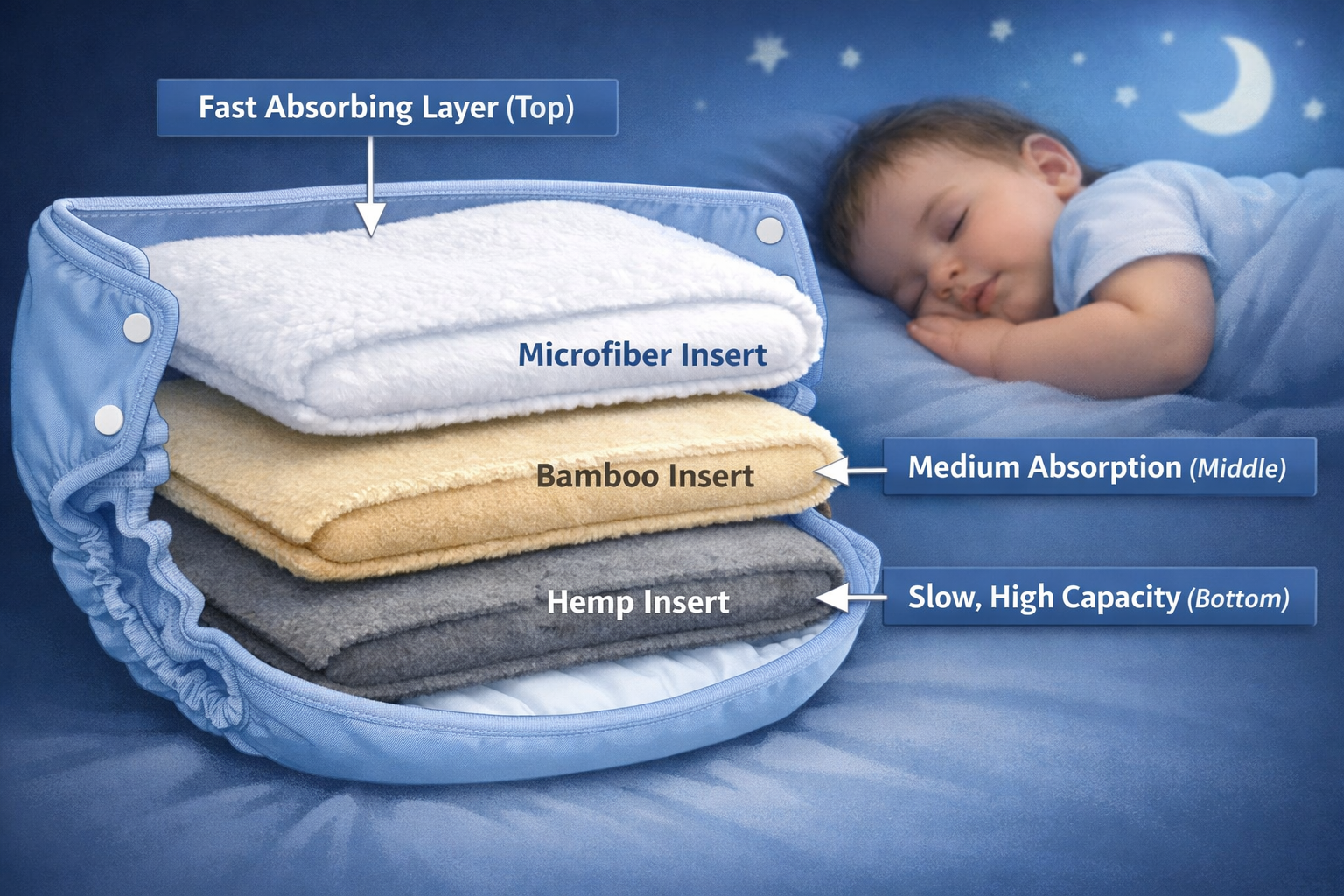
The Nighttime Powerhouse:
- Top layer: Microfiber or bamboo (for quick initial absorption)
- Middle layer: Bamboo (for capacity)
- Bottom layer: Hemp (for maximum holding power)
This three-layer approach gives you fast absorption, high capacity, and compression resistance—the trifecta of nighttime success.
The Heavy Wetter Daytime Solution:
- Main insert: Bamboo terry (standard 4-layer)
- Booster: Hemp doubler or additional bamboo layer
This provides extra capacity without excessive bulk, keeping your baby comfortable during active daytime hours.
The Budget-Friendly Option:
- Top layer: Microfiber (for speed)
- Bottom layer: Cotton prefold folded in thirds
This uses affordable materials you might already have while still providing layered protection.
Adding Boosters and Doublers
Boosters are smaller, additional absorbent layers you add to your main insert for extra capacity. They’re perfect for:
- Nighttime without excessive bulk
- Heavy wetters who need just a bit more
- Extending the life of inserts that are losing absorbency
- Targeted absorbency in the wet zone (front for boys, middle for girls)
Popular booster options include:
- Hemp doublers: Maximum absorbency in minimal space
- Bamboo boosters: Good balance of absorbency and affordability
- Cotton doublers: Budget-friendly capacity boost
Insert Layering Strategies: The Science of Staying Dry 🔬
Understanding how to layer different insert materials is perhaps the most valuable skill in cloth diapering. The right layering strategy can mean the difference between constant leaks and reliable, leak-free protection.
The Absorption Cascade Principle
Think of insert layering like a relay race. The first runner (top layer) needs to be fast to grab the liquid quickly. The middle runner maintains the pace, and the anchor (bottom layer) has the endurance to hold everything securely until the finish line (diaper change).
The optimal absorption layering order (from top to bottom) is: microfiber → cotton → bamboo → hemp, with faster-absorbing materials on top and slower ones below.[2]
This arrangement works because:
- Fast absorption at the top prevents pooling and side leaks
- Medium absorption in the middle provides capacity and transfer
- Slow, high-capacity absorption at the bottom holds liquid securely for extended periods
Practical Layering Combinations
You don’t always need all four materials. Here are practical combinations for different situations:
Newborn Daytime:
- Single 4-layer bamboo terry insert
- Change every 2 hours
- Lightweight and trim
Older Baby Daytime:
- 4-layer bamboo terry (main insert)
- Cotton doubler (if needed for heavy wetters)
- Change every 2-3 hours
Nighttime (Light Sleeper):
- Bamboo insert (top)
- Hemp doubler (bottom)
- 10-12 hour protection
Nighttime (Heavy Wetter):
- Microfiber insert (top)
- Bamboo insert (middle)
- Hemp doubler (bottom)
- Maximum 12-hour protection
Long Car Trips or Outings:
- Bamboo insert (main)
- Bamboo or hemp booster
- Extended wear without changes
Common Layering Mistakes to Avoid
❌ Putting slow-absorbing materials on top: If hemp is your top layer, liquid will pool before it absorbs, causing leaks
❌ Using only microfiber for heavy wetters: It will compress and leak once saturated
❌ Over-stuffing: Too many layers create excessive bulk and can actually prevent proper absorption
❌ Putting microfiber against skin: Always use microfiber inside a pocket or under a liner
✅ Do: Experiment with different combinations to find what works for your baby
✅ Do: Adjust layering as your baby grows and their output changes
✅ Do: Consider the time of day and activity level when choosing your layers
Troubleshooting Layering Issues
If you’re experiencing leaks despite proper layering, consider these factors:
Fit issues: Even the best inserts won’t work if the diaper doesn’t fit properly. Check for gaps around legs and waist.
Repelling: Buildup from detergent, fabric softener, or diaper creams can cause inserts to repel liquid. Strip and sanitize if needed. If you notice an ammonia smell in cloth diapers, this could indicate buildup issues.
Insufficient absorbency: You might simply need more capacity. Add another layer or upgrade to higher-absorbency materials.
Wrong material combination: If you’re getting compression leaks, replace microfiber with bamboo or hemp.
Best Cloth Diaper Inserts Available on ClothDiaper.com 🛒
When shopping for cloth diaper inserts, quality matters. ClothDiaper.com offers a curated selection of high-performance inserts that have been tested and trusted by thousands of families. Here’s what to look for when browsing their collection.[7]
Premium Bamboo Insert Options
ClothDiaper.com carries several bamboo insert varieties designed for different needs:
Standard Bamboo Terry Inserts: These 4-layer bamboo inserts are the workhorses of cloth diapering. They offer excellent absorbency for everyday use, fit most pocket diapers, and provide reliable protection for babies of all ages. Perfect for building your basic rotation.
Bamboo Charcoal Inserts: These feature a bamboo charcoal inner layer with microfiber or bamboo terry. The charcoal layer provides natural odor control while maintaining excellent absorbency. Great for parents concerned about diaper pail odors.
Bamboo/Cotton Blend Inserts: Combining bamboo’s absorbency with cotton’s softness creates a comfortable, high-performing insert that works well against skin or in pockets.
Microfiber Insert Selection
For parents who want the speed of microfiber with quality construction:
Premium 3-Layer Microfiber Inserts: These meet the minimum three-layer requirement for effective performance[2] and use high-quality microfiber that maintains absorbency longer than budget alternatives.
Microfiber/Bamboo Combination Inserts: These clever designs put microfiber on top for quick absorption and bamboo underneath for capacity and compression resistance—the best of both worlds in a single insert.
Hemp and Hemp Blend Options
For maximum absorbency and nighttime protection:
Hemp/Cotton Blend Inserts: The gold standard for overnight diapering and heavy wetters. These inserts combine hemp’s incredible capacity with cotton’s softness and improved flexibility.
Hemp Doublers: Smaller boosters made from hemp/cotton blends that add serious absorbency without excessive bulk. Perfect for layering strategies.
Organic Hemp Inserts: For eco-conscious parents who want maximum absorbency with organic, sustainable materials.
Specialty and Combination Inserts
ClothDiaper.com also offers innovative designs that solve specific problems:
Stay-Dry Topped Inserts: These feature a stay-dry fleece or suedecloth layer on top with absorbent materials underneath. They keep baby feeling dry while providing excellent absorption—ideal for sensitive skin.
Sized Inserts: Rather than one-size-fits-all, these come in newborn, small, medium, and large sizes for optimal fit and absorbency at each stage.
Prefolds and Flats: Traditional options that can be folded and used as inserts, offering versatility and excellent value for money.
What to Look for When Shopping
When browsing ClothDiaper.com’s insert collection, consider:
✅ Material composition: Check the exact blend and layer count
✅ Size compatibility: Ensure inserts fit your diaper shells
✅ Customer reviews: Real parent experiences are invaluable
✅ Care instructions: Some materials require special prep or washing
✅ Price per insert: Calculate cost for your full rotation (24-36 inserts)
✅ Bundle deals: Many retailers offer discounts on multi-packs
Building Your Insert Stash
For a complete cloth diaper rotation, most parents need:
- 24-36 everyday inserts (bamboo or bamboo/microfiber combinations)
- 6-12 nighttime inserts or boosters (hemp or hemp/bamboo)
- 6-12 backup inserts (for rotation during washing or as your baby grows)
ClothDiaper.com often offers starter packages that include a mix of insert types, which can be a cost-effective way to try different materials and find what works best for your baby.
Special Considerations for Different Ages and Stages 👶
Your baby’s diapering needs change dramatically from birth through potty training. The best cloth diaper inserts for a newborn look very different from what works for an active toddler.
Newborn Stage (0-3 Months)
Unique Needs:
- Frequent changes (every 1-2 hours)
- Smaller output per change
- Delicate, sensitive skin
- Frequent nighttime changes
- Meconium and transitional stools
Best Insert Choices:
Lightweight bamboo terry inserts (4-layer) work best for newborns due to their flexibility and lightweight properties.[1] Newborns don’t need heavy-duty absorbency—they need trim, comfortable inserts that change easily and dry quickly.
Recommended Strategy:
- Use single-layer bamboo or cotton inserts
- Change frequently rather than adding bulk
- Consider newborn-sized inserts for better fit
- Keep nighttime simple—newborns wake frequently anyway
Young Baby Stage (3-6 Months)
Unique Needs:
- Increasing output per change
- Beginning to sleep longer stretches
- More active during awake times
- Transitioning feeding patterns
Best Insert Choices:
Standard 4-layer bamboo terry inserts become the go-to option. They provide enough absorbency for 2-3 hour stretches without excessive bulk.
Recommended Strategy:
- Transition to standard bamboo inserts for daytime
- Begin experimenting with nighttime boosters as sleep stretches lengthen
- Consider adding a doubler for longer outings
- Stock up on your core rotation—you’ve figured out what works
Older Baby Stage (6-12 Months)
Unique Needs:
- Significantly increased output
- Longer stretches between daytime changes
- Sleeping through the night (hopefully!)
- Very active—crawling, standing, moving constantly
- Starting solids (different diaper contents)
Best Insert Choices:
This is when layering becomes essential. Hemp-cotton blends are recommended for babies over 6 months of age, as they are less flexible when wet but provide the capacity needed for longer wear.[1]
Recommended Strategy:
- Use bamboo inserts with bamboo or cotton boosters for daytime
- Implement serious nighttime layering (bamboo + hemp)
- Consider compression-resistant materials for active babies
- Adjust absorbency based on feeding changes
Toddler Stage (12+ Months)
Unique Needs:
- Maximum output per change
- Very active—running, climbing, playing
- Longer stretches between changes
- Approaching potty training
- Strong opinions about comfort and fit
Best Insert Choices:
Maximum absorbency with trim fit becomes the priority. Hemp/cotton combinations, bamboo with boosters, or multi-layer systems work best.
Recommended Strategy:
- Use your highest-capacity inserts for daytime
- Nighttime requires serious absorbency—don’t skimp
- Consider stay-dry topped inserts for comfort awareness (helps with potty training)
- Trim fit matters more as clothing gets less stretchy
Caring for Your Cloth Diaper Inserts: Maximizing Performance and Longevity 🧺
Even the best cloth diaper inserts won’t perform well if they’re not properly cared for. Proper washing, drying, and maintenance ensure your inserts stay absorbent, fresh, and effective for years.
Prepping New Inserts
Different materials require different prep:
Bamboo and Cotton: Wash 3-5 times before first use. These natural fibers contain oils that need to be washed away before they reach full absorbency.
Hemp: Requires the most prep—wash 5-8 times. Hemp actually gets more absorbent with each wash for the first several months of use.
Microfiber: Ready to use after one wash. Synthetic materials don’t need extensive prepping.
Why Prep Matters: Skipping prep means your brand-new inserts won’t absorb properly, leading to frustrating leaks and the mistaken belief that cloth diapers don’t work.
Washing Routine Essentials
A proper wash routine keeps inserts absorbent and fresh:
Step 1: Pre-Rinse
- Cold water
- No detergent
- Removes urine and loose debris
Step 2: Main Wash
- Hot water (140-160°F)
- Appropriate amount of cloth-diaper-safe detergent
- Heavy-duty or sanitize cycle
- Ensures thorough cleaning
Step 3: Extra Rinse
- Cold water
- No detergent
- Removes any remaining detergent residue
Water Level: Inserts should have plenty of room to agitate. Too much or too little water reduces cleaning effectiveness.
Drying Your Inserts
Line Drying:
- Most gentle on fibers
- Sunlight naturally bleaches stains
- Free and eco-friendly
- Takes longest (bamboo and hemp can take 24+ hours)
Machine Drying:
- Fast and convenient
- Use medium heat for natural fibers
- Low heat for microfiber to prevent damage
- Reduces lifespan slightly but often worth the convenience
Combination Approach:
Many parents line dry hemp and bamboo inserts while machine drying microfiber and cotton for faster turnaround.
Troubleshooting Absorbency Issues
If your inserts start repelling or losing absorbency:
Detergent Buildup: Too much detergent leaves residue that repels water. Strip inserts by washing multiple times with no detergent, then sanitize.
Hard Water Minerals: Mineral buildup can reduce absorbency. Use a water softener or add Calgon to your wash routine.
Fabric Softener Contamination: Never use fabric softener on cloth diapers or inserts—it coats fibers and causes repelling.
Diaper Cream Residue: Non-cloth-safe diaper creams can leave residue. Use liners when applying cream or choose cloth-safe options.
For persistent issues with cloth diaper rash or absorbency problems, a thorough strip and sanitize routine usually resolves the issue.
Storage and Rotation Tips
Proper Storage:
- Store clean inserts in a dry, ventilated area
- Avoid plastic bins that trap moisture
- Keep inserts easily accessible for quick stuffing
Rotation Strategy:
- Mark inserts with purchase date
- Rotate through your entire stash evenly
- This prevents some inserts from wearing out while others stay new
- Extends overall lifespan of your collection
Inventory Management:
- Keep 2-3 days’ worth of inserts in rotation
- Have backup inserts for emergencies
- Replace worn inserts before they fail completely
Real Parent Stories: Insert Success and Lessons Learned 💬
Sometimes the best learning comes from other parents who’ve been in the trenches. Here are real experiences from cloth diapering families.
Sarah’s Nighttime Breakthrough
“We were struggling with nighttime leaks for months. Our 8-month-old would wake up soaked almost every morning, and I was ready to give up on cloth at night. Then I learned about layering. I started using a microfiber insert on top with a hemp doubler underneath, and it was like magic. Not a single leak since! I wish I’d known about proper layering from the beginning—it would have saved us so much frustration and laundry.”
Lesson: Don’t give up on cloth for nighttime until you’ve tried proper layering strategies. The right combination can handle even the heaviest wetters.
Marcus’s Compression Leak Discovery
“I couldn’t figure out why my son’s diapers leaked every single time he sat in his car seat, but nowhere else. A friend mentioned compression leaks, and suddenly it all made sense. I was using cheap microfiber inserts, and the pressure from the car seat was literally squeezing the liquid back out. I switched to bamboo inserts, and the car seat leaks stopped immediately. Sometimes the solution is simpler than you think!”
Lesson: If leaks happen in specific situations (car seat, high chair, during tummy time), compression leaks are likely the culprit. Switching to compression-resistant materials like bamboo or hemp solves the problem.
Jennifer’s Budget-Smart Approach
“I started cloth diapering on a tight budget, so I bought the cheapest inserts I could find. Big mistake. They leaked constantly, lost absorbency within months, and I ended up spending more replacing them than I would have spent buying quality inserts in the first place. When I finally invested in good bamboo inserts from a reputable retailer, the difference was night and day. Quality matters, and it’s actually more economical in the long run.”
Lesson: Budget-friendly cloth diapering doesn’t mean buying the cheapest possible inserts. Invest in quality from the start—it saves money and frustration over time.
The Rodriguez Family’s Trial and Error
“We tried to use the same inserts for our newborn that we planned to use when he was older, thinking we’d save money. He was swimming in bulk, uncomfortable, and the inserts didn’t fit properly in newborn diapers. Once we got lightweight bamboo inserts sized for newborns, everything improved. He was more comfortable, we had fewer leaks, and we still have those heavy-duty inserts waiting for when he’s bigger. Different stages really do need different solutions.”
Lesson: One-size-fits-all doesn’t apply to inserts. Match your insert choice to your baby’s current age and needs, not what you think you’ll need in six months.
Making Your Decision: Choosing the Right Inserts for Your Family
After all this information, how do you actually decide which cloth diaper inserts to buy? Here’s a practical decision-making framework.
Step 1: Assess Your Baby’s Needs
Ask yourself:
- How old is my baby? (Determines absorbency needs and bulk tolerance)
- How much do they typically wet? (Light, moderate, or heavy wetter)
- What’s our biggest challenge? (Nighttime leaks, daytime leaks, compression leaks)
- How active is my baby? (More active babies need compression-resistant materials)
Step 2: Consider Your Lifestyle Factors
Think about:
- How often can I do laundry? (Affects rotation size and drying time priorities)
- What’s my budget? (Initial investment vs. long-term value)
- Where do I dry diapers? (Machine, line, or combination affects material choice)
- How much time do I have for prep and care? (Some materials need more attention)
Step 3: Start with a Core Collection
For most families, a good starting point is:
Daytime Foundation (24-30 inserts):
- Standard 4-layer bamboo terry inserts
- Reliable, versatile, and suitable for most situations
Nighttime/Heavy Duty (6-12 inserts or boosters):
- Hemp/cotton doublers or inserts
- Maximum absorbency for extended wear
Quick-Dry Backup (6-12 inserts):
- Microfiber or microfiber/bamboo combinations
- Fast drying for emergencies or small rotations
Step 4: Test and Adjust
Give your initial setup 2-3 weeks of real-world testing, then:
- Identify any recurring leak patterns
- Note which inserts work best for which situations
- Add boosters or different materials as needed
- Don’t be afraid to try something new if your current setup isn’t working
Step 5: Evolve with Your Baby
Remember that what works today might not work in three months. Be prepared to:
- Add absorbency as your baby grows
- Adjust layering strategies for different activities
- Replace worn inserts as needed
- Adapt to changing sleep patterns and feeding schedules
Frequently Asked Questions About Cloth Diaper Inserts
Q: Can I use different insert brands together?
A: Absolutely! Mix and match different brands and materials to create the perfect combination for your baby. Focus on material type and layering order rather than brand matching.
Q: How many inserts do I need?
A: For full-time cloth diapering, aim for 24-36 daytime inserts plus 6-12 nighttime inserts or boosters. This allows for washing every 2-3 days with a comfortable rotation.
Q: Why are my brand-new inserts repelling liquid?
A: They likely need proper prepping. Natural fibers (bamboo, hemp, cotton) contain oils that must be washed away before they reach full absorbency. Wash 3-8 times before use.
Q: Can I put microfiber directly against my baby’s skin?
A: No! Microfiber will wick moisture away from skin, causing severe dryness and irritation. Always use microfiber inside a pocket diaper or under a liner.
Q: How long should cloth diaper inserts last?
A: With proper care, quality bamboo and hemp inserts can last 3-5 years or through multiple children. Microfiber typically lasts 1-2 years before losing significant absorbency.
Q: What’s the difference between an insert and a booster?
A: Inserts are the main absorbent layer in your diaper, while boosters are smaller, additional layers added for extra capacity. Boosters supplement inserts rather than replace them.
Q: Should I stuff inserts before storing or right before use?
A: This is personal preference. Pre-stuffing saves time during changes but takes up more storage space. Many parents stuff a day’s worth at a time.
Q: Can I bleach my inserts to sanitize them?
A: Occasional bleach sanitizing (every few months or when buying used) is fine, but frequent bleaching breaks down fibers. Hot water washing is sufficient for regular cleaning.
Conclusion: Your Path to Cloth Diapering Success
Choosing the right cloth diaper inserts doesn’t have to be overwhelming. Armed with the knowledge of material properties, layering strategies, and how to match inserts to your baby’s specific needs, you’re well-equipped to build a cloth diapering system that works beautifully for your family.
Remember these key principles:
🌟 Material matters: Bamboo offers the best all-around performance for most families, microfiber provides speed when used strategically, and hemp delivers maximum capacity for heavy wetters and nighttime.
🌟 Layering is your secret weapon: Combining materials with fast absorption on top and slow, high-capacity absorption below creates superior protection compared to single-material approaches.
🌟 One size doesn’t fit all: Your newborn, your toddler, daytime use, and nighttime use all benefit from different insert strategies. Adapt as your baby grows and their needs change.
🌟 Quality pays off: Investing in high-quality inserts from trusted retailers like ClothDiaper.com saves money and frustration in the long run compared to constantly replacing cheap, underperforming alternatives.
🌟 Troubleshooting is normal: Every baby is different. Don’t be discouraged if your first insert choice doesn’t work perfectly—adjust, experiment, and find what works for your unique situation.
Your Next Steps
Ready to get started or improve your current cloth diaper insert setup? Here’s what to do:
- Assess your current situation: What’s working? What isn’t? Identify your specific challenges.
- Visit ClothDiaper.com: Browse their selection of quality inserts with your baby’s needs in mind. Look for starter packs or bundles that let you try different materials.
- Start with the basics: If you’re new to cloth diapering, begin with bamboo terry inserts for daytime and add hemp boosters for nighttime.
- Join the community: Connect with other cloth diapering parents through comprehensive guides and resources to share experiences and get support.
- Give it time: Allow 2-3 weeks to adjust to your new insert system before making major changes. Sometimes it takes a bit of trial and error to find the perfect combination.
- Track your results: Keep notes on which inserts work best for different situations. This helps you optimize your rotation and makes future purchases easier.
Remember, cloth diapering is a journey, not a destination. The perfect insert setup for your family exists—it might just take a little experimentation to find it. But once you do, you’ll enjoy leak-free days and nights, a happy baby, and the satisfaction of making a sustainable choice that’s better for your baby, your wallet, and the planet.
You’ve got this! 💚
References
[1] How To Choose The Best Cloth Diaper Insert For Your Baby Or Toddler – https://www.kinderclothdiapers.com/blogs/getting-started-with-cloth-diapers/how-to-choose-the-best-cloth-diaper-insert-for-your-baby-or-toddler
[2] Which Cloth Diaper Inserts Are The Best 1 – https://clothdiaperkids.com/blogs/news/which-cloth-diaper-inserts-are-the-best-1
[3] Best Cloth Diapers – https://mommyhood101.com/best-cloth-diapers
[4] Best Cloth Diapers – https://www.reviewed.com/parenting/best-right-now/best-cloth-diapers
[5] Watch – https://www.youtube.com/watch?v=jPZs2gu_9aE
[6] Watch – https://www.youtube.com/watch?v=hyWCXgutjg0&vl=en
[7] Cloth Diaper Inserts – https://clothdiaper.com/collections/cloth-diaper-inserts