Discover how to choose the right changing table and storage for safety and practicality. Expert tips for parents on features, organization, and setup.
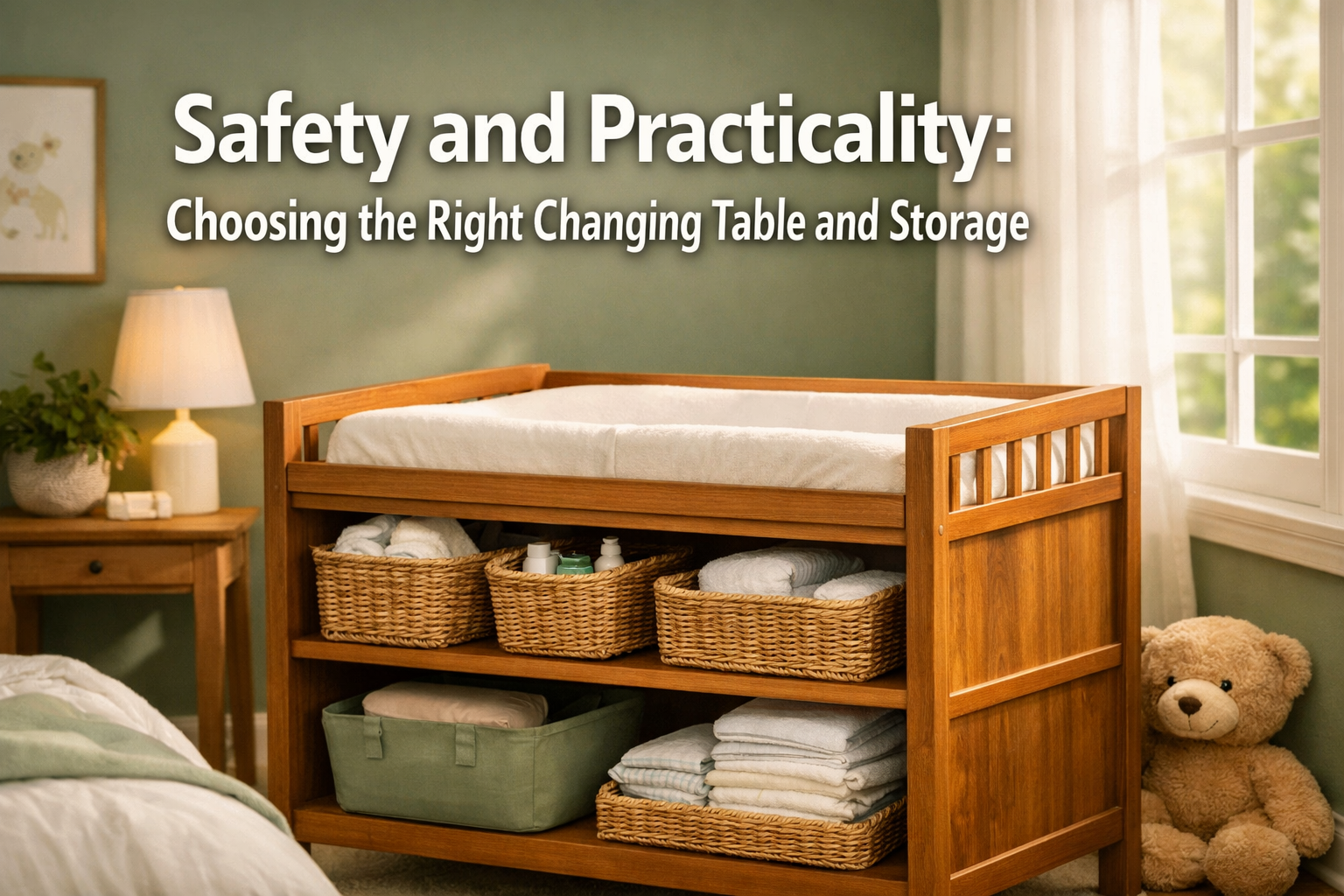
Picture this: It’s 2 a.m., your baby needs a diaper change, and you’re fumbling in the dark trying to find wipes while keeping one hand on your squirming little one. Sound familiar? Every parent has been there—that moment when you realize your changing station setup isn’t quite working. The truth is, choosing the Right Changing Table and Storage isn’t just about aesthetics or matching your nursery décor. It’s about creating a safe, efficient space that works for you during those countless diaper changes (spoiler alert: you’ll be doing this about 2,500 times in the first year alone!). Whether you’re a first-time parent preparing for baby’s arrival or a seasoned pro looking to upgrade, understanding what makes a changing table both safe and practical can transform one of parenting’s most frequent tasks from stressful to streamlined.
Key Takeaways
- Safety comes first: Look for changing tables with safety straps, guardrails at least 2 inches high, and sturdy construction that meets current safety standards
- Storage is essential: The Right Changing Table and Storage solution keeps all diapering essentials within arm’s reach, preventing dangerous moments when you need to step away
- Height matters: Choose a changing table that allows you to change diapers comfortably without bending or straining your back
- Space planning: Measure your nursery carefully and consider multi-functional furniture that grows with your child
- Quality investment: A well-built changing table with adequate storage will serve you through multiple children and can often be repurposed later
Understanding the Importance of the Right Changing Table and Storage
When Sarah brought her first baby home in 2024, she thought any flat surface would work for diaper changes. After all, how complicated could it be? Three weeks later, after countless trips across the room for forgotten wipes and one terrifying moment when her son nearly rolled off the bed, she understood why dedicated changing furniture matters.
Why Dedicated Changing Furniture Matters
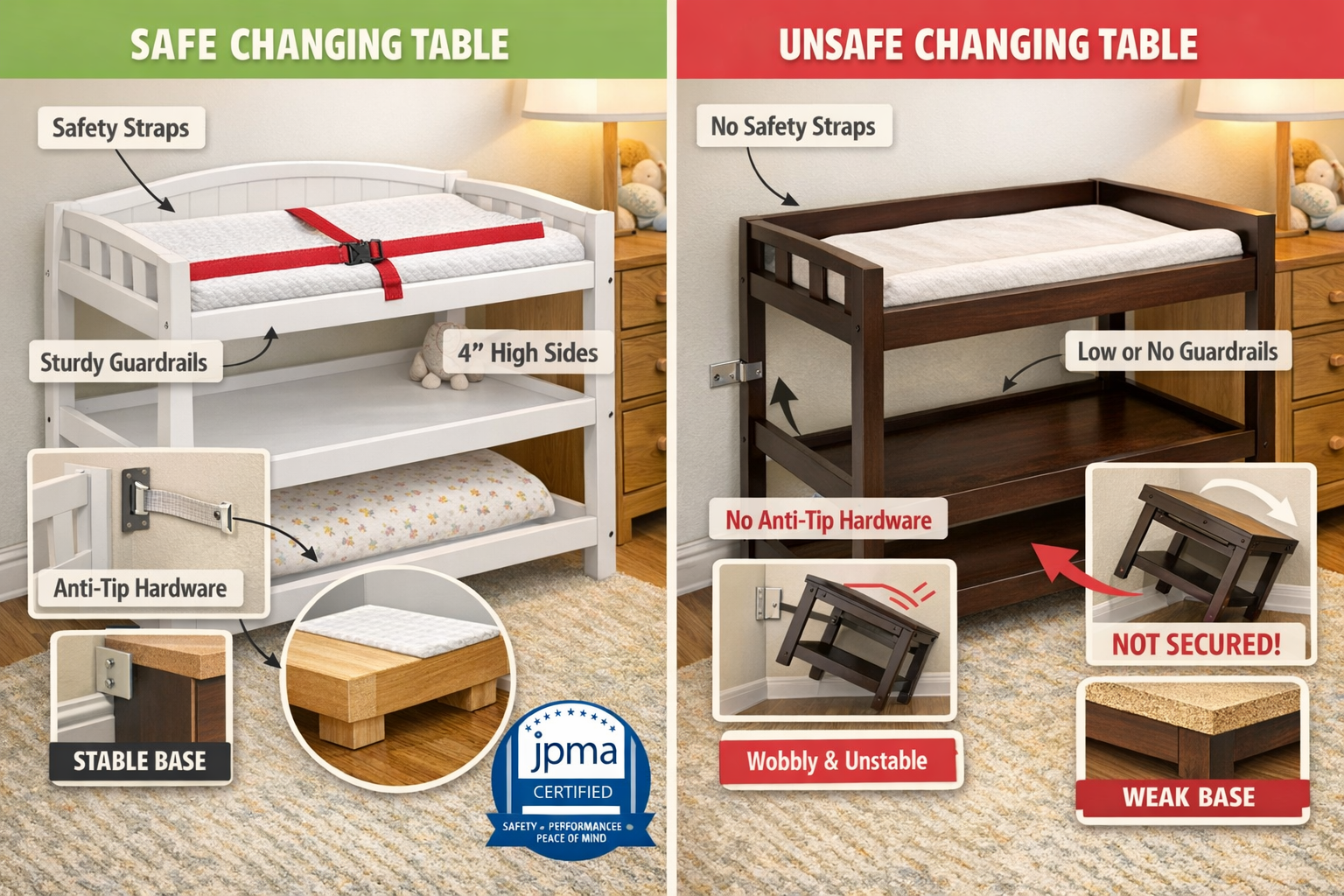
Dedicated changing tables serve multiple critical purposes that go beyond simply providing a surface. First and foremost, they’re designed with your baby’s safety in mind. Unlike beds, dressers, or other improvised surfaces, changing tables feature specific safety elements like raised edges, safety straps, and stable bases engineered to prevent accidents.
The ergonomic benefits can’t be overstated either. Most changing tables stand between 36 and 43 inches tall, positioning your baby at a comfortable height that protects your back from strain. Consider that you’ll spend approximately 30 minutes per day changing diapers during the first year—that’s over 180 hours! 🕐 The right height makes this repetitive task significantly easier on your body.
Organization and efficiency represent another crucial advantage. When everything you need is within arm’s reach, you never have to leave your baby unattended. This isn’t just convenient; it’s a fundamental safety principle. According to the Consumer Product Safety Commission, thousands of babies are injured each year from falls during diaper changes, often when caregivers step away “just for a second” to grab supplies [1].
The Hidden Costs of Poor Choices
Choosing the wrong changing setup can impact your daily life in ways you might not anticipate:
- Physical strain: Bending over low surfaces or reaching awkwardly can lead to chronic back pain
- Safety risks: Unstable furniture or inadequate restraints increase fall hazards
- Time waste: Poor organization means more time searching for supplies
- Stress accumulation: Frustrating setups compound the challenges of sleep-deprived parenting
- Financial waste: Buying cheap furniture that breaks or doesn’t meet your needs means spending twice
Essential Safety Features for Changing Tables
Click on the picture below to order now
Safety isn’t negotiable when it comes to baby furniture. Understanding which features truly protect your child helps you make informed decisions that go beyond marketing claims.
Safety Straps and Restraints
Every changing table should include a safety strap, and more importantly, you should use it every single time. These straps typically fasten around your baby’s waist, providing a crucial backup if your attention wavers even momentarily. Look for straps that are:
- Easy to fasten and unfasten with one hand
- Adjustable to grow with your baby
- Securely anchored to the table frame (not just the pad)
- Made from durable, washable materials
However, here’s the critical point: safety straps are a backup, not a substitute for supervision. Never rely solely on a strap to keep your baby safe. Always keep one hand on your baby during changes.
Guardrails and Barriers
The American Academy of Pediatrics recommends that changing tables have guardrails at least 2 inches high on all four sides [2]. These barriers serve as a physical reminder of the table’s edges and provide some protection against rolling.
Effective guardrails should be:
- Permanently attached (not removable)
- Smooth with no sharp edges or points
- High enough to be meaningful (2-4 inches is standard)
- Sturdy enough to withstand pressure
Some parents worry that guardrails make it harder to place and lift their baby. While this concern is understandable, the safety benefits far outweigh the minor inconvenience. Think of guardrails as essential protection, especially as babies become more mobile and unpredictable.
Stability and Construction Quality
A changing table’s stability determines whether it can safely support your baby’s weight plus the force of their movements. Key stability indicators include:
| Feature | What to Look For | Why It Matters |
|---|---|---|
| Base Width | Wide, stable footprint | Prevents tipping |
| Weight Capacity | At least 30 pounds | Accommodates growing babies |
| Material Quality | Solid wood or high-quality engineered wood | Ensures durability |
| Joint Construction | Screwed and glued joints | Prevents wobbling |
| Anti-tip Hardware | Wall anchoring options | Critical safety backup |
“The best changing table is one that doesn’t wobble, even slightly. If you can shake it with your hand, it’s not stable enough for your baby.” — Pediatric Safety Expert, Dr. Jennifer Martinez
Certification and Standards Compliance
In 2026, reputable changing tables should meet or exceed standards set by the Juvenile Products Manufacturers Association (JPMA) and comply with Consumer Product Safety Commission (CPSC) regulations. Look for certification labels indicating the product has been independently tested.
These certifications verify that the furniture has passed rigorous testing for:
- Structural integrity
- Stability and tip resistance
- Safety strap strength
- Absence of hazardous materials
- Proper spacing (to prevent entrapment)
Don’t hesitate to ask retailers about safety certifications. If they can’t provide clear information, consider that a red flag.
Practical Storage Solutions for Changing Tables
Safety keeps your baby protected, but smart storage keeps you sane. The Right Changing Table and Storage configuration means never having to choose between convenience and safety.
Types of Storage Configurations
Open Shelving offers the advantage of visibility and quick access. You can see everything at a glance, making it easy to grab what you need mid-change. However, open shelves require more organization effort to look tidy and offer less protection from dust.
Drawers provide concealed storage that looks cleaner and protects items from dust and light. They’re perfect for storing larger quantities of diapers, clothing, and items you don’t need constantly. The downside? You need a free hand to open them, which isn’t always possible during changes.
Combination systems blend open and closed storage, offering the best of both worlds. For example, a changing table with open shelves on one side for immediate-access items and drawers on the other for bulk storage and clothing creates a flexible system.
Hanging organizers attach to the side of changing tables or mount on nearby walls, adding vertical storage without consuming floor space. These work brilliantly in smaller nurseries.
Essential Items to Store
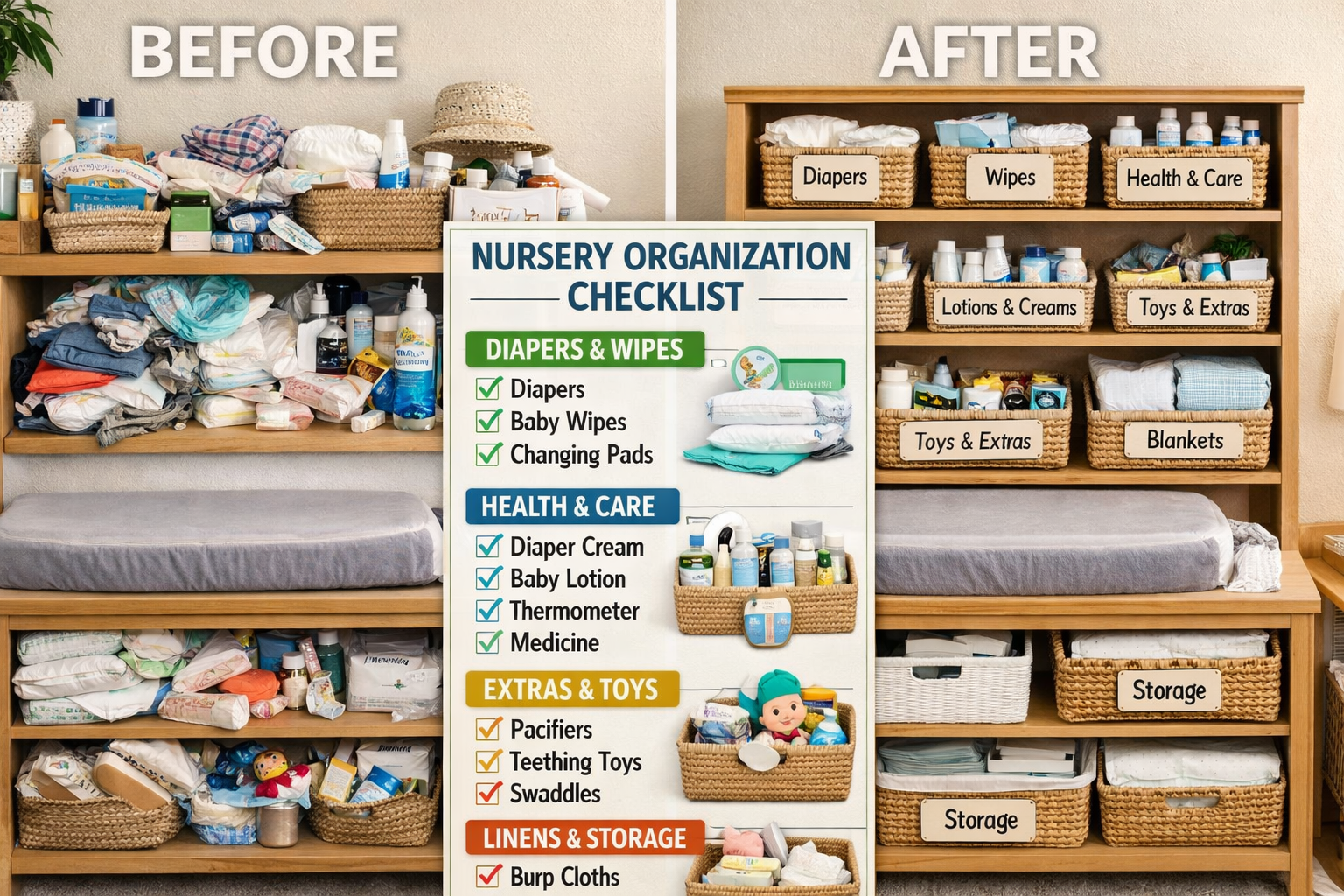
When planning your storage, consider organizing items by frequency of use. Daily essentials should occupy the most accessible spots:
Top Priority (Within Arm’s Reach):
- Diapers (cloth or disposable)
- Wipes and wipe warmer
- Diaper cream and ointments
- Hand sanitizer
- Small toy or distraction item
For parents using reusable diapers, having a well-organized system becomes even more important. Check out our complete guide to reusable diapers for storage tips specific to cloth diapering.
Secondary Storage (Nearby but Not Immediate):
- Extra clothing and onesies
- Burp cloths and towels
- Grooming supplies (nail clippers, brush, thermometer)
- Changing pad covers
- Diaper disposal bags or wet bags
Bulk Storage (Lower shelves or drawers):
- Diaper boxes or cloth diaper stash
- Backup wipes
- Extra creams and lotions
- Seasonal clothing
Organization Systems That Work
The most effective organization systems share common characteristics: they’re simple, sustainable, and scalable. Here’s what works in real nurseries:
Basket and Bin Method 📦
Use coordinated baskets or bins to group similar items. Label each container clearly (even if you think you’ll remember—sleep deprivation is real!). This system makes it easy to grab an entire category of items and simplifies restocking.
Color Coding
Assign colors to different types of supplies. For example, blue bins for diapering essentials, green for clothing, yellow for health items. This visual system helps other caregivers find things quickly.
Vertical Dividers
Install drawer dividers to prevent small items from becoming jumbled chaos. This works especially well for organizing different sizes of clothing or separating various types of diaper creams.
Rotation System
Place newer items behind older ones to ensure you use supplies before they expire or your baby outgrows them. This “first in, first out” approach prevents waste.
If you’re using cloth diapers, proper organization becomes even more critical. Learn more about navigating the world of cloth diapers to optimize your storage strategy.
Maximizing Small Spaces
Not everyone has a spacious nursery, but limited square footage doesn’t mean sacrificing functionality. Creative solutions for compact spaces include:
Wall-mounted changing stations fold up when not in use, freeing valuable floor space. Many models include built-in storage compartments that hold essential supplies.
Dresser-top changing trays convert existing furniture into changing stations. Secure a contoured changing pad to a dresser top, and use the dresser drawers for storage. This dual-purpose approach works brilliantly in small rooms.
Corner units utilize often-wasted corner space efficiently. These triangular designs fit snugly into corners while providing surprising storage capacity.
Over-the-door organizers add storage without consuming any floor or wall space. Hang them on the nursery door or closet door for additional capacity.
Choosing the Right Changing Table and Storage for Your Space
Click on the picture below to order now
Your nursery’s unique dimensions, layout, and your family’s specific needs should guide your selection process. There’s no one-size-fits-all solution, but there is a right answer for your situation.
Measuring Your Space
Before falling in love with any changing table, grab a measuring tape and get specific. Measure:
- Available floor space where the changing table will sit
- Ceiling height (important for tall storage units)
- Doorway and hallway widths (to ensure delivery is possible)
- Distance to electrical outlets (if you’ll use a wipe warmer or monitor)
- Clearance needed for drawers or doors to open fully
Create a simple floor plan sketch, even if it’s just on graph paper. Seeing the space visually helps you understand how different furniture configurations will work.
Types of Changing Tables
Traditional Changing Tables
These standalone units are purpose-built for diaper changes. They typically feature a changing surface at the top with storage underneath.
Pros: Optimal height, dedicated safety features, clear purpose
Cons: Limited lifespan (typically 1-2 years of use), requires space
Changing Table Dressers
These combination pieces function as both changing stations and dressers. Remove the changing topper, and you have a regular dresser that grows with your child.
Pros: Long-term value, space-efficient, ample storage
Cons: Higher initial cost, heavier and harder to move
Portable Changing Stations
Lightweight units that can move from room to room, some even fold for travel.
Pros: Flexibility, affordability, space-saving
Cons: Less storage, may lack stability, shorter lifespan
Wall-Mounted Options
Fold-down changing tables that mount directly to the wall.
Pros: Excellent for tiny spaces, completely out of the way when not in use
Cons: Requires wall installation, limited storage, weight restrictions
Material Considerations
The materials used in your changing table affect durability, safety, maintenance, and aesthetics.
Solid Wood 🌳
Premium hardwoods like oak, maple, or cherry offer unmatched durability and can last through multiple children. They’re sturdy, repairable, and often beautiful. However, they come with higher price tags and significant weight.
Engineered Wood
Medium-density fiberboard (MDF) or particle board with veneer finishes provide affordable options. Quality varies dramatically—high-end engineered wood can be quite durable, while cheap versions may not withstand daily use.
Metal Frames
Some modern changing tables feature metal frames with wood or composite surfaces. These can be very sturdy and often have contemporary aesthetics. Ensure all edges are smooth and powder-coated to prevent rust.
Sustainable Materials
Eco-conscious parents might seek bamboo, reclaimed wood, or certified sustainable forest products. These options combine environmental responsibility with functionality.
Budget Planning
Changing tables range from under $100 to over $1,000. Understanding what drives these price differences helps you make value-based decisions:
Budget Range ($75-$200):
- Basic construction, often particle board
- Minimal storage features
- May lack certifications
- Shorter expected lifespan
- Best for: Temporary solutions, tight budgets
Mid-Range ($200-$500):
- Better construction quality
- More storage options
- Safety certifications
- Reasonable durability
- Best for: Most families seeking balance
Premium Range ($500+):
- Solid wood construction
- Convertible designs
- Extensive storage
- Designer aesthetics
- Heirloom quality
- Best for: Long-term investment, multiple children planned
Remember that the Right Changing Table and Storage solution isn’t necessarily the most expensive—it’s the one that meets your specific needs safely and practically.
Setting Up Your Changing Station for Success
Purchasing the right furniture is only half the battle. Strategic setup and organization transform good furniture into a great changing station.
Optimal Placement in the Nursery
Location matters more than you might think. Consider these factors:
Proximity to the crib makes nighttime changes easier. You can move quickly from crib to changing table and back without fully waking your baby (or yourself).
Natural lighting helps you see what you’re doing during daytime changes and creates a more pleasant environment. Position the changing table near a window if possible, but avoid direct sunlight that could make the surface too warm or cause glare.
Electrical access becomes important if you use a wipe warmer, need a nightlight, or want to play soothing music during changes. Ensure outlets are nearby but not where curious toddlers can reach them.
Traffic flow should allow easy access without creating obstacles. Avoid placing the changing table where it blocks doorways or creates tight squeezes.
Temperature considerations mean avoiding positions near heating vents, air conditioning returns, or drafty windows. Babies are sensitive to temperature changes, especially when undressed.
Creating an Efficient Layout
Think about the workflow of a typical diaper change and arrange items accordingly:
Right-handed setup: Place most-used items on the right side for easy access with your dominant hand while your left hand stays on the baby.
Left-handed setup: Mirror this arrangement, placing essentials on the left.
Ambidextrous approach: Keep critical items like wipes and diapers centered or on both sides so either hand can reach them.
Vertical organization: Use the principle of frequency—most-used items at eye level, less-frequent items higher or lower.
Safety Checklist for Your Setup
Before using your changing station, verify these safety elements:
✅ Stability test: Push and pull the table from different angles. No wobbling should occur.
✅ Wall anchoring: If the furniture can tip, secure it to wall studs with appropriate hardware.
✅ Guardrail check: Ensure all sides have adequate barriers and they’re securely attached.
✅ Safety strap function: Test that straps buckle and unbuckle smoothly but securely.
✅ Surface inspection: Changing pad should be non-slip and fit snugly without gaps.
✅ Storage security: Drawers and doors should open smoothly but not too easily (preventing toddler access later).
✅ Hazard removal: Clear area of cords, small objects, or anything that could fall onto the baby.
✅ Lighting adequacy: Ensure you can see clearly during nighttime changes.
Special Considerations for Different Parenting Styles
Click on the picture below to order now
Every family approaches parenting differently, and your changing station should reflect your specific choices and values.
For Cloth Diaper Users
Parents choosing reusable diapers need specialized storage solutions. Cloth diapering requires more space than disposables because you’re storing clean diapers, dirty diapers, and various accessories.
Essential storage for cloth diapering:
- Clean diaper storage: Dedicate a large drawer or basket for your clean diaper stash. Many families keep 24-36 diapers in rotation.
- Wet bag station: Hang a large wet bag or have a diaper pail nearby for soiled diapers.
- Accessories drawer: Store cloth wipes, diaper sprayers, liners, and boosters separately.
- Changing supplies: Keep diaper creams safe for cloth (some ingredients damage absorbency).
For detailed guidance on managing cloth diapers effectively, including storage strategies, explore our guide for eco-conscious parents.
Common cloth diaper storage mistakes to avoid:
- Storing dirty diapers in sealed containers (they need airflow)
- Keeping cloth diapers in direct sunlight (can cause premature wear)
- Mixing cloth diaper creams with regular creams (leading to confusion)
- Insufficient organization of different diaper types (pockets, all-in-ones, covers)
If you’re experiencing issues with your cloth diapers, such as compression leaks or nighttime leaking, proper storage and organization can actually help prevent these problems.
For Minimalist Parents
Some families prefer simpler setups with fewer items. Minimalist changing stations focus on essentials without excess.
Core minimalist approach:
- Choose multi-functional furniture (dresser with changing topper)
- Limit supplies to true necessities
- Use neutral, coordinated storage containers
- Implement strict “one in, one out” policies
- Regularly purge unused items
Minimalist doesn’t mean unsafe or impractical. You still need safety features and adequate storage for essentials—you’re just more intentional about what qualifies as essential.
For Multiple Children
If you’re planning for or already have multiple children, your changing station needs evolve. Strategic planning saves money and space:
Durable investment approach: Choose high-quality furniture that withstands years of use. Solid wood changing table dressers can serve multiple children and later transition into regular bedroom furniture.
Scalable organization: Design storage systems that adapt as children age and needs change. Adjustable shelving and modular bins work well.
Age-appropriate separation: When changing stations serve multiple children, organize supplies by child. Color-coded bins prevent mix-ups with medications, creams, or size-specific items.
For Small Living Spaces
Urban apartments and compact homes require creative solutions. Space-saving strategies that don’t compromise safety:
Vertical thinking: Tall, narrow changing tables with multiple shelves use vertical space efficiently.
Dual-purpose furniture: Changing table dressers, fold-down wall units, or dresser-top changing pads maximize functionality per square foot.
Mobile solutions: Changing carts on wheels can move between rooms and tuck into closets when not needed.
Over-door and wall storage: Add capacity without consuming floor space.
Maintenance and Longevity
The Right Changing Table and Storage solution should serve you well throughout your baby’s diapering years and potentially beyond. Proper maintenance extends furniture life and ensures ongoing safety.
Regular Cleaning and Care
Changing tables face unique cleaning challenges—they encounter bodily fluids, creams, powders, and frequent use. Establish a cleaning routine:
Daily maintenance:
- Wipe down the changing surface after messy changes
- Spot-clean any spills on storage areas
- Check that safety straps are clean and functional
Weekly care:
- Thoroughly clean all surfaces with appropriate cleaners
- Wash changing pad covers
- Organize and restock supplies
- Check for loose screws or hardware
Monthly inspection:
- Deep clean all storage areas
- Inspect structural integrity
- Tighten any loose hardware
- Check wall anchors if applicable
- Assess whether organization system still works
Cleaning product considerations: Avoid harsh chemicals that could harm your baby’s sensitive skin. Simple solutions of mild soap and water work for most cleaning tasks. For wood furniture, use appropriate wood cleaners that won’t damage finishes.
Safety Inspections
As your baby grows and becomes more active, regular safety checks become increasingly important:
What to inspect:
- Structural stability: Does the table wobble or feel loose?
- Safety strap condition: Are straps frayed, torn, or weakened?
- Guardrail security: Are barriers firmly attached?
- Drawer and door function: Do they open and close properly?
- Surface condition: Are there splinters, cracks, or sharp edges?
- Weight capacity: Is your growing baby approaching the weight limit?
When to stop using a changing table: Most manufacturers recommend discontinuing use when children reach 30-35 pounds or become too mobile to safely restrain. Trust your judgment—if changes become a wrestling match, it’s time to transition to floor-based changing or standing changes.
Repurposing and Transitioning
Quality changing furniture doesn’t need to end up in a landfill when diapering days conclude. Creative repurposing extends value:
Changing table dressers simply remove the changing topper and continue using as regular dressers for years.
Traditional changing tables can transform into:
- Toy storage stations
- Art supply organizers
- Bookshelf units
- Homework stations for older children
- Craft supply storage
Selling or donating: If you’re done having children, well-maintained changing furniture has strong resale value. Ensure it still meets current safety standards before passing it along.
Common Mistakes to Avoid
Learning from others’ mistakes saves time, money, and potential safety issues. These common pitfalls trip up many parents:
Mistake #1: Prioritizing Style Over Safety
That Instagram-worthy changing table might look amazing, but if it wobbles or lacks proper safety features, it’s not worth the risk. Always evaluate safety first, aesthetics second.
Mistake #2: Insufficient Storage Planning
Many parents underestimate how much storage they’ll need. Running out of space leads to cluttered surfaces, which create safety hazards. Plan for more storage than you think necessary.
Mistake #3: Ignoring Ergonomics
Choosing a changing table that’s too low or too high leads to chronic back pain. Test the height before purchasing if possible, or carefully measure to ensure proper ergonomics.
Mistake #4: Forgetting Future Needs
Babies grow quickly. That tiny newborn will soon be a squirming, rolling, kicking toddler. Choose furniture that accommodates growth and increasing activity levels.
Mistake #5: Skipping Wall Anchoring
Even stable-seeming furniture can tip if a toddler climbs on it. Wall anchoring isn’t optional—it’s a critical safety measure that takes minutes to implement.
Mistake #6: Overcomplicated Organization
Complex organization systems sound great in theory but often fail in practice, especially during 3 a.m. changes. Keep systems simple and sustainable.
Mistake #7: Buying Too Cheap
While budget constraints are real, extremely cheap changing tables often lack safety features, use poor materials, and don’t last. Invest in quality where it matters most.
Expert Tips for Optimizing Your Setup
Beyond avoiding mistakes, implementing these expert strategies elevates your changing station from functional to exceptional:
The “One-Handed Rule”
Everything you need regularly should be accessible with one hand while your other hand stays on the baby. Test your setup: Can you grab wipes, diapers, and cream without letting go? If not, reorganize.
Lighting Layers
Combine ambient lighting with task lighting. A small lamp or LED strip provides gentle illumination for nighttime changes without fully waking your baby. Dimmable options work even better.
Distraction Station
Keep a few special toys that only appear during diaper changes. Novel items hold attention better than everyday toys, making changes smoother.
Temperature Comfort
A small space heater (safely positioned) or a wipe warmer makes changes more comfortable for babies, reducing fussing. Comfortable babies cooperate better.
Emergency Backup
Keep a complete change kit (diapers, wipes, cream, change of clothes) in a basket that can grab-and-go for changes in other rooms. Flexibility prevents frustration.
Label Everything
Even if you think you’ll remember where everything goes, labels help other caregivers and maintain organization when you’re exhausted. Clear labels save time and confusion.
Monthly Rotation
Regularly assess what’s working and what isn’t. Adjust your organization as your baby’s needs change and you discover what actually gets used.
Real Parent Stories and Experiences
Sometimes the best learning comes from those who’ve been there. Here are real experiences from parents navigating the changing table journey:
Maria’s Space-Saving Solution
“We live in a 600-square-foot apartment in the city, and I thought we’d have to skip a changing table entirely. Instead, we found a fold-down wall-mounted unit that’s been absolutely perfect. We installed it in the bathroom, which seemed weird at first, but it’s actually genius—easy cleanup, everything we need is right there, and when it folds up, you’d never know it’s there. We added a hanging organizer on the back of the bathroom door for storage. Total game-changer for small space living!” 🏙️
James’s Cloth Diaper Journey
“As a dad committed to cloth diapering, I initially underestimated the storage needs. Our first setup was a disaster—clean and dirty diapers mixed up, accessories everywhere, total chaos. We reorganized with a dedicated dresser system: top drawer for clean diapers sorted by type, second drawer for accessories and cloth wipes, third drawer for clothes. We hung a large wet bag on the side for dirties. The organization made cloth diapering so much easier that my wife, who was skeptical at first, became a total convert.”
For parents interested in James’s approach, our complete analysis of reusable baby diapers provides detailed guidance on creating efficient cloth diaper systems.
The Thompson Family’s Multi-Child Strategy
“With three kids under five, our changing station needs to work hard. We invested in a high-quality changing table dresser for our first baby, and it’s still going strong with baby number three. The key was choosing something durable and timeless. We organize supplies by child using color-coded bins—blue for the baby, pink for the toddler, green for our oldest who’s almost potty trained. This prevents mix-ups with medications and creams. Best investment we made!”
Priya’s Safety Lesson
“I’ll never forget the day my son nearly rolled off the changing table. I’d stepped away for literally two seconds to grab wipes from across the room—I thought he was too young to roll. He wasn’t. Thankfully, I caught him, but it scared me to death. After that, I completely reorganized so everything was within arm’s reach, and I never, ever step away now, even with the safety strap fastened. That moment taught me that convenience isn’t just about making life easier—it’s about safety.”
Conclusion: Making Your Decision
Choosing the Right Changing Table and Storage solution represents a significant decision that impacts your daily parenting experience for years. By now, you understand that this choice extends far beyond picking furniture that matches your nursery décor—it’s about creating a safe, efficient, and comfortable space that serves your family’s unique needs.
Remember the core principles:
✨ Safety is non-negotiable. Guardrails, safety straps, stability, and proper construction aren’t optional features—they’re essential requirements that protect your most precious cargo.
✨ Storage drives efficiency. Having everything within arm’s reach isn’t just convenient; it’s a fundamental safety practice that prevents dangerous moments when you might otherwise step away.
✨ Ergonomics matter. Your back will thank you for choosing the right height, and you’ll appreciate this decision during every one of those thousands of diaper changes.
✨ Quality pays off. While budget constraints are real, investing in well-built furniture that meets safety standards and serves you through multiple children often costs less in the long run than replacing cheap furniture.
✨ Personalization is key. The “perfect” changing table for another family might not work for yours. Consider your space, your parenting style, your budget, and your specific needs when making this decision.
Your Next Steps
Ready to set up your changing station? Here’s your action plan:
- Measure your space carefully and create a simple floor plan
- Determine your budget and decide whether you’re optimizing for short-term use or long-term investment
- List your must-have features based on your parenting approach (cloth diapers, minimalism, multiple children, etc.)
- Research options that meet safety standards and fit your criteria
- Read reviews from real parents, not just marketing materials
- Visit stores if possible to test height and see construction quality in person
- Plan your organization system before the baby arrives
- Set up and test your changing station, making adjustments as needed
- Commit to regular maintenance and safety inspections
Final Thoughts
Your changing station will be the site of countless precious moments—not just diaper changes, but conversations, giggles, silly faces, and bonding time with your baby. Creating a space that’s both safe and practical allows you to focus on these connections rather than wrestling with poor organization or worrying about safety.
The Right Changing Table and Storage solution doesn’t have to be expensive or elaborate. It simply needs to keep your baby safe, make your life easier, and serve your family’s specific needs. Whether you choose a premium convertible dresser, a budget-friendly traditional changing table, or a space-saving wall-mounted unit, the best choice is the one that works for you.
Trust your instincts, prioritize safety, and don’t be afraid to adjust your setup as you discover what works best for your family. Parenting is a journey of constant learning and adaptation—your changing station can evolve right along with you.
Welcome to this incredible adventure. You’ve got this! 👶💙
References
[1] U.S. Consumer Product Safety Commission. (2024). “Nursery Product-Related Injuries and Deaths Among Children Under Age Five.” Annual Report on Product Safety.
[2] American Academy of Pediatrics. (2025). “Safe Sleep and Infant Care Environments.” AAP Policy Statement, Updated Guidelines.