
- 100% Cotton
- Made in the USA or Imported
- COMFORTABLE: Made from 100% cotton for a soft, gentle feel on sensitive baby skin. Free from any plastics or dyes that m…

- SLIM FIT AND ANTI LEAK – Perfect fit with crossover snaps and hip snaps to avoid wing droop and keep the baby cloth diap…
- GROWS WITH YOUR CHILD – One size adjustable cloth diaper covers (8-40lbs) with 3×4 rise snaps, perfect fit for newborn i…
- ULTIMATE ABSORBENCY – Including six adjustbale 4-layer natural blend polyester cloth diaper inserts. Blowout free days a…

- 100% Cotton
- 💎ESSENTIAL ITEM- Our multi-functional muslin burp cloth, measuring 20×10 inches, is perfect for all your needs. Made of …
- 💎ULTRA ABSORBENT- These washcloths are perfect for catching spills and drools, thanks to the ultra-absorbent 100% cotton…
Picture this: Sarah, a first-time mom, stands in the baby store aisle, calculator in hand, staring at rows of disposable diapers. The monthly cost makes her stomach drop. Then she remembers her friend mentioning cloth diapers and wonders, “What do cloth diapers cost, really?” Like many parents facing the reality of diaper expenses, Sarah is about to discover that the answer isn’t as straightforward as she hoped—but it might just be the financial game-changer she needs.
Key Takeaways
• Initial Investment vs. Long-term Savings: Cloth diapers require a higher upfront cost ($200-$800) but can save families $1,500-$3,000 over a child’s diapering years
• Cost Per Diaper Breakdown: While disposables cost $0.25-$0.35 per diaper, cloth diapers cost approximately $0.05-$0.15 per use when calculated over their lifetime
• Hidden Expenses Matter: Factor in washing costs, accessories, and potential childcare requirements when calculating total cloth diaper expenses
• Multiple Children = Maximum Savings: Cloth diapers can be reused for subsequent children, dramatically increasing cost savings for larger families
• Quality Affects Price: Premium cloth diaper systems cost more initially but often provide better performance and durability, improving long-term value
Understanding the True Cost of Cloth Diapers
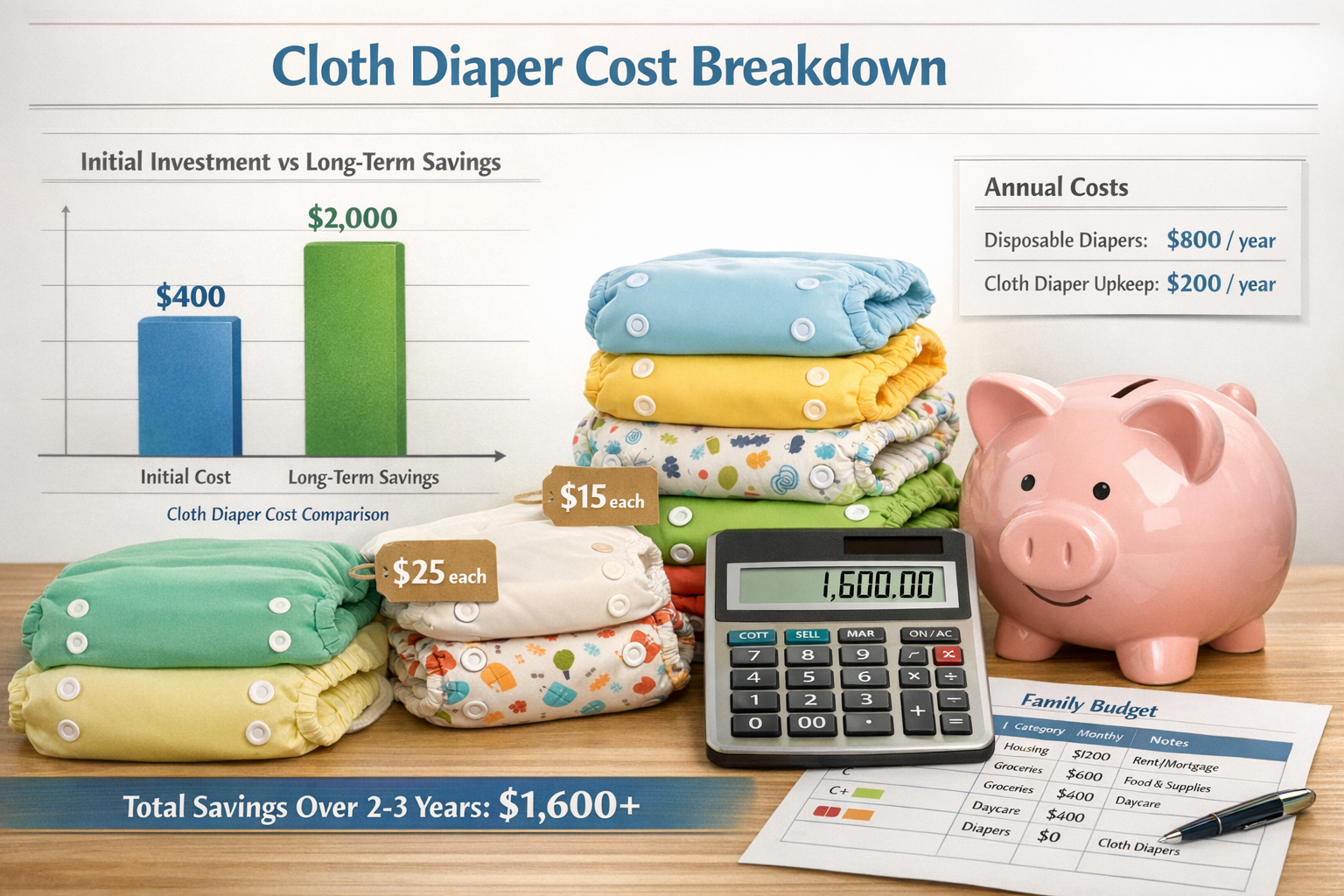
When parents ask “what do cloth diapers cost,” they’re often surprised to learn that the answer depends on numerous factors. Unlike disposable diapers with a straightforward per-diaper price, cloth diapering involves an initial investment followed by ongoing operational costs.
The cloth diaper market offers options ranging from budget-friendly prefolds at $2 each to premium all-in-one systems costing $25-$30 per diaper. This wide price range reflects different materials, construction quality, and convenience features. Understanding these differences helps parents make informed decisions that align with their budget and lifestyle needs.
Breaking Down Initial Investment Costs
Most families need between 20-30 cloth diapers to maintain a comfortable rotation. Here’s what parents can expect to invest initially:
Budget Option ($200-$400)
- Prefold diapers with covers: $2-$8 per diaper
- Basic pocket diapers: $8-$15 each
- Simple all-in-one styles: $12-$18 each
Mid-Range Option ($400-$600)
- Quality pocket diapers: $15-$20 each
- Hybrid systems: $18-$22 per diaper
- Premium all-in-ones: $20-$25 each
Premium Option ($600-$800+)
- Luxury brands: $25-$30+ per diaper
- Organic materials and special features
- Complete systems with multiple components
Essential Accessories and Their Costs
Beyond the diapers themselves, parents need several accessories that add to the total investment:
- Diaper covers (for prefolds): $8-$15 each, need 4-6
- Inserts and boosters: $3-$8 each, need 10-15 extras
- Wet bags: $15-$25 each, need 2-3
- Diaper pail or storage: $20-$50
- Cloth-safe detergent: $15-$25 per month
- Diaper sprayer: $30-$60 (optional but helpful)
For families interested in exploring different brands and systems, checking out comprehensive guides to reusable diapers can provide valuable insights into various options and their associated costs.
What Do Cloth Diapers Cost Compared to Disposables?
The financial comparison between cloth and disposable diapers reveals compelling long-term savings potential. While disposable diapers require no upfront investment, their ongoing costs accumulate significantly over time.
Disposable Diaper Expenses
The average child uses approximately 6,000-8,000 diapers from birth to potty training. With disposable diapers costing $0.25-$0.35 each, families spend:
- Annual cost: $800-$1,200 per year
- Total cost per child: $2,500-$3,500
- Premium brand costs: Up to $4,000+ per child
Cloth Diaper Long-term Costs
After the initial investment, cloth diapers incur only washing and maintenance costs:
- Washing costs: $200-$400 per year (including water, electricity, detergent)
- Replacement items: $50-$100 annually for worn elastics or damaged diapers
- Total operational costs: $250-$500 per year
The Real Savings Calculation
When comparing total costs over 2.5-3 years of diapering:
Disposable Diapers: $2,500-$3,500
Cloth Diapers: $600-$1,200 (initial) + $625-$1,250 (washing) = $1,225-$2,450
Potential savings: $1,275-$2,275 for the first child
These savings multiply dramatically for families with multiple children, as cloth diapers can typically be reused for 2-3 children with proper care.
Factors That Influence Cloth Diaper Pricing
Understanding what drives cloth diaper costs helps parents make informed purchasing decisions. Several key factors significantly impact pricing across different brands and styles.
Material Quality and Construction
The materials used in cloth diapers directly affect both price and performance:
Natural Fibers
- Organic cotton: Premium pricing due to sustainable farming practices
- Bamboo: Mid-range pricing with excellent absorbency
- Hemp: Higher cost but exceptional durability
Synthetic Materials
- Microfiber: Budget-friendly but may cause sensitivity issues
- Microsuede: Comfortable feel with moderate pricing
- Athletic wicking jersey: Premium pricing for stay-dry properties
Design Complexity and Features
More sophisticated diaper designs command higher prices:
- All-in-one systems: Highest convenience, highest price
- Pocket diapers: Moderate complexity and pricing
- Prefolds with covers: Simplest design, lowest cost
- Hybrid systems: Versatile but expensive due to multiple components
Brand Reputation and Innovation
Established brands often charge premium prices for:
- Research and development costs
- Brand recognition and trust
- Innovative features and patents
- Superior customer service and warranties
Parents researching specific brands might find detailed reviews of popular options helpful in understanding whether premium pricing translates to better value.
Manufacturing Location and Ethics
Ethical manufacturing practices influence pricing:
- Domestic production: Higher labor costs but supporting local economy
- Fair trade practices: Ensuring worker welfare increases costs
- Environmental certifications: Sustainable practices add to production expenses
Hidden Costs and Additional Expenses
When calculating what cloth diapers cost, parents must consider expenses beyond the diapers themselves. These hidden costs can significantly impact the total investment and ongoing operational expenses.
Washing and Utility Costs
Cloth diapers require regular washing, creating ongoing utility expenses:
Water Usage
- Additional 2-3 loads per week
- Cost varies by location: $0.50-$2.00 per load
- Annual water cost increase: $50-$300
Electricity/Gas for Drying
- Dryer usage: $0.30-$0.50 per load
- Line drying reduces costs but requires time and weather cooperation
- Annual energy cost: $40-$150
Detergent Expenses
- Cloth-safe detergents: $15-$25 per month
- Special additives for odor control: $10-$20 monthly
- Annual detergent costs: $180-$540
Childcare Considerations
Many daycare centers charge extra fees for cloth diaper children or refuse cloth diapers entirely:
- Additional fees: $20-$50 per week at some facilities
- Limited daycare options: May require premium childcare providers
- Training costs: Some providers charge for staff education on cloth diaper procedures
Replacement and Maintenance Costs
Even quality cloth diapers require eventual replacement:
- Elastic replacement: $2-$5 per diaper every 12-18 months
- Snap or Velcro repairs: $3-$8 per repair
- Complete replacement: 10-20% of stash annually for heavy users
Time Investment Considerations
While not a direct monetary cost, time investment has value:
- Daily prep time: 10-15 minutes for stuffing pockets or folding prefolds
- Washing routine: 30-45 minutes every 2-3 days
- Troubleshooting: Time spent addressing leaks, odors, or fit issues
For parents experiencing common issues, resources about compression leaks and nighttime leaking solutions can help minimize time spent on troubleshooting.
Cost-Saving Strategies for Cloth Diaper Families
Smart shopping strategies can significantly reduce what cloth diapers cost without compromising quality or convenience. Experienced cloth diaper parents have developed numerous tactics for building affordable, effective stashes.
Buying Used and Secondhand Options
The secondhand market offers substantial savings opportunities:
Online Marketplaces
- Facebook groups: 40-60% savings on gently used diapers
- eBay auctions: Competitive pricing on lot purchases
- Mercari and Poshmark: Individual diaper sales with negotiation options
Local Options
- Consignment stores: Inspectable condition, immediate availability
- Garage sales: Potential for significant bargains
- Parent swap groups: Direct exchanges with other families
Quality Assessment Tips
- Check elastic condition around legs and waist
- Inspect snaps or Velcro for functionality
- Examine fabric for thinning or permanent staining
- Test waterproof layers for delamination
Seasonal Sales and Bulk Purchasing
Strategic timing reduces new diaper costs:
Best Sale Times
- Black Friday/Cyber Monday: 30-50% discounts
- End-of-season clearances: Discontinued prints and styles
- New parent expo events: Show-exclusive pricing
- Earth Day promotions: Eco-friendly brand sales
Bulk Buying Benefits
- Manufacturer direct sales: Volume discounts of 15-25%
- Group buying with friends: Shared shipping costs
- Complete starter packages: Better per-diaper pricing than individual purchases
DIY and Budget Alternatives
Creative parents can reduce costs through DIY approaches:
Making Your Own
- Prefold diapers: $3-$5 in materials vs. $8-$12 retail
- Wet bags: $5-$8 to make vs. $15-$25 retail
- Cloth wipes: $0.50 each vs. $2-$4 retail
Hybrid Approaches
- Disposables for outings, cloth at home
- Cloth during the day, disposables overnight
- Disposables during illness or travel periods
Building a Stash Gradually
Avoiding the pressure to purchase everything immediately:
Newborn Strategy
- Start with 8-12 diapers to test preferences
- Add gradually as baby grows and needs become clear
- Focus on one size at a time to maximize use
Size Transition Planning
- Sell outgrown sizes to fund next size purchases
- Choose adjustable diapers that span multiple sizes
- Consider one-size diapers for longer use periods
Parents looking for comprehensive guidance on building an effective cloth diaper collection can explore detailed guides for eco-conscious parents that cover both cost considerations and practical implementation strategies.
Different Types of Cloth Diapers and Their Costs
Understanding the various cloth diaper styles helps parents determine what cloth diapers cost for their specific needs and preferences. Each type offers different benefits, convenience levels, and price points.
All-in-One (AIO) Diapers
All-in-one diapers provide maximum convenience with everything sewn together in one piece:
Cost Range: $18-$30 per diaper
Pros:
- Easiest for caregivers and daycare
- No assembly required
- Most similar to disposable experience
Cons:
- Highest price point
- Longest drying time
- Entire diaper must be washed after each use
Best For: Families prioritizing convenience, daycare situations, caregivers uncomfortable with cloth diaper assembly
Pocket Diapers
Pocket diapers feature a waterproof outer shell with an opening to stuff absorbent inserts:
Cost Range: $12-$22 per diaper (plus $3-$6 per insert)
Pros:
- Customizable absorbency
- Faster drying than AIOs
- Stay-dry feeling against baby’s skin
Cons:
- Requires stuffing and unstuffing
- Need to purchase inserts separately
- Pocket opening can trap odors
Best For: Parents wanting customization options, families with heavy wetters, those comfortable with some assembly
Prefolds and Covers
The most traditional and economical cloth diaper system:
Cost Range: $2-$8 per prefold, $8-$15 per cover
Pros:
- Lowest cost option
- Most versatile and long-lasting
- Excellent for multiple children
Cons:
- Steepest learning curve
- Requires folding and fastening
- Less convenient for caregivers
Best For: Budget-conscious families, parents comfortable with traditional methods, those planning multiple children
Hybrid Systems
Hybrid diapers combine reusable covers with disposable or washable inserts:
Cost Range: $15-$25 per cover, $0.50-$2.00 per insert
Pros:
- Flexibility between disposable and cloth
- Good for travel and outings
- Covers can be reused multiple times
Cons:
- Higher ongoing costs if using disposable inserts
- More complex system to manage
- Disposable inserts reduce environmental benefits
Best For: Families wanting flexibility, part-time cloth diaper users, those transitioning from disposables
Fitted Diapers with Covers
Fitted diapers are shaped like disposables but require a separate waterproof cover:
Cost Range: $15-$25 per fitted, $8-$15 per cover
Pros:
- Excellent absorbency
- Natural fiber options available
- Good fit and containment
Cons:
- Two-piece system increases costs
- Slower drying than other options
- Requires separate cover purchase
Best For: Families prioritizing natural materials, heavy wetters, overnight use
Calculating Your Personal Cloth Diaper Budget
Determining what cloth diapers cost for your specific situation requires careful consideration of your family’s needs, preferences, and circumstances. Creating a personalized budget helps ensure realistic expectations and successful cloth diaper implementation.
Assessing Your Family’s Needs
Number of Children
- First child: Higher cost per use, longer payback period
- Multiple children: Dramatic cost savings, faster return on investment
- Future family planning: Influences quality and quantity decisions
Childcare Situation
- Home care: Full flexibility in cloth diaper choices
- Daycare requirements: May limit options or increase costs
- Multiple caregivers: Consider ease of use and training needs
Lifestyle Factors
- Washing frequency preferences: Affects stash size needs
- Travel frequency: Influences system complexity choices
- Time availability: Impacts maintenance and prep time tolerance
Creating a Realistic Budget Plan
Phase 1: Initial Investment (Months 1-3)
- Start with 8-12 diapers to test preferences: $150-$300
- Essential accessories (wet bags, covers): $50-$100
- Washing supplies and setup: $50-$100
- Total Phase 1: $250-$500
Phase 2: Building Full Stash (Months 4-6)
- Additional 15-20 diapers: $200-$400
- Extra accessories and backups: $75-$150
- Size transitions or adjustments: $100-$200
- Total Phase 2: $375-$750
Phase 3: Maintenance and Growth (Ongoing)
- Annual replacement and repairs: $50-$150
- Size transitions: $200-$400 per size change
- Additional children preparation: $100-$300
- Annual Ongoing Costs: $350-$850
Sample Budget Scenarios
Budget-Conscious Family
- 24 prefolds + 6 covers: $250
- Basic accessories: $75
- Annual maintenance: $100
- Total first year: $425
Moderate Investment Family
- 20 pocket diapers + inserts: $400
- Complete accessory set: $150
- Annual maintenance: $150
- Total first year: $700
Premium Convenience Family
- 25 all-in-one diapers: $600
- Luxury accessories: $200
- Annual maintenance: $200
- Total first year: $1,000
Parents interested in exploring specific brand options and their associated costs might benefit from reading detailed brand comparisons to understand how different manufacturers price their products.
Check Cost Calculator here
Regional Price Variations and International Considerations
What cloth diapers cost varies significantly based on geographic location, local market conditions, and international trade factors. Understanding these variations helps parents set realistic budget expectations and identify potential cost-saving opportunities.
North American Market Pricing
United States
- Premium brands: $20-$30 per diaper
- Mid-range options: $12-$20 per diaper
- Budget alternatives: $8-$15 per diaper
- Sales tax varies by state: 0-10% additional cost
Canada
- Higher base prices due to smaller market: 15-25% premium over US prices
- Limited local manufacturing increases import costs
- Provincial sales tax: 5-15% additional cost
- Currency fluctuation affects imported brand pricing
Mexico
- Growing market with emerging local brands
- Imported brands carry significant premium: 30-50% higher than US pricing
- Local alternatives available at 40-60% of imported brand costs
European Market Dynamics
Western Europe
- Strong local manufacturing reduces shipping costs
- Premium organic options widely available
- VAT adds 15-25% to retail prices
- Government incentives in some countries offset costs
Eastern Europe
- Rapidly growing market with competitive pricing
- Local brands emerging at budget-friendly price points
- Import duties on non-EU brands increase costs
- Growing secondhand markets provide affordable options
Asia-Pacific Variations
Australia/New Zealand
- Limited local production increases import dependence
- Premium pricing due to shipping costs and small market
- Strong government environmental incentives
- Active secondhand and swap communities
Japan
- High-quality local brands with premium pricing
- Cultural preference for convenience drives AIO popularity
- Limited space considerations affect washing and storage
- Government rebate programs in some municipalities
Southeast Asia
- Emerging markets with growing awareness
- Price-sensitive consumers driving budget innovation
- Climate considerations affect material choices and pricing
- Limited infrastructure impacts washing and drying options
Currency and Economic Factors
Exchange Rate Impact
- International brands affected by currency fluctuations
- Local manufacturing provides price stability
- Economic conditions influence disposable income allocation
Inflation Considerations
- Cloth diapers provide hedge against ongoing price increases
- Initial investment protects against future cost inflation
- Quality purchases maintain value better during economic uncertainty
Parents dealing with specific challenges like odor issues can find helpful resources about eliminating ammonia smells that might affect long-term cost calculations if not properly addressed.
Tips for Maximizing Your Cloth Diaper Investment
Smart strategies can significantly reduce what cloth diapers cost while maximizing their performance and longevity. Experienced cloth diaper families have developed proven methods for getting the best value from their investment.
Proper Care and Maintenance
Washing Best Practices
- Use appropriate water temperature: warm wash, hot rinse
- Choose cloth-safe detergents to prevent buildup
- Avoid fabric softeners that reduce absorbency
- Strip diapers quarterly to maintain performance
Drying Strategies
- Line dry when possible to extend fabric life
- Use low heat settings when machine drying
- Rotate diapers to ensure even wear
- Sun-bleach stains naturally to avoid harsh chemicals
Storage and Organization
- Proper ventilation prevents mold and mildew
- Organized storage systems reduce wear from searching
- Climate-controlled storage maintains elastic integrity
- Regular inventory checks identify needed repairs early
Extending Diaper Lifespan
Preventive Maintenance
- Replace worn elastics before complete failure
- Repair small tears before they become large problems
- Rotate usage to prevent excessive wear on favorites
- Store properly between children to maintain condition
Quality Assessment
- Monitor absorbency performance over time
- Check waterproof layers for delamination
- Inspect snaps and Velcro for secure closure
- Evaluate fit changes as components age
Upgrade Timing
- Replace 20-30% of stash annually for optimal performance
- Upgrade inserts before replacing entire diapers
- Consider component replacement vs. complete replacement
- Time purchases with sales for maximum savings
Resale Value Optimization
Maintaining Resale Value
- Keep original packaging and documentation
- Photograph condition before first use
- Maintain detailed care records
- Store properly to preserve appearance
Selling Strategies
- Time sales with seasonal demand peaks
- Bundle complementary items for higher values
- Price competitively based on condition assessment
- Use multiple platforms to maximize exposure
Market Timing
- Sell before significant wear becomes apparent
- Consider market saturation in your area
- Time sales with new parent preparation periods
- Monitor brand popularity trends
For parents considering premium options, reading detailed reviews of specific products can help determine whether higher initial costs translate to better long-term value.
Building Community Connections
Local Parent Networks
- Join cloth diaper swap groups for cost-effective variety
- Share bulk purchasing opportunities with friends
- Exchange size-specific diapers as children grow
- Coordinate group purchases for volume discounts
Online Communities
- Participate in brand-specific groups for insider tips
- Access exclusive sales and promotional codes
- Learn troubleshooting techniques from experienced users
- Find reliable sources for used diapers and supplies
Educational Resources
- Attend local cloth diaper workshops and demonstrations
- Connect with lactation consultants who understand cloth diapering
- Build relationships with retailers for personalized service
- Access manufacturer customer service for technical support
Real Parent Experiences and Case Studies
Understanding what cloth diapers cost becomes more meaningful when viewed through real family experiences. These case studies illustrate how different approaches, family sizes, and circumstances affect the actual financial impact of cloth diapering.
Case Study 1: The Budget-Conscious First-Time Parents
Family Profile: Sarah and Mike, one child, tight budget, both working full-time
Initial Investment:
- 24 prefold diapers: $120
- 6 waterproof covers: $60
- Basic accessories: $75
- Total startup cost: $255
Ongoing Costs:
- Monthly washing expenses: $20
- Annual replacement items: $40
- Three-year total: $975
Outcome: Saved approximately $2,025 compared to disposables, despite initial skepticism about the learning curve. Sarah notes, “The first month was challenging, but once we got the routine down, it became second nature. The savings allowed us to put money toward our daughter’s college fund instead.”
Case Study 2: The Convenience-Focused Professional Family
Family Profile: Jennifer and David, two children, higher income, demanding careers
Initial Investment:
- 30 all-in-one diapers: $750
- Premium accessories and backup supplies: $200
- Professional diaper service for first 6 months: $600
- Total startup cost: $1,550
Ongoing Costs:
- Monthly washing expenses: $35
- Annual replacement and maintenance: $150
- Per child costs: $2,810 (first child), $1,260 (second child)
Outcome: Despite higher initial costs, saved $1,190 over two children while maintaining convenience. Jennifer explains, “We prioritized time savings and ease of use. The higher upfront cost was worth it for the convenience, and we still came out ahead financially.”
Case Study 3: The Eco-Minded Large Family
Family Profile: Lisa and Tom, four children, environmental priorities, single income
Initial Investment:
- 36 pocket diapers (bought used): $400
- Additional inserts and accessories: $150
- Gradual upgrades over time: $200
- Total startup cost: $750
Ongoing Costs:
- Monthly washing expenses: $30
- Annual maintenance across all children: $100
- Total investment over 8 years: $3,630
Outcome: Saved approximately $8,370 compared to disposables for four children. Lisa shares, “Cloth diapers aligned with our environmental values while making financial sense for our large family. The savings were substantial, and we felt good about reducing waste.”
Case Study 4: The Part-Time Cloth Diaper Family
Family Profile: Rachel and James, one child, travel frequently, mixed approach
Initial Investment:
- 18 hybrid system diapers: $360
- Washable and disposable inserts: $200
- Travel accessories: $100
- Total startup cost: $660
Ongoing Costs:
- Monthly washing expenses: $15
- Disposable inserts for travel: $300 annually
- Three-year total: $1,740
Outcome: Saved approximately $760 compared to full-time disposables while maintaining travel convenience. Rachel notes, “The hybrid approach worked perfectly for our lifestyle. We got environmental and financial benefits at home while having convenience when traveling.”
Parents interested in exploring various approaches can find additional guidance in comprehensive cloth diaper guides that cover different family situations and needs.
When Cloth Diapers Might Not Be Cost-Effective
While cloth diapers offer significant savings for many families, certain circumstances can affect their cost-effectiveness. Understanding these situations helps parents make informed decisions about whether cloth diapering aligns with their specific circumstances.
High Utility Costs
Expensive Water Regions
- Areas with water scarcity pricing: $0.01+ per gallon
- Private well maintenance costs
- Septic system limitations affecting wash frequency
- Drought restrictions limiting washing options
Premium Electricity Rates
- Peak hour pricing affecting dryer usage
- Limited line-drying options in apartments
- Energy-inefficient washing machines
- Time-of-use restrictions on appliance operation
Childcare Limitations
Daycare Restrictions
- Facilities refusing cloth diapers entirely
- Additional fees exceeding cost savings: $50+ weekly
- Limited cloth-friendly childcare options
- Staff training requirements creating barriers
Caregiver Challenges
- Elderly grandparents uncomfortable with cloth systems
- Babysitters requiring disposable backup supplies
- Multiple caregivers creating consistency issues
- Language barriers affecting instruction comprehension
Lifestyle Factors
Frequent Travel
- Business travel requiring constant diaper shipping
- International travel with washing limitations
- Extended family visits without washing access
- Camping and outdoor activities limiting facilities
Housing Constraints
- Apartment restrictions on washing frequency
- Shared laundry facilities with limited access
- No storage space for diaper supplies
- Rental agreements restricting clothesline installation
Health Considerations
Skin Sensitivity Issues
- Persistent diaper rash requiring disposable periods
- Allergic reactions to detergents or fabrics
- Medical conditions requiring frequent changes
- Premature babies needing specialized disposable options
Family Health Challenges
- Chronic illness limiting energy for cloth diaper maintenance
- Postpartum depression affecting daily routines
- Physical limitations preventing washing and folding
- Immune system concerns requiring disposable periods
Parents experiencing diaper rash issues might benefit from reading about cloth diaper rash causes and solutions to determine if the problems are solvable or indicative of incompatibility.
Financial Considerations
Cash Flow Constraints
- Unable to afford initial investment despite long-term savings
- Credit limitations preventing bulk purchases
- Emergency fund priorities taking precedence
- Variable income making budget planning difficult
Opportunity Cost Analysis
- Time investment valued higher than financial savings
- Career advancement requiring time allocation elsewhere
- Education or training priorities taking precedence
- Business investment opportunities with higher returns
Future Trends in Cloth Diaper Costs
The cloth diaper industry continues evolving, with emerging trends affecting what cloth diapers cost and their overall value proposition. Understanding these developments helps parents make informed long-term decisions.
Technology and Innovation Impact
Advanced Materials
- Smart fabrics with enhanced absorbency reducing stash size needs
- Antimicrobial treatments extending time between washes
- Quick-dry technologies reducing drying time and energy costs
- Biodegradable components addressing end-of-life concerns
Manufacturing Innovations
- 3D printing reducing production costs for custom fits
- Automated manufacturing lowering labor costs
- Sustainable production methods potentially affecting pricing
- Direct-to-consumer models eliminating retail markups
Market Expansion Effects
Increased Competition
- More brands entering market driving competitive pricing
- Generic and store-brand options reducing premium pricing
- International brands expanding availability and choice
- Subscription services offering convenience and cost savings
Economy of Scale Benefits
- Larger production volumes reducing per-unit costs
- Bulk purchasing programs becoming more accessible
- Group buying platforms facilitating community purchases
- Manufacturer direct sales increasing affordability
Environmental and Regulatory Influences
Sustainability Incentives
- Government rebates and tax credits for eco-friendly choices
- Corporate environmental programs subsidizing employee purchases
- Insurance company incentives for reduced waste generation
- Municipal programs supporting cloth diaper adoption
Regulatory Changes
- Chemical safety regulations affecting material costs
- Import/export policies influencing international pricing
- Environmental standards driving innovation and costs
- Labeling requirements increasing transparency and competition
Consumer Behavior Shifts
Generational Preferences
- Millennial and Gen Z parents prioritizing sustainability
- Increased willingness to invest in quality over convenience
- Social media influence driving brand awareness and competition
- Community sharing and swapping becoming more mainstream
Economic Awareness
- Inflation concerns driving interest in cost-saving alternatives
- Economic uncertainty increasing focus on long-term value
- Rising disposable diaper costs making cloth options more attractive
- Financial literacy education highlighting total cost of ownership
For parents interested in staying current with industry developments, following comprehensive cloth diaper resources can provide ongoing insights into market trends and cost considerations.
Making the Final Decision: Is the Investment Worth It?
Determining whether cloth diapers represent a worthwhile investment requires careful consideration of your family’s unique circumstances, priorities, and financial situation. The question “what do cloth diapers cost” ultimately depends on how you value time, money, convenience, and environmental impact.
Financial Break-Even Analysis
Typical Break-Even Timeline
- Single child: 12-18 months to recover initial investment
- Multiple children: 6-12 months for second child and beyond
- Quality considerations: Premium diapers may take longer to break even
- Usage patterns: Full-time use accelerates payback period
Total Cost of Ownership
- Initial investment: $200-$800
- Operational costs: $200-$400 annually
- Opportunity costs: Time value varies by family
- Resale value: 30-60% recovery for well-maintained diapers
Non-Financial Considerations
Environmental Impact
- Reduced landfill waste: 6,000+ disposable diapers per child
- Lower carbon footprint when washed efficiently
- Sustainable material choices supporting eco-friendly manufacturing
- Teaching children environmental responsibility through example
Health and Comfort
- Natural fiber options for sensitive skin
- Chemical-free alternatives to conventional disposables
- Better breathability potentially reducing diaper rash
- Customizable absorbency for individual needs
Convenience Factors
- No emergency store runs for diaper supplies
- Always having clean diapers available at home
- Learning curve investment pays ongoing dividends
- Satisfaction from mastering sustainable parenting practices
Decision-Making Framework
Financial Readiness Checklist
- ✅ Can afford initial investment without compromising emergency fund
- ✅ Have reliable washing machine and drying options
- ✅ Understand ongoing operational costs
- ✅ Comfortable with 12-18 month payback period
Lifestyle Compatibility Assessment
- ✅ Time available for washing routine every 2-3 days
- ✅ Childcare providers supportive of cloth diaper use
- ✅ Storage space for diaper supplies and washing rotation
- ✅ Commitment to learning and troubleshooting process
Long-term Planning Considerations
- ✅ Family size plans affecting cost-per-child calculations
- ✅ Housing stability ensuring access to washing facilities
- ✅ Career plans compatible with cloth diaper time requirements
- ✅ Environmental values aligned with sustainable choices
Parents seeking additional support in making this decision can explore detailed comparisons of different cloth diaper systems to understand which options best match their needs and budget.
Conclusion
Understanding what cloth diapers cost involves far more than simply comparing price tags. The true value of cloth diapering emerges from a comprehensive analysis of initial investment, ongoing expenses, time commitment, and long-term benefits. For many families, cloth diapers represent not just a financial decision, but a lifestyle choice that aligns with environmental values and provides substantial cost savings over time.
The financial case for cloth diapers becomes increasingly compelling with multiple children, where the initial investment can be amortized across several years of use. Even for single-child families, the typical savings of $1,500-$2,500 compared to disposable diapers make cloth diapering an attractive option for budget-conscious parents.
However, success with cloth diapers requires honest assessment of your family’s circumstances. Factors such as childcare requirements, housing situations, utility costs, and time availability all influence the true cost-effectiveness of cloth diapering. The most expensive cloth diaper system is one that sits unused because it doesn’t fit your lifestyle.
Take Action Today:
- Calculate your specific costs using the factors outlined in this guide
- Start small with a trial period using 8-12 diapers to test your preferences
- Connect with local cloth diaper communities for support and cost-saving opportunities
- Research childcare policies if applicable to your situation
- Create a realistic budget that accounts for both initial and ongoing costs
Remember that cloth diapering is not an all-or-nothing proposition. Many families successfully use hybrid approaches, combining cloth diapers at home with disposables for outings or childcare. The key is finding an approach that works for your family’s unique needs while providing the financial and environmental benefits you’re seeking.
Whether you choose budget-friendly prefolds or premium all-in-one systems, the investment in cloth diapers often pays dividends beyond simple cost savings. The confidence that comes from mastering sustainable parenting practices, the satisfaction of reducing environmental impact, and the financial freedom from breaking the cycle of ongoing disposable purchases make cloth diapering a worthwhile consideration for many modern families.
For continued support and resources as you navigate your cloth diaper journey, explore the wealth of information available through dedicated reusable diaper communities where experienced parents share practical tips, troubleshooting advice, and encouragement for new cloth diaper families.