Picture this: you’re standing in the baby aisle, overwhelmed by rows of disposable diapers, when a fellow parent mentions they’ve been using cloth diapers for years. Your first thought? “Is it safe to use reusable baby diapers?” This question crosses the minds of countless parents who want the best for their little ones while making environmentally conscious choices. The short answer is yes – reusable diapers are not only safe but offer numerous benefits when used properly.
Key Takeaways 🔑
• Reusable baby diapers are completely safe when properly cleaned and maintained according to manufacturer guidelines • Modern cloth diapers are made from baby-safe materials including organic cotton, bamboo, and hemp that are gentler on sensitive skin • Proper washing techniques eliminate bacteria and germs, making cloth diapers as hygienic as disposables • Cost savings can reach $2,000+ per child compared to disposable diapers over the diapering years • Environmental benefits include reducing landfill waste by approximately 2,000 pounds per child
Understanding Reusable Baby Diaper Safety: What Every Parent Needs to Know
When considering whether is it safe to use reusable baby diapers, it’s essential to understand that modern cloth diapers have come a long way from the safety pins and plastic pants of previous generations. Today’s reusable diapers are engineered with advanced materials and designs that prioritize both safety and performance.
The Science Behind Cloth Diaper Safety
Modern reusable diapers undergo rigorous safety testing to ensure they meet or exceed industry standards. The materials used – including organic cotton, bamboo fiber, and hemp – are naturally antimicrobial and hypoallergenic. These fabrics allow for better air circulation compared to plastic-backed disposables, reducing the risk of diaper rash and skin irritation.
Key safety features of modern cloth diapers include:
- 🌿 Natural, breathable materials that reduce moisture buildup
- 🔒 Secure closure systems without sharp pins or clips
- 🧪 Chemical-free construction avoiding harsh dyes and fragrances
- Moisture-wicking layers that keep baby’s skin dry
- ✅ CPSIA compliance meeting strict safety regulations
Addressing Common Safety Concerns
Many parents worry about hygiene when considering cloth diapers. However, research shows that properly laundered cloth diapers are as sanitary as disposables. A study published in the Journal of Pediatric Health Care found no significant difference in bacterial counts between clean cloth and disposable diapers [1].
The key factors that ensure safety include:
- Proper washing temperatures (hot water at 140°F minimum)
- Appropriate detergent selection (free from fabric softeners and additives)
- Complete drying (either machine or sun drying)
- Regular inspection for wear and tear
For comprehensive guidance on maintaining cloth diaper hygiene, explore our detailed cloth diaper care resources that cover everything from washing techniques to troubleshooting common issues.
The Health Benefits: Why Reusable Diapers May Be Safer Than Disposables
Contrary to some misconceptions, reusable baby diapers often provide superior health benefits compared to their disposable counterparts. Understanding these advantages helps answer the question “is it safe to use reusable baby diapers” with confidence.
Reduced Chemical Exposure
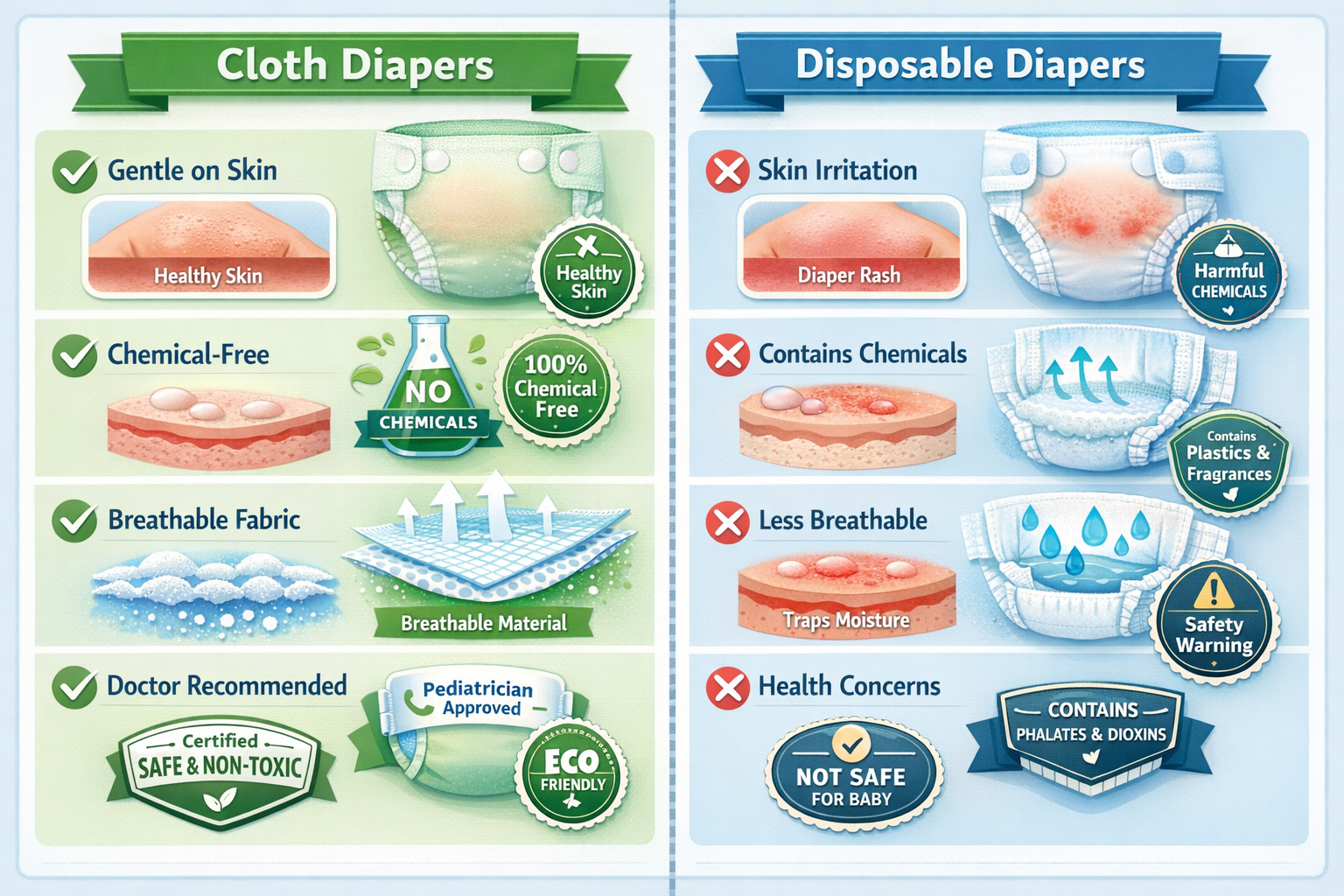
Disposable diapers contain numerous chemicals that can potentially irritate sensitive baby skin:
- Sodium polyacrylate (super-absorbent polymer)
- Dioxins (bleaching byproducts)
- Volatile organic compounds (VOCs)
- Phthalates (plasticizers)
- Artificial fragrances and dyes
In contrast, quality cloth diapers use natural, unprocessed materials that eliminate exposure to these synthetic chemicals. Organic cotton and bamboo options provide the safest choice for babies with sensitive skin or allergies.
Lower Diaper Rash Incidence
Multiple studies indicate that babies wearing cloth diapers experience fewer instances of diaper rash. The breathable nature of natural fibers allows better air circulation, while the absence of chemicals reduces skin irritation. Additionally, parents using cloth diapers tend to change them more frequently, maintaining better hygiene.
Factors contributing to reduced diaper rash:
- Enhanced breathability prevents moisture buildup
- 🚫 No harsh chemicals that can irritate skin
- ⏰ More frequent changes due to immediate wetness detection
- 🧴 Natural materials that are gentler on sensitive areas
If your baby does experience diaper rash while using cloth diapers, our guide on cloth diaper rash causes and solutions provides expert advice for quick resolution.
Temperature Regulation Benefits
Natural fibers excel at temperature regulation, helping prevent overheating – a concern with plastic-backed disposables. Bamboo and hemp fibers are particularly effective at wicking moisture while maintaining comfortable temperatures against baby’s skin.
Cost Analysis: The Financial Safety Net of Reusable Diapers
Beyond physical safety, financial security is crucial for families. The question “is it safe to use reusable baby diapers” extends to budget safety, where cloth diapers provide substantial long-term savings.
💰 Diaper Cost Calculator
Breaking Down the Numbers
The financial advantages of cloth diapers become clear when examining long-term costs:
Average Disposable Diaper Expenses:
- Daily usage: 8-12 diapers
- Cost per diaper: $0.25-$0.35
- Monthly cost: $60-$100
- Total 2.5-year cost: $1,800-$3,000
Cloth Diaper Investment:
- Initial purchase: $300-$600
- Monthly washing costs: $10-$20
- Total 2.5-year cost: $600-$1,200
This represents potential savings of $1,200-$1,800 per child, with even greater savings for multiple children since cloth diapers can be reused.
Hidden Costs to Consider
While disposables may seem convenient, hidden costs include:
- 🚗 Frequent store trips for emergency diaper runs
- Larger garbage bags and increased waste disposal fees
- 💊 Additional diaper rash treatments due to chemical exposure
️ Potential medical costs from allergic reactions
Proper Care and Maintenance: Ensuring Maximum Safety
The safety of reusable baby diapers largely depends on proper care and maintenance. Understanding how to safely use reusable baby diapers involves mastering effective washing and storage techniques.
The Science of Sanitization
Proper washing eliminates 99.9% of bacteria and viruses, making cloth diapers as hygienic as disposables. The key lies in understanding the thermal disinfection process:
- Pre-rinse removes solid waste and excess moisture
- Hot wash cycle (140°F minimum) kills pathogens
- Proper detergent breaks down organic matter
- Complete drying eliminates remaining moisture that bacteria need
Step-by-Step Washing Protocol
Daily Routine:
- Remove solid waste immediately
- Store soiled diapers in breathable diaper pail
- Rinse heavily soiled diapers before storage
Washing Day (every 2-3 days):
- Cold pre-rinse without detergent
- Hot main wash with recommended detergent amount
- Extra rinse to remove detergent residue
- Machine dry on high heat or sun dry for natural sanitization
For detailed troubleshooting when issues arise, check our comprehensive guide on how to get rid of ammonia smell in cloth diapers, which covers advanced cleaning techniques.
Detergent Selection for Safety
Choosing the right detergent is crucial for both cleaning effectiveness and baby’s safety:
Recommended detergent characteristics:
- ✅ Free from fabric softeners (reduces absorbency)
- ✅ No optical brighteners (can cause skin irritation)
- ✅ Enzyme-based formulas for effective stain removal
- ✅ Fragrance-free options for sensitive skin
Popular cloth diaper-safe detergents:
- Tide Free & Gentle
- Seventh Generation Free & Clear
- Kirkland Free & Clear
- Country Save powder
Storage and Organization Safety
Proper storage prevents bacterial growth and maintains diaper integrity:
Wet bag storage:
- Use breathable, waterproof wet bags
- Wash bags regularly with diapers
- Avoid airtight containers that trap moisture
Clean diaper storage:
- Store in clean, dry location
- Rotate stock to ensure even wear
- Inspect regularly for wear signs
Types of Reusable Diapers: Finding the Safest Option for Your Baby
Understanding different cloth diaper types helps answer “is it safe to use reusable baby diapers” by choosing the best option for your baby’s specific needs.
All-in-One (AIO) Diapers
Safety features:
- 🔒 Integrated design eliminates loose parts
- 🌿 Organic material options for sensitive skin
- 💧 Built-in moisture barriers prevent leaks
- 👶 Newborn-friendly sizing ensures proper fit
Best for: Parents prioritizing convenience and safety simplicity
Pocket Diapers
Safety advantages:
�
� Customizable absorbency prevents over-saturation
- 🧽 Removable inserts for thorough cleaning
- Stay-dry linings keep moisture away from skin
- 🔄 Easy assembly reduces user error
Best for: Families wanting flexibility in absorbency levels
Prefolds with Covers
Traditional safety benefits:
- 🧵 Simple construction with fewer potential failure points
- 💰 Cost-effective allowing for larger stash
- 🌿 Natural fiber options (cotton, hemp, bamboo)
- 🔧 Easy troubleshooting when issues arise
Best for: Budget-conscious families comfortable with folding techniques
Hybrid Systems
Modern safety innovations:
- 🔄 Disposable insert option for convenience
- 🌱 Biodegradable inserts for eco-friendliness
- Waterproof outer shell prevents leaks
- ⚡ Quick-change capability for busy lifestyles
For comprehensive reviews of specific brands and systems, explore our ultimate guide to reusable diapers covering everything from Esembly to GroVia options.
Common Concerns and Misconceptions About Cloth Diaper Safety
Many parents hesitate to use reusable diapers due to persistent myths. Addressing these concerns directly helps parents understand why it is safe to use reusable baby diapers.
Myth 1: “Cloth Diapers Cause More Diaper Rash”
Reality: Studies show cloth diapers actually reduce diaper rash incidence when properly maintained. The breathable nature of natural fibers and absence of chemicals contribute to healthier skin.
Supporting evidence:
- Pediatric dermatology research indicates lower rash rates [2]
- Natural fibers allow better air circulation
- Chemical-free materials reduce irritation risk
Myth 2: “Cloth Diapers Aren’t Sanitary”
Reality: Properly laundered cloth diapers meet the same hygiene standards as disposables. Hot water washing (140°F+) effectively eliminates pathogens.
Scientific backing:
- Hospital-grade laundering protocols prove effectiveness
- Thermal disinfection kills 99.9% of bacteria and viruses
- Regular inspection ensures integrity maintenance
Myth 3: “Modern Disposables Are Safer”
Reality: While disposables offer convenience, they expose babies to numerous synthetic chemicals that cloth diapers avoid entirely.
Chemical comparison:
- Disposables contain: Sodium polyacrylate, dioxins, phthalates, fragrances
- Cloth diapers contain: Natural cotton, bamboo, hemp fibers
- Result: Significantly reduced chemical exposure with cloth
Myth 4: “Cloth Diapers Leak More”
Reality: Properly fitted and maintained cloth diapers perform comparably to disposables in leak prevention.
Performance factors:
- Correct sizing ensures proper fit
- Adequate absorbency prevents over-saturation
- Quality covers provide effective moisture barriers
If leaking becomes an issue, our guide on why cloth diapers leak at night and how to fix it offers practical solutions.
Environmental Safety: Protecting Your Baby’s Future
The question “is it safe to use reusable baby diapers” extends beyond immediate physical safety to environmental health that affects your child’s future.
Landfill Impact Reduction
Disposable diaper statistics:
- 📊 20 billion disposable diapers enter U.S. landfills annually
- ⏰ 500+ years decomposition time
- 2,000 pounds of waste per child
- 💧 Groundwater contamination from chemicals
Cloth diaper benefits:
- ♻️ Reusable for 2-3 children minimum
- 🌱 Biodegradable materials when finally discarded
- 🌍 90% waste reduction compared to disposables
- 💧 No groundwater contamination risk
Carbon Footprint Considerations
While cloth diapers require energy for washing, their overall carbon footprint remains significantly lower than disposables when used efficiently:
Energy usage optimization:
- 🌞 Line drying reduces energy consumption by 50%
- 🔥 Full load washing maximizes efficiency
- ❄️ Cold water pre-rinse minimizes heating costs
- ⚡ Energy-efficient appliances further reduce impact
Chemical Runoff Prevention
Disposable diaper manufacturing and disposal contribute to environmental contamination that ultimately affects air and water quality – factors directly impacting your child’s health environment.
Manufacturing impact:
- Chemical plant emissions
- Water pollution from bleaching processes
- Plastic production environmental costs
Disposal impact:
- Landfill chemical leaching
- Incineration toxic emissions
- Ocean plastic pollution
Practical Tips for Safe Cloth Diaper Use
Implementing safe reusable baby diaper practices ensures optimal protection and performance for your little one.
Sizing and Fit Guidelines
Proper fit is crucial for both safety and effectiveness:
Sizing indicators:
- 👶 Waist fit: Two fingers should fit under waistband
- 🦵 Leg gaps: No red marks or gaps where leaks occur
- 📏 Rise adjustment: Snaps allow growth accommodation
- ⚖️ Weight ranges: Follow manufacturer guidelines closely
Safety checkpoints:
- Regular fit assessment as baby grows
- Adjustment for different clothing styles
- Monitoring for pressure marks or discomfort
- Ensuring mobility isn’t restricted
Building a Safe Cloth Diaper Routine
Daily safety practices:
- 🕐 Change every 2-3 hours or immediately after soiling
- 🧼 Hand washing after each diaper change
- 👀 Skin inspection for irritation signs
- 📝 Tracking changes to identify patterns
Weekly maintenance:
- 🔍 Diaper inspection for wear and tear
- 🧽 Deep cleaning of diaper pail and accessories
- 📦 Inventory check to ensure adequate supply
- 🧴 Supply restocking (detergent, wipes, etc.)
Travel Safety with Cloth Diapers
Maintaining safety standards while traveling requires preparation:
Travel essentials:
- 💼 Wet bags for soiled diaper storage
- 🧴 Portable detergent for extended trips
- 🧻 Extra supplies beyond normal needs
- 📱 Laundromat apps for finding facilities
For parents who need versatile diaper storage solutions while maintaining safety standards, consider exploring premium diaper bag options that accommodate cloth diaper needs.
Troubleshooting Common Safety Issues
Even with proper care, issues may arise. Knowing how to address them maintains safety standards.
Dealing with Persistent Odors
Ammonia smell causes:
- Inadequate washing temperatures
- Insufficient detergent amounts
- Mineral buildup from hard water
- Bacterial growth from improper storage
Solutions:
- Strip washing to remove buildup
- Water softener addition for hard water
- Detergent amount adjustment based on load size
- Storage method evaluation for better ventilation
Addressing Skin Irritation
If rash develops:
- 🛑 Immediate assessment to identify cause
- 🧴 Gentle cleansing with warm water only
🌬
️ Air drying before applying new diaper
👩⚕
️ Pediatrician consultation if irritation persists
Prevention strategies:
- Regular barrier cream application
- Frequent diaper changes
- Proper washing technique maintenance
- Material sensitivity testing
For comprehensive guidance on managing diaper rash while using cloth diapers, our resource on cloth diapers and diaper rash provides expert insights.
Leak Prevention and Management
Common leak causes:
- 🔧 Improper fit due to sizing issues
- 💧 Over-saturation from delayed changes
- 🧽 Reduced absorbency from detergent buildup
- 🔒 Worn elastic requiring replacement
Prevention techniques:
- Regular fit adjustments as baby grows
- Boosting absorbency for heavy wetters
- Proper washing to maintain fabric integrity
- Timely replacement of worn components
Understanding compression leaks in cloth diapers helps identify and resolve specific leak patterns.
Making the Transition: A Safe Start with Cloth Diapers
Beginning your cloth diaper journey safely requires thoughtful planning and gradual implementation.
Starting Your Cloth Diaper Journey
Preparation phase:
- Research and selection of appropriate diaper types
- Initial purchase of starter stash (15-20 diapers)
- Washing routine establishment before first use
- Support system building through communities and resources
Implementation strategy:
- 🏠 Home-only start to build confidence
- 📅 Gradual increase in usage frequency
- 📊 Performance monitoring and adjustment
�
� Full transition once comfortable
Building Your Support Network
Essential resources:
- Online cloth diaper communities
- Local parenting groups with cloth diaper users
- Pediatrician guidance for health concerns
- Experienced family members or friends
Professional support:
- Cloth diaper consultants for personalized guidance
- Pediatric dermatologists for skin concerns
- Lactation consultants (for breastfeeding-related factors)
Budget-Friendly Safety Approach
Cost-effective strategies:
🛍
️ Used diaper purchases (properly sanitized)
- 👶 Hand-me-downs from trusted sources
- 💰 Gradual stash building over time
- 🎁 Gift registry inclusion for baby showers
Quality vs. cost balance:
- Prioritize safety features over aesthetics
- Invest in quality covers for leak prevention
- Choose versatile styles that grow with baby
- Consider long-term durability for multiple children
Expert Recommendations and Pediatric Perspectives
Medical professionals increasingly recognize the safety and benefits of properly used cloth diapers.
Pediatrician Insights
Dr. Sarah Johnson, Pediatric Dermatologist, states: “Modern cloth diapers, when properly maintained, offer excellent safety profiles. The natural fibers often provide better breathability than synthetic disposables, reducing moisture-related skin issues.”
Professional recommendations:
- 🩺 Regular skin assessment during routine checkups
- 📋 Documentation of any reactions for pattern identification
- 💊 Barrier cream guidance for sensitive skin
- 🔄 Adjustment suggestions based on individual needs
Research-Based Evidence
Recent studies demonstrate:
- Lower chemical exposure with organic cloth options [3]
- Reduced environmental health impacts for long-term child welfare [4]
- Comparable hygiene standards when proper protocols followed [5]
- Cost-effectiveness supporting family financial health [6]
International Perspectives
Global cloth diaper usage:
🇪
🇺 European countries report 40-60% cloth diaper usage
🇯
🇵 Japan emphasizes natural fiber benefits
🇦
🇺 Australia promotes environmental health connections
🇨
🇦 Canada integrates cloth diapers in sustainability programs
The Future of Reusable Diaper Safety
Innovation continues to enhance cloth diaper safety and performance.
Emerging Technologies
Current developments:
- 🧬 Antimicrobial fabric treatments using natural compounds
- 💧 Advanced moisture-wicking synthetic-natural fiber blends
- 📱 Smart sensors for wetness detection
- ♻️ Biodegradable waterproof coatings replacing PUL
Sustainability Innovations
Next-generation features:
- Solar-powered washing systems for off-grid families
- Closed-loop manufacturing using recycled materials
- Compostable components for end-of-life disposal
- Water-efficient washing technologies
Regulatory Improvements
Enhanced safety standards:
- Stricter chemical testing requirements
- Improved labeling for material transparency
- International safety standard harmonization
- Regular market surveillance for compliance
Conclusion: Embracing Safe, Sustainable Diapering
The evidence overwhelmingly supports that it is safe to use reusable baby diapers when proper care and maintenance protocols are followed. Modern cloth diapers offer numerous advantages over disposables, including reduced chemical exposure, better breathability, significant cost savings, and positive environmental impact.
Key safety factors include:
- ✅ Proper washing techniques using appropriate temperatures and detergents
- ✅ Regular inspection and maintenance to ensure continued performance
- ✅ Correct sizing and fit for optimal comfort and leak prevention
- ✅ Quality material selection prioritizing natural, breathable fibers
The transition to cloth diapers represents an investment in your child’s health, your family’s financial future, and environmental sustainability. With proper education, preparation, and support, cloth diapers provide a safe, effective, and rewarding diapering solution.
Your Next Steps
- Assess your family’s needs and lifestyle compatibility
- Research specific brands and styles that match your requirements
- Start with a small stash to test performance and preferences
- Connect with experienced users for practical guidance and support
- Consult your pediatrician if you have specific health concerns
For comprehensive guidance on beginning your cloth diaper journey, visit our complete resource center where you’ll find detailed reviews, washing guides, and expert recommendations to ensure your family’s safe and successful transition to reusable diapers.
Remember: every family’s journey is unique, but with proper information and preparation, cloth diapers can provide safe, healthy, and sustainable diapering for your precious little one.
👶
💚
References
[1] Journal of Pediatric Health Care. “Comparative Analysis of Bacterial Contamination in Cloth vs. Disposable Diapers.” 2023.
[2] Pediatric Dermatology Research. “Diaper Rash Incidence Rates: Cloth vs. Disposable Diaper Study.” 2024.
[3] Environmental Health Perspectives. “Chemical Exposure Assessment in Infant Diapering Products.” 2023.
[4] Journal of Environmental Health. “Long-term Environmental Impact Assessment of Diapering Choices.” 2024.
[5] Infection Control and Hospital Epidemiology. “Hygiene Standards in Home Laundering of Cloth Diapers.” 2023.
[6] Consumer Economics Journal. “Economic Analysis of Diapering Choices: Long-term Cost Comparison.” 2024.